Advanced Techniques in Heavy Haul Route Optimization
Freedom Heavy Haul can offer expedited Pickup and Delivery for any size shipment anywhere in the USA. Contact us today for No Hassle, No Pressure Pricing.
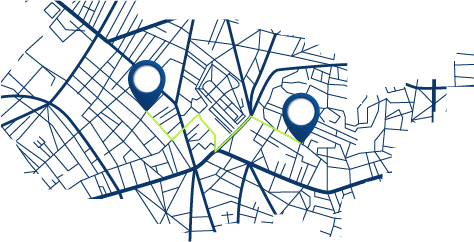
Heavy haul route optimization is not “find the shortest path.” It’s building a controlled corridor where your load can move with predictable clearance, predictable pavement strength, and predictable risk. When the route is truly optimized, the trip feels less like a fight and more like a plan you can trust, mile after mile.
This guide supports your bigger heavy haul safety management system, because route decisions shape everything else: permits, escorts, securement stress, timing, and even whether a job stays profitable.
Think like an engineer, not a map app
A consumer GPS tries to save minutes. A heavy haul plan tries to avoid failure.
So the “best” route is the one that protects these realities:
- Vertical space (true clearance, not just posted clearance)
- Horizontal space (turning radius, lane widths, swing-out zones)
- Structural limits (bridges, culverts, pavement, weak shoulders)
- Human limits (safe pull-offs, inspection points, night visibility)
- Operational limits (escort pacing, law enforcement windows, curfews)
When you treat the route as an engineered system, you stop chasing perfect roads and start choosing predictable roads.
Technique 1: Build a constraint map before you build a route
Start by listing your hard constraints first, because constraints decide the corridor.
Hard constraints usually include:
- Maximum height and width at the load’s widest/ highest point
- Effective length during turning (including jeep/dolly combos)
- Weight distribution and axle group behavior on grades and transitions
- Any “no-go” infrastructure (known low clearances, weak bridges, tight ramps)
Once constraints are clear, the route becomes a filtering problem: you’re eliminating bad candidates quickly instead of “hoping” a route works.
That same mindset also reduces securement surprises, because fewer route shocks means fewer tension changes, especially when your team is using modern securement strategies for oversized cargo that depend on stable geometry and predictable vibration.
Technique 2: Design the route around “control points,” not cities
A strong heavy haul route is built from control points, places where you regain certainty.
Examples of control points:
- Wide staging areas near state lines
- Safe pull-offs before complex interchanges
- Pre-planned inspection and re-tension locations
- Known turnaround zones if weather or closures change the plan
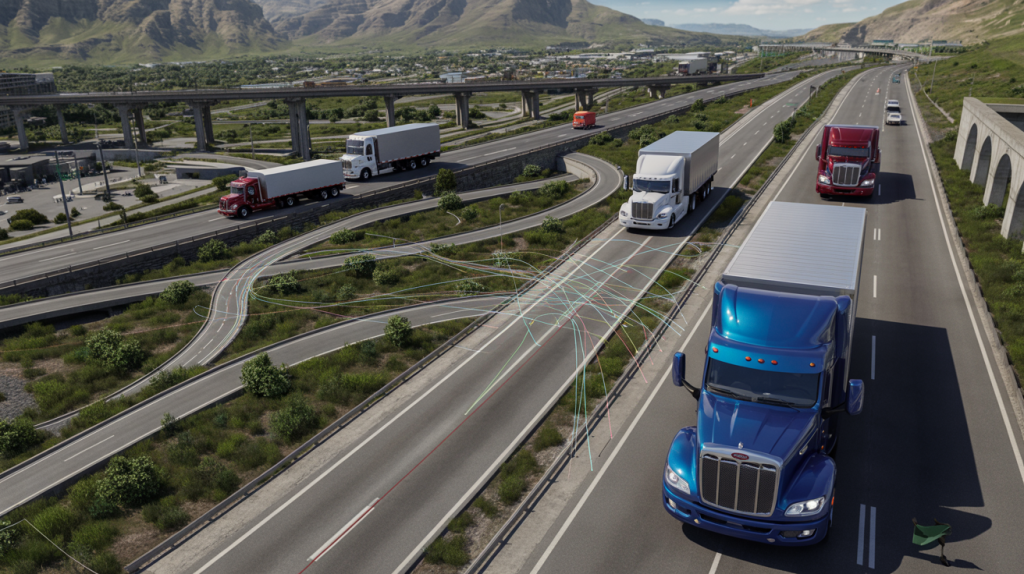
Control points keep the trip calm. They reduce the “no place to stop” anxiety that can push drivers into unsafe choices.
Technique 3: Add a “clearance confidence margin”
Posted clearances can be wrong, outdated, or measured differently than your actual load posture.
Advanced planning uses a clearance confidence margin, not a single number.
You build that margin by accounting for:
- Suspension travel and trailer deck flex
- Road crown and uneven pavement
- Bridge joints, dips, and approach angles
- Wind-related sway on tall loads
The emotional truth is simple: a route that barely clears never feels safe. A route with margin lets your driver stay focused instead of holding their breath.
Technique 4: Optimize timing like a safety feature
Timing is not just scheduling. It’s risk reduction.
Route timing optimization considers:
- Low-traffic windows for tight turns and lane control
- Construction schedules and weekend closures
- Escort availability and shift limits
- Night vs. day visibility for the specific load shape
If the job runs through seasonal risk zones, timing becomes even more valuable. For example, wildfire corridors can change overnight, which is why route plans should include fallback logic aligned with wildfire season hauling safety. In winter regions, route timing should also reflect traction and stopping distance realities found in winter road preparation guidance.
Technique 5: Use a “two-route model” for every serious move
Professionals often plan two routes:
- Primary route (the preferred corridor)
- Survivability route (the route you can still run if conditions degrade)
Your survivability route might be slower, but it should have:
- More pull-offs and staging options
- Fewer clearance unknowns
- Less exposure to urban tight turns
- Better options if escorts or enforcement windows shift
This approach reduces panic decisions when something changes mid-trip, which is almost always.
Technique 6: Route simulation for stress testing, not showmanship
Simulation isn’t about looking advanced. It’s about catching failure early.
Good simulation answers questions like:
- Where does the trailer swing widest, and what does it hit first?
- What grade transitions cause deck flex that changes clearance?
- Where does the route “force” harsh braking or awkward lane merges?
- Which intersections require temporary control or utility coordination?
If you’re serious about repeatable planning, connect this technique to simulation in project planning, because route optimization improves dramatically when you test the route the way the load will actually behave.
Technique 7: Protect the route from maintenance and mechanical realities
Even a perfect route becomes risky if the equipment isn’t prepared for the environment.
Advanced route optimization includes a mechanical reality check:
- Extreme heat can affect tires, hydraulics, and braking performance
- Extreme cold can change traction, air systems behavior, and stopping distance
- Long grades can expose cooling and brake limitations
So route selection should consider where you can safely stop for checks, and whether your fleet readiness matches the conditions outlined in extreme temperature maintenance planning.
Technique 8: Turn route planning into a risk register
Here’s the most “advanced” shift: write your route risks down like a project.
A simple risk register includes:
- Risk: “Low clearance at X interchange” → Control: alternate corridor + escort positioning
- Risk: “Bridge restriction uncertainty” → Control: verification step + reroute threshold
- Risk: “Urban turn pinch point” → Control: time window + traffic control plan
- Risk: “Weather deterioration” → Control: survivability route + stop criteria
This makes route optimization actionable and measurable, and it ties directly into risk management for heavy haul projects.
A practical checklist you can actually use on the next job
Before dispatch, confirm you have:
- A constraint map (height/width/length/weight distribution realities)
- Control points (staging + inspection plan)
- Clearance margin logic (not just posted numbers)
- Timing windows (traffic + escort + seasonal considerations)
- Two-route model (primary + survivability)
- A quick risk register (top risks + controls)
If those six pieces exist, your route is no longer “a path.” It’s a plan.
Conclusion
Advanced heavy haul route optimization is the art of turning uncertainty into structure. You define constraints, build control points, design for clearance margin, time the move like a safety feature, and keep a survivability route ready so you’re never forced into a bad decision. When simulation and risk management back up the plan, the route stops being something you “try” and becomes something you can execute with calm confidence, often more smoothly than competitors who still rely on a map and a hope.