
Axle Configurations and Load Optimization: The Hidden Engineering of Heavy Haul
Freedom Heavy Haul can offer expedited Pickup and Delivery for any size shipment anywhere in the USA. Contact us today for No Hassle, No Pressure Pricing.
In heavy haul transport, trailers carry the cargo, but axles decide whether the cargo can legally and safely move. Axle configuration is not a paperwork detail; it is the physical engineering layer that governs how weight interacts with pavement, bridges, and vehicle dynamics.
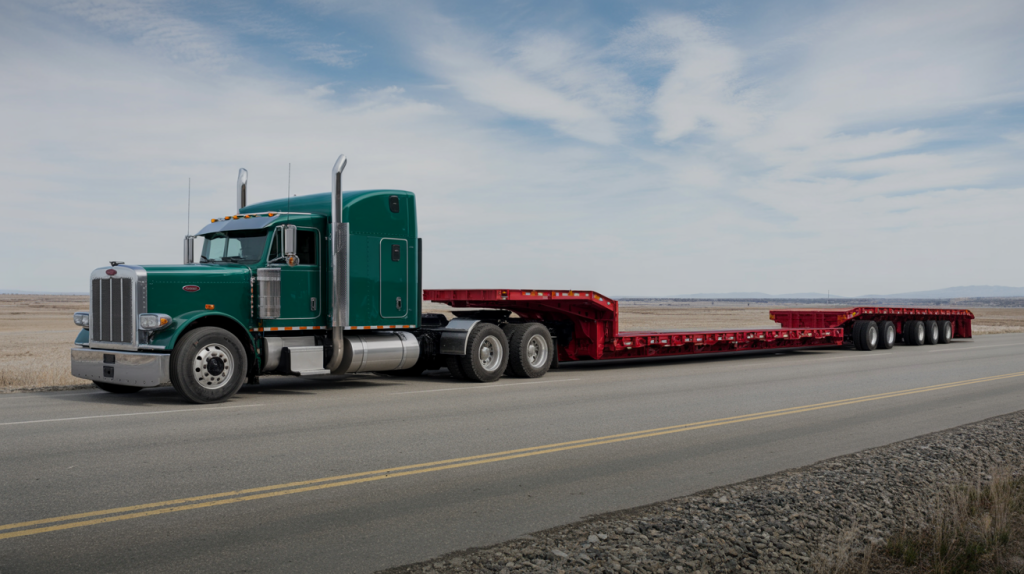
Axle layout must align with trailer design and route constraints to ensure safe and compliant heavy haul operations.
Why axle configuration matters more than gross weight
Most people think total weight is the main limit. In reality, how weight is distributed matters more than how much weight exists.
Axles determine:
- how much force each tire applies to the road
- how bridges and pavement structures respond to the load
- how stable the trailer feels during braking and turning
- whether permits are granted without restrictions
A poorly planned axle layout can make a legal load illegal, or make a controllable load unstable.
The core axle configuration types in heavy haul
Axle systems vary from simple fixed setups to complex modular systems designed for extreme cargo. The choice depends on weight, route constraints, and maneuverability needs.
Fixed axle trailer groups
Standard heavy haul trailers use fixed axle groups with predetermined spacing. These are simpler, easier to permit, and often used for moderately overweight loads.
Spread axle configurations
Spread axles increase the distance between axle groups to distribute weight over a larger bridge footprint. This reduces bridge loading stress and can lower permit restrictions.
Steerable and self-steering axles
When cargo is long or routes are tight, steerable axles improve turning behavior. They reduce tire scrub, improve maneuverability, and protect pavement in urban areas.
Modular axle lines
For extreme loads, modular axle platforms allow dozens of axles to be configured in custom layouts. These systems are common for transformers, industrial assemblies, and mega-project cargo.
Trailer selection influences which axle systems are available, which is why trailer selection for heavy haul projects must be considered alongside axle planning.
Load optimization: distributing weight like an engineer, not a guesser
Load optimization involves positioning cargo so axle groups share weight evenly and predictably across the entire rig. This affects permits, handling, and mechanical stress.
Key factors include:
- center of gravity location
- axle spacing and count
- trailer deck geometry
- suspension characteristics
- braking dynamics
If the load is positioned incorrectly, some axles overload while others are underutilized. That can trigger permit violations, uneven tire wear, or unstable handling.
For practical planning methods, axle weight distribution planning explains how engineers determine where cargo should sit on the deck.
Axles and bridges: why spacing matters more than people think
Bridges don’t “feel” gross weight the way pavement does. They respond to axle spacing and load footprint.
Closely spaced axles concentrate stress, while spread axles distribute it across more structural elements. This is why many overweight permits specify axle spacing rules, not just total weight.
If your routes involve sensitive infrastructure, planning should include bridge engineering considerations in heavy haul to avoid structural conflicts or forced rerouting.
Turning behavior: the trade-off between stability and maneuverability
More axles generally improve stability but reduce maneuverability. Longer axle groups require wider turns and more planning in tight corridors.
Steerable axles solve some turning issues, but they add complexity and cost. This is why axle configuration must be chosen with route geometry in mind, not just weight.
Urban corridors, job site access roads, and construction zones amplify this issue. If your move includes tight clearances, combine axle planning with oversized load clearance planning techniques to avoid last-minute surprises.
How axle optimization affects permits and project costs
Axle layout directly influences:
- permit approval time
- escort requirements
- allowable travel hours
- route restrictions
- infrastructure fees and special engineering reviews
A well-optimized axle plan can reduce restrictions and shorten project timelines. A poorly optimized axle plan can trigger engineering reviews, reroutes, or delays that exceed the cost of transport itself.
A practical axle planning mindset for heavy haul teams
Instead of asking “How many axles do we have?” ask:
- How many axles do we need to stay compliant on this route?
- Where should the load sit so axles share weight evenly?
- Will axle spacing reduce bridge stress or create turning problems?
- Do we need steerable axles for site access or city corridors?
This engineering-first mindset prevents reactive adjustments during permitting or dispatch.
Common mistakes in axle configuration planning
Even experienced teams make these errors:
- placing cargo without calculating axle load distribution
- choosing axle counts based on habit, not route requirements
- ignoring axle spacing impact on bridges
- failing to plan for turning radius with long axle groups
- assuming modular axles are always better (they are not)
Avoiding these mistakes turns axle configuration into a competitive advantage.
Conclusion
Axle configurations are the silent decision-makers in heavy haul transport. They shape how weight interacts with roads, bridges, and turning geometry, and they determine whether a load feels controlled or risky on the road. When axle planning is done early, alongside trailer selection, weight distribution, and route constraints, heavy haul projects become smoother, permits become simpler, and operations become predictable. In oversized transport, axles are not just mechanical components; they are the engineering foundation that makes compliant heavy haul transport possible.