Best Practices for Securing Heavy Equipment on Flatbed Trailers
Freedom Heavy Haul can offer expedited Pickup and Delivery for any size shipment anywhere in the USA. Contact us today for No Hassle, No Pressure Pricing.
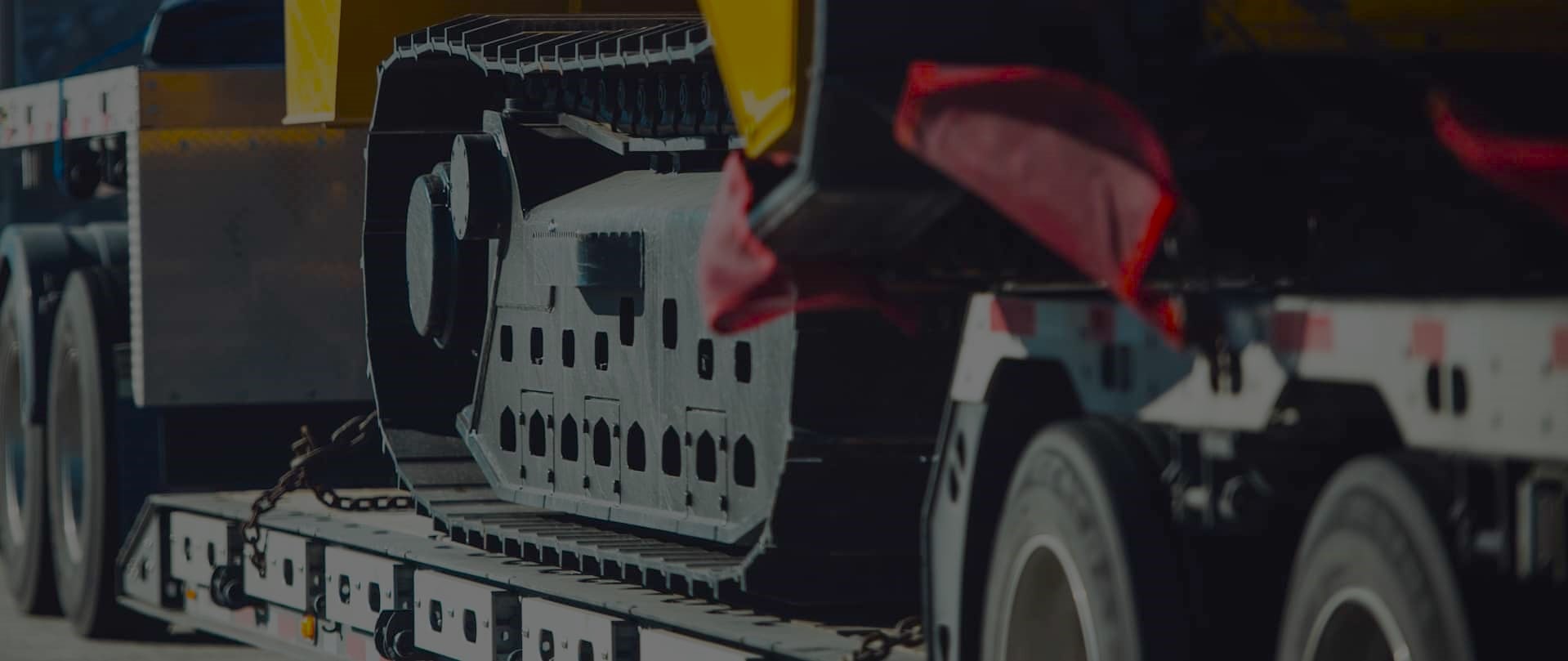
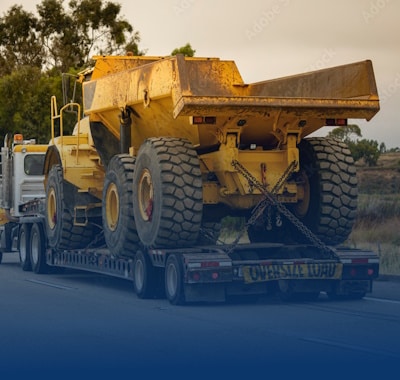
Moving heavy equipment on a flatbed is not just “tie it down and go.” Load securement is a safety system made of the machine, the trailer, and the tie-down gear working together so the equipment cannot slide, tip, bounce, or rotate during braking, turning, and rough road vibration.
If you’re building a site-wide safety system, this guide fits inside the bigger heavy haul safety management approach, because securement is where planning becomes real-world risk control.
Start with the right mindset: “prevent movement,” not “add straps”
A dozer doesn’t become safe because it has chains on it. It becomes safe when all possible movement paths are blocked:
- Forward movement during hard braking
- Side movement during turns or lane changes
- Rearward movement during acceleration or downhill push
- Vertical bounce on dips, bridge joints, and rough surfaces
When you think in “movement directions,” your securement choices become hookup logic, not guesswork.
Step 1: Confirm weight, tie-down points, and trailer match
Before any chain goes on, confirm three facts:
The equipment is within trailer limits
The trailer must be rated for the machine weight + attachments + fuel + extras. A trailer that is technically “close enough” turns into flex, sway, and securement stress.
The tie-down points are real tie-down points
Manufacturers often provide lift and tie-down lugs for a reason. Hooking chains to weak rails, steps, or thin brackets creates failure risk the moment the machine bounces.
The deck and contact surface are stable
A flatbed deck that is wet, dusty, oily, or smooth reduces friction. Less friction means your chains must do more work, and your margin gets smaller.
Step 2: Use blocking, chocks, and friction to reduce chain stress
Chains hold best when the load is already “not going anywhere.”
- Chock tracks or tires to stop rolling.
- Block against forward slide where practical (especially for wheeled equipment).
- Use friction mats under contact points when allowed and appropriate.
- Make sure blocks are captured (they can’t shoot out under vibration).
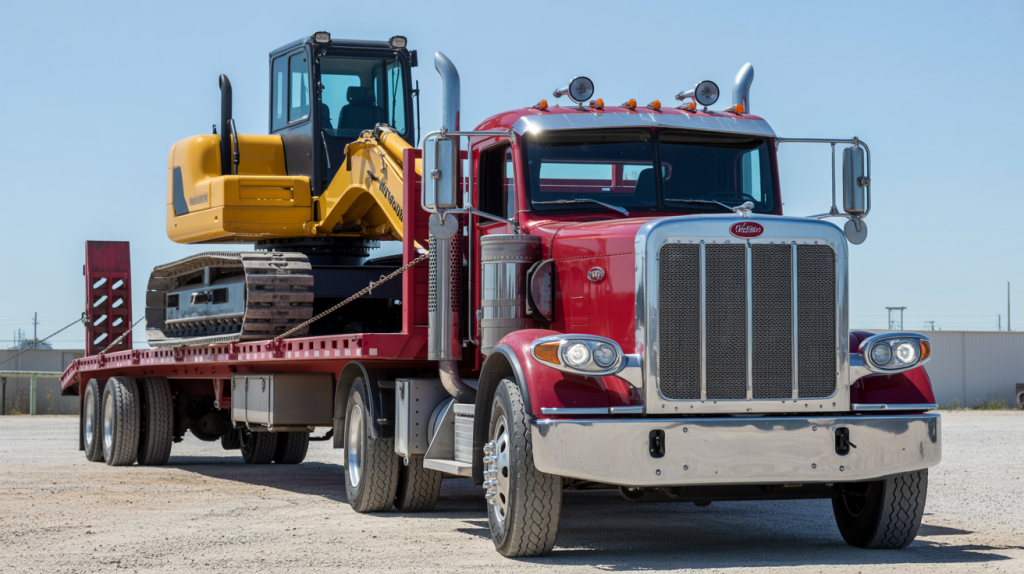
This matters because a machine that resists sliding naturally puts less shock-load into your tie-downs, which improves stability and gear life.
Step 3: Choose tie-down gear by Working Load Limit, not appearance
A thick-looking chain is not automatically stronger. The real number is the Working Load Limit (WLL) of each component:
- Chain grade and size
- Binders
- Hooks and attachments
- Anchor points on the trailer
Your securement is only as strong as its weakest rated part, because the system fails at the first weak link.
Angle matters more than people realize
A tie-down that pulls mostly sideways is not creating much downward force. A tie-down that pulls down-and-out helps “seat” the machine to the deck and reduces bounce.
Step 4: Use a clean “four-corner” securement baseline
For most heavy machinery, a simple baseline strategy is:
- Four primary tie-downs, one near each corner of the machine
- Tie-downs pulling outward and downward to oppose side movement and bounce
- Extra securement for attachments that can articulate or swing
This baseline is popular because each chain has a job, and the load stays balanced.
If you want to go beyond the basics (especially for unusual shapes and high center-of-gravity cargo), use ideas from modern securement strategies for oversized cargo to improve stability without overcomplicating the setup.
Step 5: Secure attachments like they are separate loads
Buckets, blades, booms, and forks do not behave like the main machine body. An attachment can bounce or pivot, which creates surprise movement.
Good attachment control usually includes:
- Lowering the attachment to a stable position
- Using an additional tie-down or restraint
- Preventing swing or drift during vibration
Attachments cause many roadside issues because the machine “looks chained,” but the moving part is not actually locked.
Step 6: Protect your tie-downs from cutting, crushing, and edge damage
Securement fails most often at stress points:
- Chain rubbing sharp corners
- Straps cutting on edges
- Hooks side-loading against angled steel
- Binder handles vibrating loose
Use edge protection, proper hook placement, and keep binders positioned so vibration can’t work them open.
Step 7: Do a “shock test” before leaving the yard
Before you roll, do a simple real-world check:
- Walk the load and push/pull where safe
- Confirm nothing shifts, rocks, or rattles
- Ensure the machine feels “seated” on the deck, not floating
Then re-check:
- After the first few miles
- After your first stop
- Whenever you hit rough roads, wind, or hard braking
This kind of routine fits naturally inside a larger project risk plan, like the one in risk management strategies for heavy haul projects, because a securement check is a risk-control habit, not an inconvenience.
Step 8: Make securement part of route decisions
If your route includes tight turns, steep grades, rough construction zones, or high crosswinds, your securement needs to be more conservative because forces increase.
That’s why strong securement planning pairs well with advanced route optimization techniques, since route choice changes the stress the load will experience.
Common securement mistakes that look “fine” until they fail
- Using tie-down points that bend under stress
- Forgetting to secure the attachment
- Ignoring WLL because the chain “seems strong”
- Poor tie-down angles that don’t add downward force
- Not re-tensioning after the load settles
- Letting chains rub sharp edges for hours
Most failures are not dramatic at the start. They are slow, quiet loosening, until one moment makes it obvious.
Quick field checklist (simple, repeatable, reliable)
- Equipment weight confirmed
- Trailer rating and deck condition confirmed
- Four-corner securement baseline applied
- Attachment restrained
- WLL and gear condition verified
- Sharp edges protected
- Binders positioned to resist vibration
- Re-check plan set for early miles and first stop
Conclusion
Securing heavy equipment on a flatbed works best when you treat it as a movement-control system, not a tying routine. The machine stays safe when tie-down points are correct, WLL is respected, attachments are restrained, and re-checks are built into the trip. When this process becomes consistent, it protects the public, the driver, and the equipment, and it also supports a stronger safety reputation for your heavy haul operation.