How to Choose the Right Trailer for Your Heavy Haul Needs
Freedom Heavy Haul can offer expedited Pickup and Delivery for any size shipment anywhere in the USA. Contact us today for No Hassle, No Pressure Pricing.
Selecting the correct trailer for a heavy haul job is a strategic decision that affects safety, permitting, cost, and overall project success. The trailer is not just a platform for the load, it determines how the cargo behaves on the road, how weight is distributed, and how easily the shipment can move through real-world infrastructure.
Understanding trailer selection is a key part of heavy haul planning, as it connects directly to axle configuration, route feasibility, and infrastructure limitations.
Begin with the cargo realities, not the equipment list
Every heavy haul move starts with understanding what you are moving. The trailer must solve the cargo’s physical challenges, not just carry it.
Key questions to define early:
- How heavy is the cargo, and where is the weight concentrated?
- How tall and wide is the cargo once loaded?
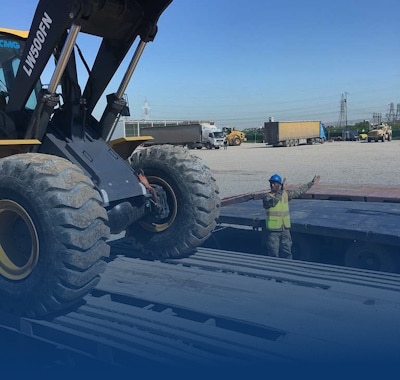
- Can the cargo roll or drive onto the trailer, or does it require lifting?
- Does the cargo have irregular shapes that affect securement?
Answering these questions early prevents choosing a trailer that looks suitable but creates problems during permitting or loading.
Match trailer type to the problem you are solving
Different trailers exist because different cargo problems exist. Choosing correctly means matching the trailer design to the primary constraint.
Low-deck and RGN trailers for height and loading control
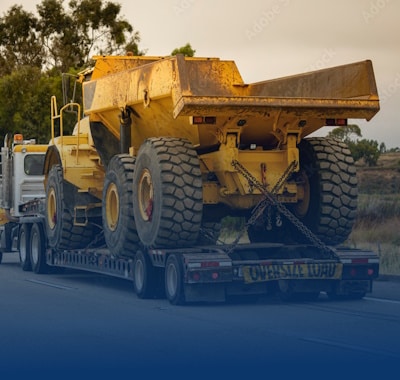
When height reduction is the main goal, low-deck options provide better clearance and stability. They are commonly used for tall equipment such as cranes, dozers, and large excavators, especially when driving equipment onto the deck is preferred.
Step deck trailers for versatile heavy equipment
Step decks work well for cargo that exceeds standard flatbed height limits but does not require the lowest possible deck. They offer flexibility for many types of construction and industrial machinery.
Extendable and modular trailers for long or unusual cargo
Some freight cannot be shortened or disassembled. Long beams, blades, or industrial assemblies often require adjustable trailers designed for dimensional freight. If length or geometry is the dominant challenge, review trailer options built for dimensional cargo transport.
Flatbeds for stable, low-profile loads
Flatbeds are appropriate when cargo height is manageable and securement points are accessible. However, they require careful planning for weight distribution and tie-down angles.
Trailer choice must align with axle strategy
The trailer does not work alone. Axles determine whether the weight is legal, controllable, and infrastructure-friendly.
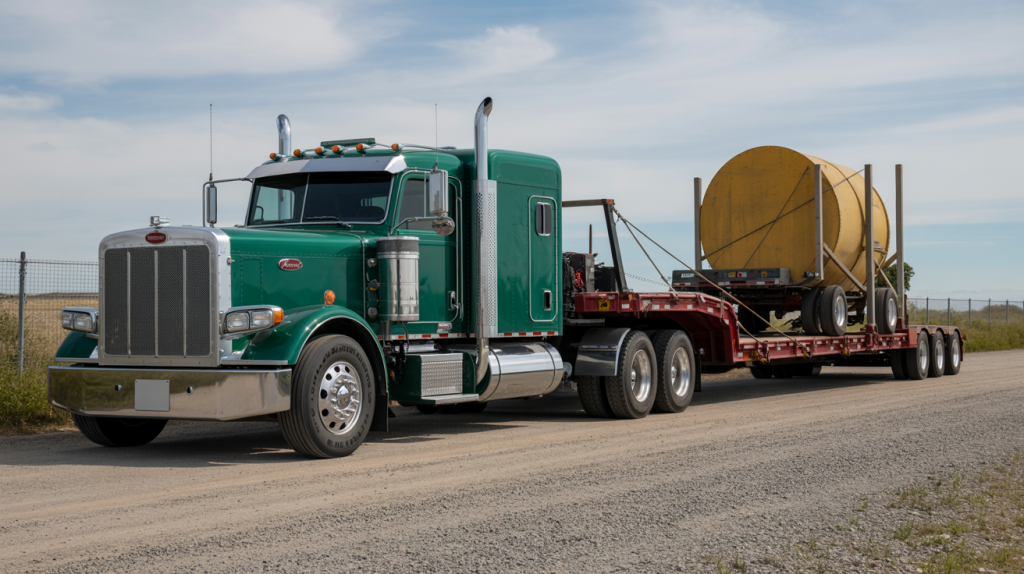
Before finalizing a trailer, understand how the axle layout affects performance by reviewing axle configuration and load optimization strategies. A trailer that cannot support proper axle spacing or weight balance can trigger permit issues or unsafe handling.
Plan weight distribution before permits, not after
A trailer that carries weight incorrectly can fail inspections even if the total weight is legal. The center of gravity, heavy-end placement, and axle spacing determine how weight is shared across the rig.
For complex loads, use axle weight distribution planning methods to decide cargo placement on the deck before requesting permits. This prevents costly reconfiguration later.
Route constraints often dictate the trailer decision
Infrastructure limits frequently decide which trailer is possible, even more than cargo preference.
Low bridges, utility lines, and urban corridors can restrict height, while older bridges may limit axle loads or spacing. If clearance is a concern, review how oversized loads manage low-clearance routes to avoid unexpected detours or escort complications.
For heavy structural loads, bridge behavior matters. Planning should include bridge engineering considerations in heavy haul transport, especially for overweight moves.
A practical decision framework for real projects
Use this sequence when quoting or planning a heavy haul job:
- Define cargo dimensions, weight, and loading method.
- Identify the primary constraint (height, weight, length, or loading access).
- Shortlist trailer types that solve that constraint first.
- Confirm axle configuration supports the weight distribution plan.
- Validate route infrastructure compatibility.
- Finalize securement and loading logistics.
Incorrect trailer selection can lead to permit delays, route detours, axle overload violations, and equipment damage. Professional heavy haul carriers evaluate cargo geometry, axle configuration, and infrastructure constraints before selecting equipment to reduce risk and avoid costly disruptions.
This approach reduces guesswork and keeps planning consistent across projects.
Common mistakes when selecting heavy haul trailers
Many heavy haul delays come from early equipment decisions that ignored real-world constraints.
Typical errors include:
- Choosing a trailer based on equipment type instead of actual measurements
- Ignoring attachments that change height or weight balance
- Assuming loading access without verifying site conditions
- Finalizing permits before confirming weight distribution
- Overlooking clearance and bridge limitations until dispatch
Avoiding these mistakes saves time, cost, and client trust.
If you are unsure which trailer is best for your equipment, a heavy haul specialist at Freedom Heavy Haul can review cargo dimensions, axle requirements, and route constraints before transport begins.
Conclusion
Choosing the right trailer for heavy haul transport is an engineering decision, not a routine selection. The correct trailer improves stability, simplifies permitting, protects infrastructure, and reduces operational stress. When trailer selection aligns with cargo characteristics, axle planning, and route constraints, heavy haul projects become predictable instead of reactive. The strongest heavy haul operations treat trailer choice as the foundation of the entire move, not just the starting point.