Expert Tracked Loader Transport: Logistics and Restrictions
Freedom Heavy Haul can offer expedited Pickup and Delivery for any size shipment anywhere in the USA. Contact us today for No Hassle, No Pressure Pricing.
Moving heavy machinery is a complex task. It demands specific knowledge and careful planning. We know that getting your equipment from one site to another is vital for your projects.
Our experience ensures your valuable machinery arrives safely and on schedule. We handle the details so you can focus on your work.
This guide offers a clear path through the entire process. We cover compliance needs and best practices for delivery.
Our approach combines years of machinery handling with current regulatory knowledge. We provide actionable guidance for construction and industrial operations.
We focus on practical solutions for real-world challenges. Our priority is maintaining the highest safety standards for your equipment.
Understanding Heavy Equipment Logistics and Compliance
Navigating the legal framework for moving industrial machinery demands precision and foresight. Every project operates within a complex web of rules. Our approach ensures your heavy equipment move is seamless and fully compliant from start to finish.
We treat compliance as the backbone of safe operations. It protects your investment and the public.
Key Compliance Regulations and Safety Standards
Federal and state regulations set the baseline for safety. These requirements cover weight, dimensions, and necessary permits. Our team stays current with all evolving standards.
We implement robust risk management systems. These procedures identify potential hazards before they become problems. This proactive approach safeguards both your equipment and personnel.
True compliance isn’t just about avoiding penalties—it’s about creating a culture of safety that protects your assets and your team.
Overview of Industry Best Practices
Beyond legal requirements, we adhere to proven industry best practices. This includes documented safety protocols and regular equipment inspections. We follow strict guidelines for construction site operations.
Effective communication and proper training are non-negotiable. These practices ensure every stakeholder is informed. This level of detail is what separates a good move from a great one.
Preparing Your Equipment for Transport
The initial phase of equipment readiness establishes safety protocols that protect both personnel and assets. We approach each project with systematic precision, ensuring every component receives proper attention.
Documenting Risk Assessments and Load Requirements
Comprehensive documentation forms the backbone of our preparation process. We create detailed risk assessments that outline equipment specifications and potential hazards.
These assessments include precise weight calculations and loading requirements. Proper documentation supports permit applications and demonstrates our commitment to safety standards.
Thorough risk assessment documentation isn’t just paperwork—it’s the blueprint for incident-free equipment movement.
Outfitting Sites with Essential PPE and Tools
Every construction site requires proper safety equipment before operations begin. We ensure all personnel have complete PPE including hard hats and high-visibility vests.
Our site preparation includes thorough equipment inspection and component securing. We maintain detailed records of all safety measures implemented.
| Preparation Step | Purpose | Required Tools |
|---|---|---|
| Equipment Inspection | Identify potential issues | Checklists, measuring tools |
| Component Securing | Prevent damage during movement | Straps, covers, fasteners |
| Site Assessment | Ensure safe loading conditions | Levels, measuring tapes |
| PPE Distribution | Protect personnel | Safety gear inventory |
This meticulous approach ensures every project begins with optimal conditions for success.
Mastering Tracked Loader Transport: Logistics and Restrictions
Successfully moving industrial machinery hinges on precise preparation. We focus on the critical details that ensure a smooth operation from start to finish.
Our process begins with a deep understanding of your machinery’s specific needs.
Understanding Load Limits and Equipment Specifications
Every project starts with precise measurements. We document the exact weight and dimensions of your equipment. This data is the foundation for all subsequent decisions.
We carefully assess the total weight of your machinery, including any attachments. This calculation is vital for selecting the right trailers and ensuring compliance with legal limits.
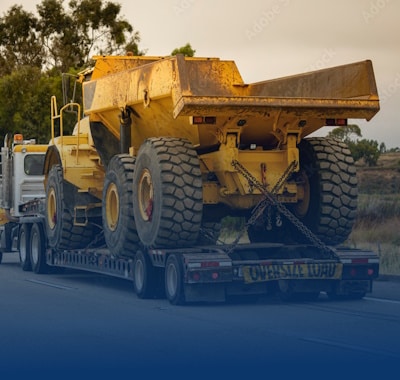
Standard trailers often cannot accommodate large industrial machines. We utilize specialized equipment like lowboy or RGN trailers designed for heavy loads.
Accurate specifications are the first step toward safe and compliant machinery movement.
Legal limits for weight and size are strictly enforced. Exceeding standard dimensions requires careful planning and proper permits. Our team manages these details for you.
Securement is non-negotiable. We ensure your equipment is fastened according to the highest safety standards. This protects your valuable machinery throughout its journey.
How to Safely Load and Unload Heavy Equipment
Proper loading and unloading techniques are fundamental to protecting your capital investment. This phase presents the highest risk for damage to your machinery. We implement a rigorous process focused entirely on safety.
Step-by-Step Loading Process for Tracked Loaders
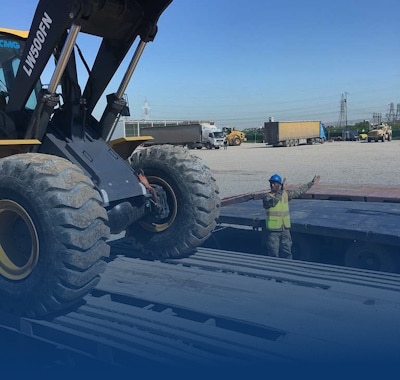
Our loading procedure begins with clear role assignment. An operator drives the equipment while a spotter provides guidance. This teamwork is essential for safe ramp movement.
We meticulously clean the ramp and trailer deck before any movement. This ensures maximum traction for the heavy equipment. We select level, stable ground for the entire operation.
The machine’s center of gravity shifts significantly during ascent. This is the most hazardous part of the process. We maintain slow, controlled movement onto the trailer.
Safe Unloading Procedures and Final Inspections
Unloading begins with a thorough site assessment. We verify the area is clear and the ramp is clean. Any load shift requires a custom unloading plan before proceeding.
We release securing components methodically. The process starts from the rear corners. This careful approach prevents sudden shifts.
A final inspection covers all equipment, the trailer, and anchor points. We document the condition of every component. This completes the transfer cycle.
| Safety Factor | Loading Phase | Unloading Phase |
|---|---|---|
| Primary Focus | Controlled ascent & positioning | Stable descent & ground transition |
| Critical Check | Ramp/deck cleanliness | Load shift assessment |
| Key Personnel | Operator + Spotter | Operator + Spotter |
| Weight Management | Forward distribution on deck | Monitoring center of gravity |
This systematic approach ensures every transfer meets our highest standards for protection and efficiency.
Optimizing Route Planning and Permit Applications
Careful route analysis prevents costly delays and ensures regulatory compliance. We approach each project with detailed pre-transport evaluation.
Our team maps every journey with precision. This protects your valuable equipment investment.
Mapping the Best Routes for Heavy Machinery
We conduct comprehensive analysis of potential obstacles. This includes low-clearance overpasses and bridge weight limits.
Our route planning evaluates terrain challenges and road conditions. We select paths that minimize exposure to difficult driving situations.
Bridge structures receive special attention. We verify weight capacities and clearance dimensions for safe passage.
Securing Oversize, Overweight, and Local Permits
Permit applications require specific knowledge of state regulations. Our team handles all necessary documentation.
We understand that requirements vary significantly by jurisdiction. Weight, width, and height limits differ across regions.
When escort vehicles are mandated, we coordinate certified operators. These professionals understand specific protocols.
All vehicles carry required signage and lighting. This ensures full compliance with local standards.
Managing On-Road Safety and Regular Inspections
Maintaining vehicle integrity during transit demands rigorous attention to detail and scheduled checkpoints. We implement comprehensive safety protocols that protect both personnel and valuable cargo. Our approach ensures every journey meets the highest standards.
Conducting En Route Checks and Inspections
We follow strict industry standards for en route verification. Our schedule includes mandatory stops within the first 50 miles. Additional checkpoints occur every three hours or 150 miles.
Driver changes trigger complete vehicle assessments. We document all findings meticulously. This systematic approach prevents potential issues.
Maintaining Vehicle and Trailer Integrity
Pre-departure inspections cover all critical systems. We verify tire condition and pressure levels. Brake functionality receives special attention due to heavy loads.
Lighting systems undergo thorough testing. We confirm all tie-down points meet requirements. These measures reduce accident risks significantly.
| Inspection Type | Frequency | Key Components | Documentation |
|---|---|---|---|
| Pre-Departure | Before each journey | Tires, brakes, lights, securement | Comprehensive checklist |
| En Route | Every 3 hours/150 miles | Load shift, tire pressure, components | Digital log entry |
| Driver Change | At each transition | Full vehicle assessment | Detailed report |
| Weather Response | As conditions change | Road traction, braking distance | Condition assessment |
Weather conditions receive constant monitoring. We adjust travel plans when necessary. This proactive strategy ensures optimal safety.
Leveraging Logistics Providers for Expert Equipment Transport
Successful equipment delivery requires strategic partnerships with specialized providers. We select partners with proven expertise in heavy machinery handling. Their established carrier relationships form the foundation of reliable operations.
Strategies for Coordinated Heavy Equipment Logistics
Our approach begins with comprehensive planning. We work with providers who understand permit requirements and documentation needs. This ensures full compliance throughout the entire process.
Strong carrier relationships guarantee access to appropriate trailers and experienced drivers. These connections maintain project timelines through reliable service. Our team coordinates all aspects from origin to final destination.
Advanced monitoring systems provide real-time updates on shipment status. This allows proactive management of any potential delays. Stakeholders receive continuous communication about progress.
Strategic planning identifies obstacles before they impact delivery. Custom solutions address unique project challenges. This includes difficult terrain access and time-sensitive requirements.
Effective coordination minimizes equipment downtime through precise scheduling. Machinery arrives exactly when needed at the project site. This careful management protects your investment and keeps operations moving forward.
Wrapping Up Your Tracked Loader Transport Project
Final project wrap-up procedures are essential for confirming successful equipment delivery and operational readiness. We conduct comprehensive final inspections that verify machinery condition and complete all necessary documentation.
Our team examines the delivered heavy equipment, checking for any issues and confirming all components are present. This ensures your machinery is ready for immediate deployment at the construction site.
We maintain detailed records from initial planning through final delivery. This documentation demonstrates compliance and supports future operations. Proper closure means confirming all permits are finalized.
Successful project completion depends on meticulous preparation and attention to detail. When safety and reliability guide every decision, your construction operations achieve better outcomes.
FAQ
What safety standards govern heavy equipment transport?
We adhere to strict federal and state regulations, including Department of Transportation rules. Our team ensures full compliance with weight limits, securing requirements, and traffic laws for every project.
How do you prepare a tracked loader for transport?
Our process includes thorough cleaning, fluid checks, and securing all movable parts. We document the machine’s condition and ensure proper weight distribution for safe loading onto specialized trailers.
What permits are needed for oversized equipment?
Oversize and overweight moves require specific permits from each state we travel through. Our logistics team handles all permit applications, route surveys, and escort vehicle coordination.
How do you ensure safe loading and unloading?
We use certified ramps, heavy-duty trailers, and experienced operators. Our crew conducts site assessments to verify ground conditions and follows strict protocols for every load cycle.
What factors affect route planning for heavy haul?
We analyze road conditions, bridge heights, weight capacities, and traffic patterns. Our advanced planning accounts for weather, time of day, and potential obstacles to ensure smooth delivery.
Why choose a professional logistics provider?
Professional carriers bring expertise in compliance, risk management, and equipment handling. We provide comprehensive solutions that protect your investment and ensure timely project completion.