
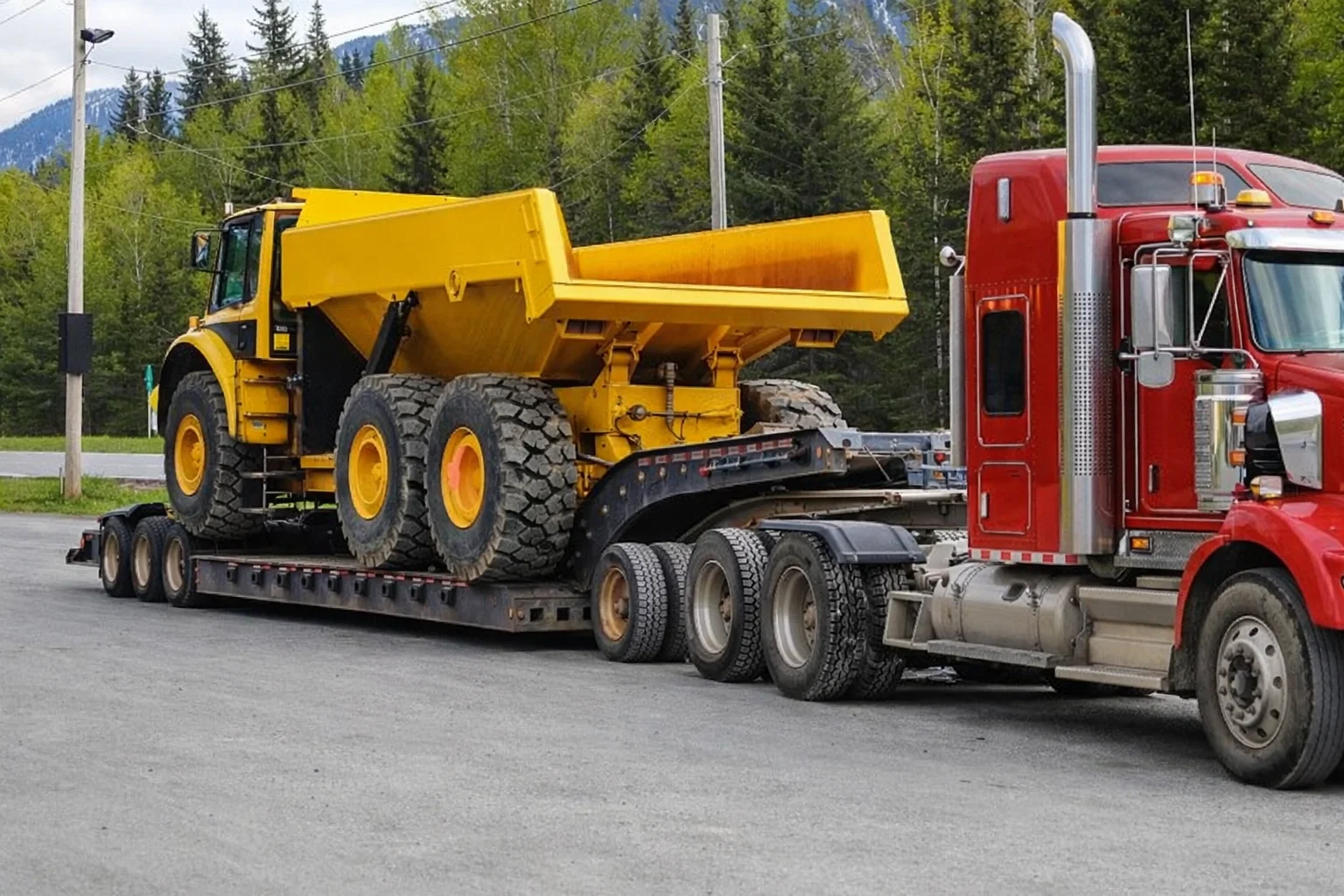
Heavy Haul Transport, Shipping, Hauling & Movers - Freedom Heavy Haul
Looking for reliable heavy haul transport? You’ve found the right team. Freedom Heavy Haul specializes in oversized equipment transport that delivers on time, every time—without the headaches, delays, or damage that plague cheaper carriers. Whether you’re moving a single excavator across state lines or coordinating a multi-load equipment relocation, our heavy haul trucking team handles every detail from pickup to delivery.
Your heavy machinery shipping needs aren’t typical. Neither are we. From 100-ton excavators to 14-foot-wide bulldozers, our heavy equipment hauling services move the unmovable across all 48 states. We specialize in loads that standard carriers turn down — overwidth, overheight, super loads, and loads requiring multi-axle configurations.
We manage every detail of your construction equipment transport—permits, escorts, route planning, and DOT compliance. You get one point of contact. One invoice. Zero stress. Our permit team has established relationships with state DOT offices in all 48 contiguous states, which means faster approvals and fewer delays.
Our heavy haul trucking drivers aren’t just licensed—they’re craftsmen. Each load is secured using military-grade tie-downs and monitored 24/7 until delivery. Every shipment includes a pre-load inspection, rigging verification, and post-delivery condition report.
Get your oversize freight transport quote in minutes. What we quote is what you pay—no surprise “accessorial charges” on delivery day. Our pricing includes permit fees, escort coordination, and fuel surcharges upfront.
Our heavy load transportation team has direct relationships with state DOT offices nationwide. Permits that take competitors 2 weeks? We get them in 3–5 days. For loads in multiple states, we coordinate all permits simultaneously to eliminate cascading delays.
Call (866) 305-6018 right now. A live transportation expert answers—not a voicemail system or overseas call center. We’re available 7 days a week for dispatch, tracking updates, and urgent coordination.
Understanding what qualifies as a heavy haul load starts with federal legal limits. Any shipment exceeding the following thresholds requires heavy haul permitting and specialized equipment:
Super loads — typically 150,000+ lbs or over 16 feet wide — require engineering route surveys, structural analysis of bridges, and utility coordination for overhead line clearance. Freedom Heavy Haul manages super load transport with in-house permit specialists who have coordinated moves up to 250 tons.
Federal bridge formula law limits how much weight each axle group can carry. For most loads, this means:
For heavy loads, we calculate the optimal axle spread and trailer configuration to stay within bridge formula compliance — reducing permit costs and avoiding load restrictions on specific roads.
Choosing the right trailer isn’t just about capacity — it’s about load geometry, clearance requirements, and loading method. Here’s how we match your equipment to the right trailer:
The go-to trailer for heavy equipment hauling. Standard lowboys drop to 18–24 inches of deck height, clearing most height restrictions while carrying loads up to 80,000 lbs on a standard configuration. RGN (Removable Gooseneck) trailers allow drive-on/drive-off loading for self-propelled equipment — ideal for excavators, bulldozers, and wheel loaders. We operate both fixed-neck and detachable gooseneck lowboys in standard (48′), stretch (53′), and multi-axle configurations for loads exceeding 100,000 lbs.
When height matters more than weight, step decks provide a lower deck height than standard flatbeds (typically 10–11 feet loaded vs. 13–14 feet) without the cost of a specialized lowboy. Best for equipment up to 12 feet tall and 48,000 lbs that can be forklift- or crane-loaded.
Standard flatbeds handle loads up to 48,000 lbs at legal height (under 13.5 feet loaded). Ideal for equipment that doesn’t need the low-profile of a lowboy — skid steers, compact excavators, and materials. Fast availability and lower cost when equipment dimensions allow.
For loads over 100,000 lbs or with unusual length requirements, we deploy hydraulic platform trailers (also called Goldhofer or Scheuerle trailers) with 8 to 24+ axle lines. These modular trailers can be configured to match any load geometry and spread weight across dozens of axle points for bridge compliance.
Plus: Cranes, industrial machinery, agricultural equipment, mining vehicles, generators, transformers, and anything else that requires specialized heavy haul transport.
Every day your over-dimensional transport sits in a terminal is money down the drain. Delayed equipment means idle crews, pushed deadlines, and penalty clauses on construction contracts. Our average transit time beats industry standards by 30%—because we plan routes that work, not routes that are easiest. We identify permit bottlenecks before they happen and pre-coordinate with state DOTs to avoid multi-day approval queues.
Heavy equipment transport shouldn’t require a dozen phone calls to a dozen vendors. Our team coordinates:
Freedom Heavy Haul operates across all 48 contiguous states. We have established carrier relationships and permit contacts in every state, enabling multi-state hauls with seamless permit handoffs. From Georgia to California, Florida to Washington, our network covers every major construction corridor in the country.
Every heavy haul driver on our network holds a valid CDL-A with hazmat and oversize endorsements. We require a minimum 3-year verifiable heavy haul experience before any driver handles an oversized load. All carriers in our network carry DOT-compliant cargo insurance with minimums of $250,000 per occurrence. Load securement follows FMCSA Chapter 4 — working load limits, tie-down angles, and blocking specifications are verified before every departure.
Tell us what you’re moving, where, and when. We’ll give you a firm quote — not a range, not an estimate — within 2 hours during business hours. Call (866) 305-6018 or fill out the quote form above.
Any shipment exceeding standard legal dimensions or weight — typically over 80,000 lbs GVW, 8.5 ft wide, 13.5 ft tall, or 53 ft long — qualifies as heavy haul and requires specialized permits, route planning, and equipment.
Pricing depends on load weight, dimensions, distance, and permit requirements. Most heavy haul loads range from $2,500 to $15,000+. Permit fees, escort vehicles, and fuel surcharges are included in our all-in quotes. Call (866) 305-6018 for a free quote tailored to your shipment.
Yes. Freedom Heavy Haul manages all oversize/overweight permits, route surveys, and escort vehicles for every shipment. Permit coordination is included in your quote — no surprise fees or third-party permit brokers.
Transit time depends on distance and permit processing. Most heavy haul loads ship within 3–7 business days. Expedited options are available for time-critical equipment moves. Super loads requiring engineering surveys may require 1–2 additional business days for permit approval.
Excavators, bulldozers, cranes, generators, transformers, industrial tanks, construction equipment, and any oversized or overweight machinery. If it’s heavy and needs to move, we move it.
All 48 contiguous states. We have active permit contacts and carrier relationships in every state, including states with complex permit requirements like California, New York, and Texas.
A super load exceeds the maximum permitted dimensions for standard oversize transport — typically over 16 feet wide, 150,000+ lbs, or requiring a bridge structural analysis. Yes, we handle super loads. Our permit team coordinates engineering surveys, utility clearances, and state police escorts for super load moves nationwide.
With the right multi-axle trailer configuration, we’ve moved loads exceeding 250 tons. There’s no hard ceiling — weight capacity is determined by trailer configuration, route analysis, and bridge formula compliance. Contact us with your load specs and we’ll tell you exactly what’s needed.
Generally yes. Equipment should be drained of fluids (or secured against leaks), booms and attachments secured, and any protruding components removed or tied down. We’ll walk you through the prep checklist when you book so nothing causes a delay at pickup.
All loads are covered by a minimum $250,000 cargo insurance policy. We conduct pre-load and post-delivery condition checks and provide full documentation. In the rare event of damage, our claims team responds within 24 hours.
Any shipment exceeding standard legal dimensions or weight — typically over 80,000 lbs, 8.5 ft wide, 13.5 ft tall, or 53 ft long — qualifies as heavy haul and requires specialized permits, route planning, and equipment.
Pricing depends on load weight, dimensions, distance, and permit requirements. Most heavy haul loads range from $2,500 to $15,000+. Call (866) 305-6018 for a free quote tailored to your specific shipment.
Yes. Freedom Heavy Haul manages all oversize/overweight permits, route surveys, and escort vehicles for every shipment. Permit coordination is included in your quote — no surprise fees.
Transit time depends on distance and permit processing. Most heavy haul loads ship within 3–7 business days. Expedited options are available for time-critical equipment moves.
Excavators, bulldozers, cranes, generators, transformers, industrial tanks, construction equipment, and any oversized or overweight machinery. If it is heavy, we move it.