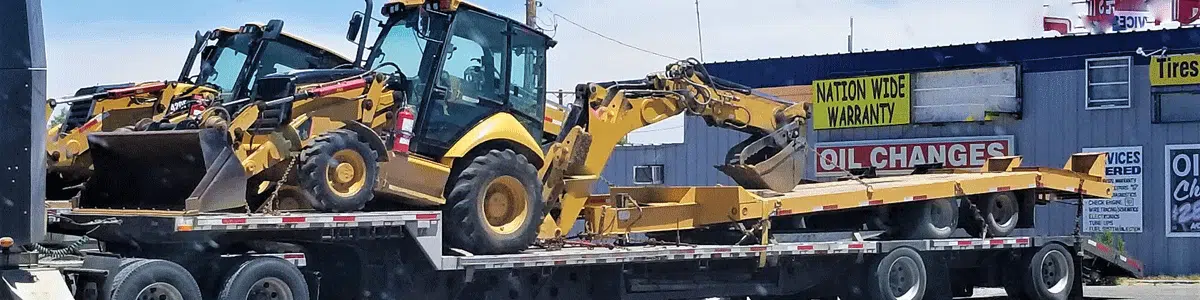
Moving oversized or overweight equipment across state lines isn’t like booking a standard freight shipment. It involves permits, route planning, specialized equipment, and coordination that most carriers can’t handle. Here’s exactly how the process works when you work with Freedom Heavy Haul — from your first call to final delivery.
Everything starts with a conversation. Call us at (866) 305-6018 or fill out our online quote form. To get you an accurate number fast, we’ll need:
For standard loads, you’ll typically have a quote within 2–4 hours. More complex moves requiring route surveys or superload permits may take 24–48 hours to price accurately.
Once we have your load details, our dispatch team determines the right trailer and truck configuration for the job. This isn’t guesswork — it’s a technical assessment based on your exact weight, dimensions, and the terrain of your route.
Common trailer options include:
Selecting the wrong trailer is one of the most common mistakes in heavy haul — it creates permit problems, safety risks, and delays at weigh stations. We get this right before anything else moves.
This is where heavy haul separates from standard trucking. Every state your load crosses requires its own oversize and/or overweight permit. We handle all of it:
For a typical coast-to-coast haul, this means managing 8–12 separate permit applications simultaneously. Missing or mismatched permits can result in fines, load impoundment, or being turned back at a state line.
Permits approved doesn’t mean route planning is done. Our team plans your specific travel route based on:
In some states, an approved permit specifies the exact route you must travel — deviating from it (even to avoid traffic) constitutes a violation. We plan routes that minimize detours and avoid any clearance or weight issues before wheels roll.
Most oversize loads require pilot cars (escort vehicles) to travel ahead of and/or behind the load. Requirements are state-mandated and depend on your load’s width, height, and length:
We coordinate pilot car assignments as part of your quote. You don’t need to find escorts separately — that’s handled.
On the scheduled pickup day, our driver arrives with the correct trailer and handles the loading. For equipment that drives on (RGN configuration), this means rigging a ramp and safely loading under our driver’s supervision. For craned loads, we coordinate with your crew or crane operator on-site.
Before leaving the yard, our driver:
Our dispatch team stays in contact with your driver throughout transit. If anything changes — weather, road closure, bridge inspection flagged at a weigh station — we manage the resolution and communicate updates to you directly.
You’ll have a direct contact number for your load coordinator throughout the haul. No hold music, no transfer queues, no leaving a message. If there’s an issue, you hear about it and we have a plan before you hang up.
At the destination, our driver works with your team to safely unload the equipment. For RGN loads that drive off, we manage the ramp and unloading. For craned unloads, we coordinate timing with your site crew.
After delivery, you receive:
There are a lot of heavy haul carriers. Here’s what’s different about working with us:
For standard oversize loads, 3–7 business days is usually enough time to secure permits and schedule equipment. Complex superloads requiring bridge analysis or multiple-state engineering reviews may need 2–3 weeks of lead time. Emergency moves can sometimes be accommodated with 24–48 hours notice — call us directly to discuss.
We can often work from manufacturer specifications or model numbers for standard equipment. For custom-built or modified equipment, we’ll need measured dimensions. Providing inaccurate dimensions — even slightly — can invalidate permits and create serious problems at state lines.
Yes. In many cases, disassembly is required to bring a load within legal limits and reduce permit complexity. We can advise on what disassembly makes sense and coordinate on-site disassembly crews when needed.
We have breakdown protocols and relationships with repair services along all major corridors. If a breakdown delays your delivery window, we communicate immediately and work through the resolution. Your load is never abandoned.
Yes. All Freedom Heavy Haul loads are GPS-tracked throughout transit. You’ll have a direct line to your load coordinator who can give you updates at any time — and we proactively check in at key milestones (state crossings, overnight stops, estimated arrival).
The process works because we’ve done it thousands of times. Our team knows what can go wrong — the permit timing issues, the bridge restrictions, the state line complications — and we handle all of it before it becomes your problem.
Request a free quote or call (866) 305-6018 to talk through your move with our team. We’ll tell you exactly what’s involved, what it costs, and when we can have it done.