Navigating Low Clearances With Oversized Loads: Planning Before the First Mile
Freedom Heavy Haul can offer expedited Pickup and Delivery for any size shipment anywhere in the USA. Contact us today for No Hassle, No Pressure Pricing.
Low clearances are one of the few heavy haul risks that cannot be negotiated on the road. If an oversized load meets a bridge, overpass, or utility line that is too low, the project stops instantly. Unlike axle weight or routing adjustments, clearance mistakes have no easy fixes once the load is in motion.
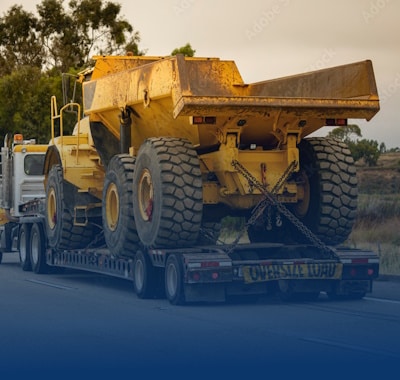
Trailer height, axle configuration, and load placement directly influence total transport height and clearance margins.
Why clearance issues are more complex than height measurements
Most people think clearance planning means measuring the load and checking bridge heights. In reality, clearance risk comes from multiple variables interacting at once.
Final transport height depends on:
- trailer deck height
- suspension ride height and air pressure
- tire size and inflation
- load geometry and center of gravity
- road crown and grade changes
- dynamic movement during braking and bumps
A load that appears compliant on paper can exceed clearance limits once real-world suspension movement and road geometry are introduced.
Understanding clearance categories in heavy haul
Clearance planning is not just about bridges. Multiple obstacles exist across a route.
Bridges and overpasses
These are fixed structures with published clearance limits. However, signage may be outdated, or resurfacing can reduce actual clearance.
Utility lines and signage
Power lines, traffic signals, and temporary construction signage can sit lower than posted standards. Utility coordination is often required for tall loads.
Tunnels and enclosed structures
Tunnels have strict height and width limits and often require special routing or engineering approval.
Temporary obstacles
Construction zones, detours, and temporary gantries can introduce unexpected clearance risks that did not exist during permit planning.
How trailer choice affects clearance risk
Trailer design directly determines how tall your load will be.
Low-deck and double-drop trailers reduce overall transport height, while flatbeds and step decks add height. Cargo placement also matters, raising the center of gravity increases total height and reduces stability.
This is why equipment planners must integrate clearance constraints into trailer selection before permits are finalized.
Clearance planning starts with load geometry, not permits
Permits are built on declared dimensions. If those dimensions are wrong, the permit becomes unreliable.

Before applying for permits:
- measure the load in transport orientation, not just factory orientation
- account for attachments, lifting points, and stacked components
- calculate total height including trailer, tires, and suspension ride height
If the load is modular or disassembled, plan multiple configurations to reduce height.
Route survey: the difference between theory and reality
A route survey is the most reliable way to identify clearance issues.
Route surveys typically include:
- bridge clearance verification
- overhead utility identification
- turning and grade evaluation
- physical drive-through checks for urban corridors
This process is closely tied to strategic heavy haul route planning, because clearance risk often dictates the route rather than the shortest distance.
Axles, load placement, and clearance interaction
Load placement changes not just weight distribution, but height and dynamic movement.
For example:
- moving a load backward may increase rear trailer ride height
- adding axles may raise the deck height slightly depending on suspension design
- uneven axle loading can change ride height during braking
That is why clearance planning should align with axle configuration and load optimization strategy instead of being treated as a separate task.
Bridge clearance is not just a height problem
Bridges are often the most critical clearance constraints, but they introduce two risks:
- Vertical clearance – the obvious height restriction
- Structural clearance – whether the bridge can physically handle the load footprint
A route may allow height but still require engineering review for structural capacity. This is where bridge engineering planning for heavy haul transport becomes necessary.
Practical techniques to reduce clearance height
Heavy haul teams often use multiple strategies to lower transport height:
- removing attachments (booms, buckets, exhaust stacks)
- rotating or reconfiguring equipment orientation
- using low-deck or double-drop trailers
- lowering air suspension pressure when safe
- removing temporary skids or lifting frames
Each inch of height reduction can expand routing options and reduce infrastructure coordination requirements.
Real-world mistakes that cause clearance incidents
Even experienced teams encounter clearance failures. Common causes include:
- relying only on published bridge heights
- ignoring dynamic suspension movement
- failing to measure after loading and securement
- overlooking temporary construction structures
- assuming utility lines meet standard height regulations
These mistakes often lead to route shutdowns, emergency detours, or costly utility coordination at the last minute.
A proactive clearance mindset for heavy haul projects
Instead of asking, “Can we fit?” ask:
- How much clearance margin do we have under worst-case conditions?
- What happens if suspension compresses during braking?
- What is our fallback route if clearance fails?
- Can the load be reconfigured to reduce height?
This mindset turns clearance from a risk into a controlled variable.
Conclusion
Navigating low clearances with oversized loads requires more than measuring a tape and reading bridge signs. Trailer selection, load placement, axle behavior, suspension dynamics, and route geometry all shape final transport height. When clearance planning is integrated with route engineering, axle optimization, and trailer design, heavy haul projects avoid stoppages, reroutes, and infrastructure conflicts. In oversized transport, clearance is not just a measurement; it is a strategic engineering constraint that must be addressed from initial project planning through execution.