Specialized Hauling Equipment Explained: Beyond the Truck and Trailer
Freedom Heavy Haul can offer expedited Pickup and Delivery for any size shipment anywhere in the USA. Contact us today for No Hassle, No Pressure Pricing.
Heavy haul transport is rarely just a truck pulling a trailer. Behind every successful oversized move is a collection of specialized equipment that controls loading, stabilizes the cargo, protects infrastructure, and keeps the project on schedule. This equipment often decides whether a move is smooth or turns into a delay, a permit revision, or a safety incident.
Specialized hauling equipment directly influences trailer design, axle configuration, route planning, and infrastructure compliance.
What counts as “specialized hauling equipment”?
In heavy haul, specialized equipment means anything beyond a standard tractor-trailer setup that is required to move oversized or overweight cargo safely.
This can include:
- loading and lifting systems
- modular axle assemblies
- support vehicles and escorts
- monitoring and control systems
- infrastructure coordination tools
Each system exists because standard freight equipment cannot safely manage the forces, dimensions, and logistics of extreme loads.
Loading and lifting systems: getting the cargo onto the trailer
In heavy haul projects, loading is often the first and most critical engineering challenge.
Cranes and lifting rigs
Large industrial components, transformers, and prefabricated assemblies often require crane lifts. These lifts must be planned to avoid structural stress and ensure the load sits correctly on the trailer.
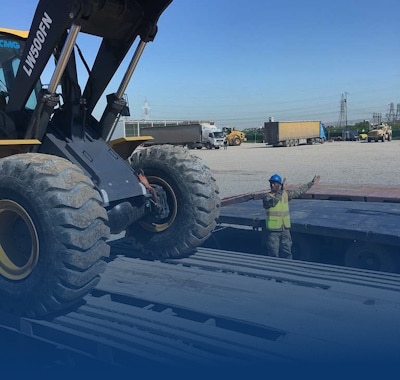
Hydraulic ramps and winch systems
For tracked equipment and rolling machinery, hydraulic ramps and winches allow controlled drive-on or pull-on loading. This reduces tipping risk and prevents uncontrolled movement during loading.
Trailer choice matters here. For example, detachable gooseneck trailers simplify loading geometry, which is why trailer selection logic in choosing the right heavy haul trailer often starts with loading method.
Modular axle systems: when weight becomes the main problem
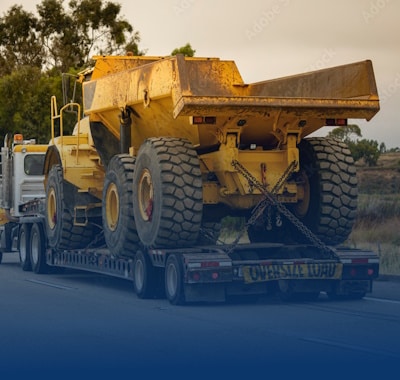
When cargo weight exceeds standard axle capacities, modular axle systems distribute weight across many contact points.
These systems:
- reduce axle loads on roads and bridges
- improve stability for extremely heavy cargo
- allow configuration changes for different routes
Understanding how axle placement changes performance is essential, which is why planning should include axle configuration and load optimization concepts before permits are finalized.
Securement and stabilization equipment: controlling movement
Oversized cargo moves differently than standard freight. Specialized securement equipment helps control that movement.
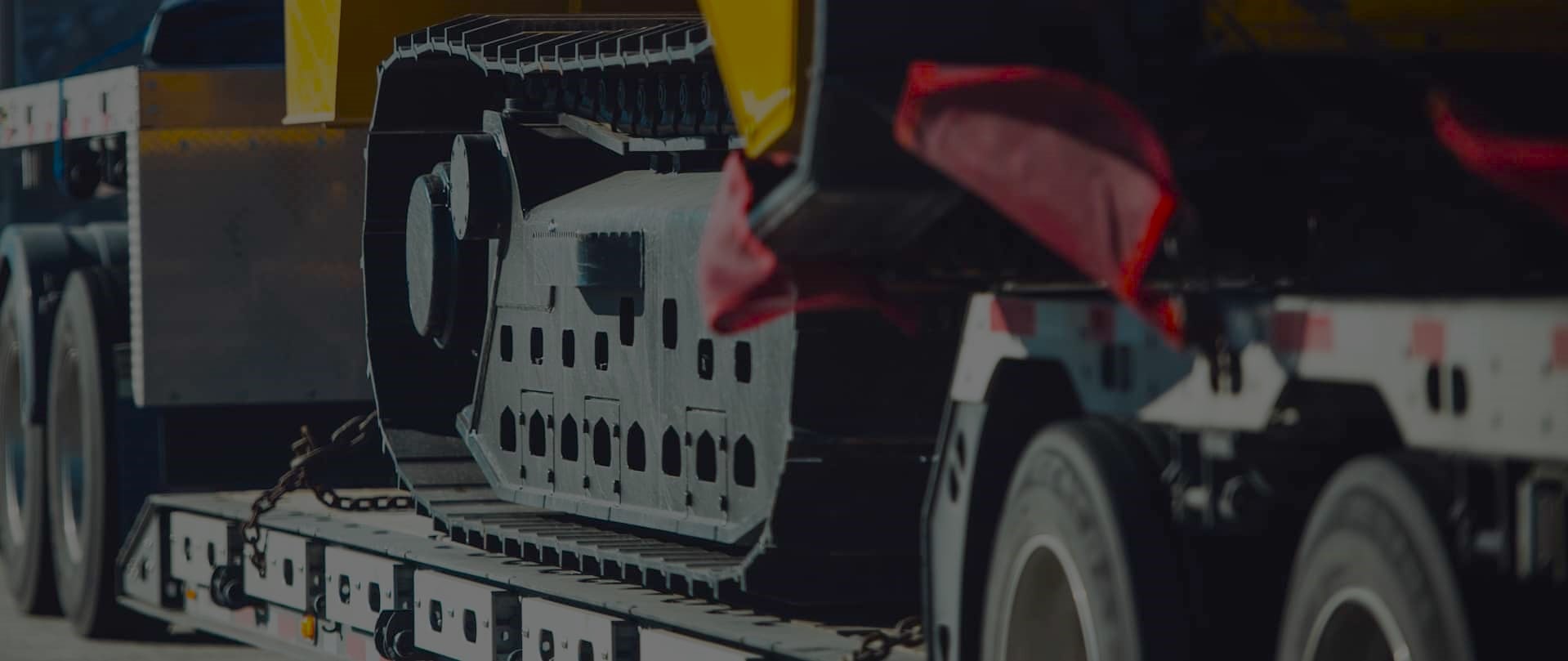
High-capacity chains and tensioners
Heavy haul chains are designed for extreme loads and high shock forces, not just static weight.
Load spreaders and cribbing
Cribbing and spreader beams distribute point loads across the trailer deck, preventing structural stress on both the trailer and the cargo.
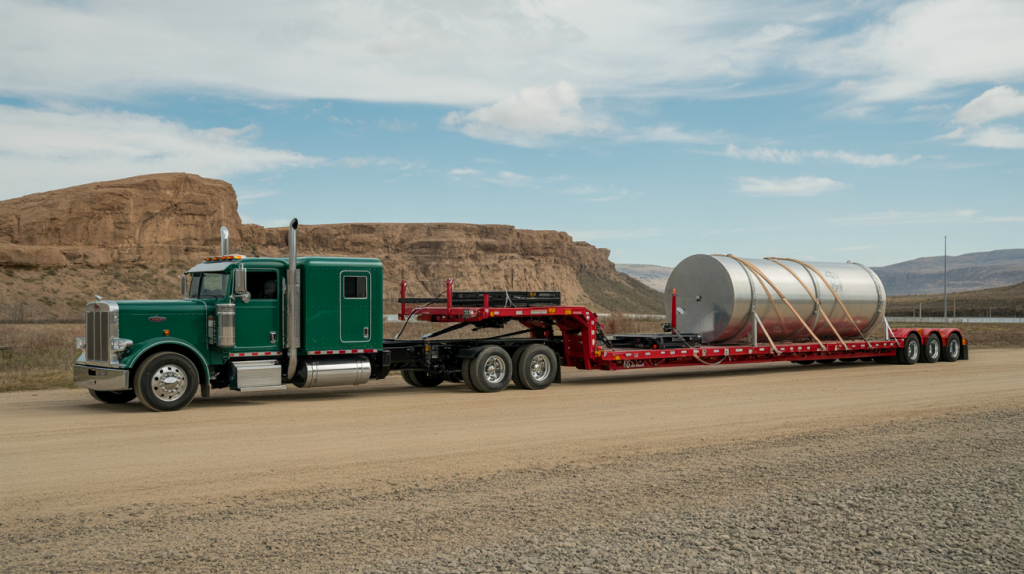
Monitoring markers and reference points
Simple tools like paint marks and reference indicators help crews detect load shift early, especially on long-distance or rough-road moves.
These tools work best when weight distribution is planned in advance using axle weight distribution planning methods, because securement cannot compensate for poor load placement.
Escort and support vehicles: the moving safety system
Support vehicles are not just a legal requirement, they are part of the operational control system.
Escort vehicles:
- manage traffic flow and lane positioning
- warn the driver about hazards and low clearances
- coordinate turns and staging in tight environments
In urban corridors and older infrastructure zones, escorts help identify clearance risks, which is why planning should also consider strategies for navigating low-clearance oversized routes before dispatch.
Infrastructure coordination tools: planning beyond the pavement
Heavy haul often interacts with infrastructure in ways standard freight never does.
Bridge analysis and route engineering
Some loads require engineering reviews of bridges, culverts, and road structures. This includes axle spacing analysis and structural modeling.
If your loads approach overweight territory, route planning should include bridge engineering considerations for heavy haul transport to avoid last-minute rerouting or permit denials.
Utility coordination equipment
Height poles, measurement devices, and communication protocols with utility companies are used to manage overhead lines, signage, and temporary adjustments.
Why specialized equipment changes project economics
Specialized hauling equipment is a strategic investment that affects project cost, schedule, and feasibility.
Using the right equipment can:
- reduce permit complexity
- shorten route approvals
- lower escort requirements
- prevent load damage and downtime
- improve customer confidence and repeat business
Using the wrong equipment can create delays that cost far more than the equipment itself.
A realistic way to think about heavy haul equipment selection
Instead of thinking in terms of “what equipment do we own,” think in terms of what problem must be solved:
- Height problem → low-deck trailers, clearance tools, utility coordination
- Weight problem → modular axles, load spreaders, axle optimization planning
- Length problem → extendable trailers, steering axles, turning simulations
- Loading problem → cranes, winches, hydraulic ramps
- Traffic problem → escorts, communication systems, traffic control planning
This mindset turns equipment selection into engineering planning.
Conclusion
Specialized hauling equipment is the hidden architecture of heavy haul transport. Cranes, modular axles, securement systems, escort vehicles, and infrastructure coordination tools work together to control forces that standard freight never encounters. When these tools are planned alongside trailers, axle layouts, and route constraints, heavy haul projects become predictable rather than reactive. In oversized transport, the equipment behind the scenes is often what determines whether a move is possible, compliant, and profitable.