The Importance of Pre-Trip Inspections for Heavy Haul Trucks
Freedom Heavy Haul can offer expedited Pickup and Delivery for any size shipment anywhere in the USA. Contact us today for No Hassle, No Pressure Pricing.
Pre-trip inspections for heavy haul trucks are the systematic checks performed before every move to confirm that the truck, trailer, and securement systems are fully ready for the load they will carry. A heavy haul shipment places far greater stress on equipment than ordinary freight, so inspection is not a formality. It is a critical safety process that protects the driver, the cargo, and everyone sharing the road.
This article supports the overall workflow explained in how heavy haul transport projects are planned and executed, because no route plan or permit can succeed without mechanically sound equipment.
Why Heavy Haul Requires Deeper Inspections
Standard trucking inspections look for general roadworthiness. Heavy haul inspections look for strength, endurance, and precision. Oversized loads multiply small problems into big failures. A weak tire, loose chain, or worn brake component becomes a serious risk when tens of thousands of pounds are involved.
Pre-trip inspections create confidence. Confidence creates safer trips.
The Core Areas Every Inspection Must Cover
A thorough inspection examines several major systems rather than a single checklist item.
Key areas include:
- tires, wheels, and hubs
- brakes and air systems
- lights and visibility equipment
- trailer structure and decking
- hydraulic and suspension components
- load securement tools
- coupling devices between truck and trailer
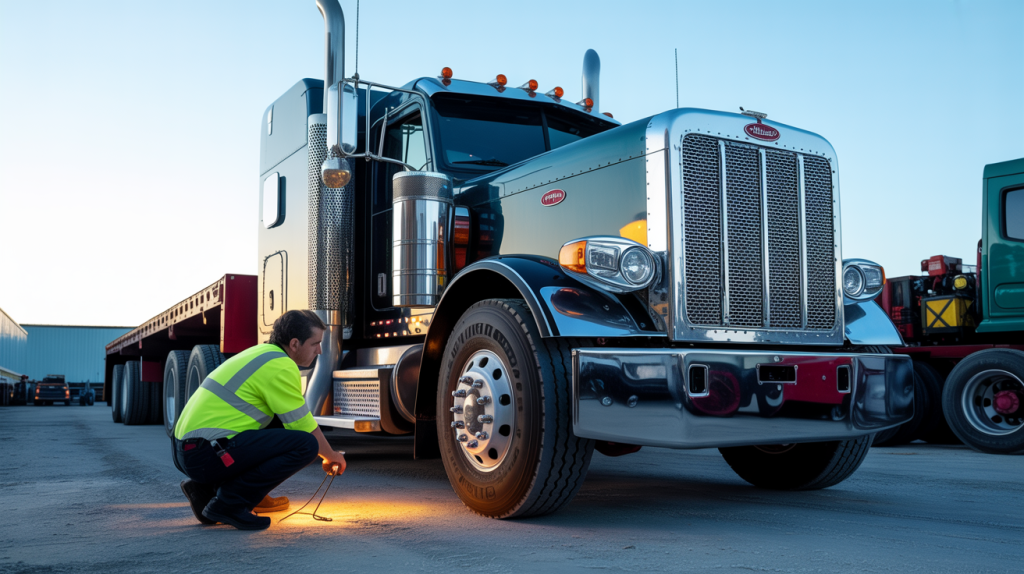
Each area supports the others. If one element fails, the entire operation becomes vulnerable.
Tires and Wheels Carry the Entire Plan
Tires on heavy haul equipment work under extreme pressure. They bear concentrated weight for long distances and often face heat buildup on highways. A small defect can quickly grow into a blowout.
Inspection of tires and wheels confirms:
- correct inflation levels
- absence of cuts or bulges
- proper lug nut torque
- alignment and bearing condition
These checks prevent roadside emergencies and keep the load stable during travel.
Brakes and Air Systems Protect Every Mile
Braking performance is crucial when a truck pulls a massive piece of equipment. Worn pads, leaking air lines, or out-of-adjustment components reduce stopping power exactly when it is needed most.
Reliable inspections verify:
- air pressure integrity
- brake lining condition
- proper adjustment of slack adjusters
- absence of leaks or damage
When brakes are confirmed healthy, the route feels safer and more predictable.
Securement Equipment Deserves Special Attention
Chains, binders, straps, and anchor points hold the cargo in place. If any of these components are weak, the entire load becomes unstable.
Pre-trip checks examine:
- condition of chains and hooks
- tension on binders
- integrity of trailer tie-down points
- placement of blocking and bracing
Good securement supports the stability goals described in calculating optimal axle weight distribution, because balanced weight must also be firmly restrained.
Lights and Visibility Keep the Move Legal
Oversized transport relies heavily on clear signaling. Drivers, escorts, and the public must see the vehicle easily. Broken lights or missing flags create confusion and increase accident risk.
Inspections confirm:
- working brake and turn signals
- properly mounted wide-load signs
- clean reflectors and markers
- functioning escort communication equipment
Visibility turns a complex move into a cooperative one.
Inspections Connect Directly to Route Safety
A carefully chosen route loses value if the equipment cannot handle it. Steep grades, long distances, and heavy traffic test every component of the truck.
Mechanical readiness works hand in hand with route planning for heavy hauls. The best route deserves the best-prepared equipment.
Catching Hazards Before They Travel
Many transportation problems originate not on the road, but in the yard. A missing pin, a weak tire, or a cracked weld may seem minor at first glance. Once the truck is moving, those small issues become serious hazards.
Regular inspections support the principles outlined in identifying potential hazards during heavy haul transportation. They remove mechanical risk from the list of unknowns.
Inspections Also Protect Schedules
For equipment owners and construction companies, a breakdown is more than an inconvenience. It can halt an entire project. Crews wait, cranes sit idle, and deadlines slip.
Pre-trip inspections reduce these costly surprises. Time spent checking equipment in advance saves far more time than roadside repairs later.
Creating a Reliable Inspection Routine
Professional heavy haul teams treat inspections as a consistent ritual rather than an occasional task.
A dependable routine includes:
- documented checklists for every trip
- trained drivers and mechanics
- scheduled maintenance between moves
- verification after loading and securement
- follow-up checks during long journeys
This structure turns safety into a habit.
How Customers Benefit From Strong Inspections
Clients rarely see the inspection process, but they feel its results. When trucks are well prepared:
- deliveries arrive on schedule
- cargo remains undamaged
- routes stay compliant
- projects proceed without disruption
Thorough inspections quietly protect the client’s investment and timeline.
Conclusion
Pre-trip inspections for heavy haul trucks are the foundation of safe and reliable transportation. They confirm that tires, brakes, lights, and securement systems are ready to handle extreme loads and long distances. Inspections transform a complex move from a risky venture into a controlled operation. When equipment is carefully checked before every journey, heavy haul transport becomes dependable, professional, and secure.