Transporting a Grader: What Kind of Trailer is Needed
Freedom Heavy Haul can offer expedited Pickup and Delivery for any size shipment anywhere in the USA. Contact us today for No Hassle, No Pressure Pricing.
Moving a motor grader demands the right hauling solution. These powerful machines shape our infrastructure, from road construction to mining sites. Selecting the correct trailer is not just a detail—it is a fundamental requirement for safety and efficiency.
Graders come in two main types: rigid frame and articulated frame. Articulated models offer greater maneuverability. Their blades range from 10 feet for tight spaces to 24 feet for major projects. Larger graders are considered oversized equipment.
This directly impacts transportation planning. An improper trailer choice can lead to serious consequences. These include equipment damage, project delays, and safety hazards on the road.
We understand the complexities of moving heavy equipment. Our expertise ensures your grader arrives safely and on schedule. This guide will provide clear, actionable advice on what kind of trailer is needed for transporting a grader.
We will cover different trailer types, loading best practices, and vital regulatory steps. Proper preparation prevents problems. By the end, you will know how to plan a secure and compliant move for your vital construction assets.
Understanding the Basics of Grader Transportation
The successful transport of grading equipment begins with understanding its fundamental characteristics. We recognize that proper planning prevents costly delays and ensures project timelines remain intact.
Overview of Grader Types and Functions
Graders serve essential functions across multiple industries. They create level surfaces for road construction and prepare foundation pads for building projects. These machines also maintain access routes on mining sites.
There are two primary grader types: rigid frame and articulated frame models. Articulated graders offer superior maneuverability with flexible connection points. Blade sizes range from 10-foot units for confined spaces to 24-foot blades for large infrastructure projects.
Additional attachments often require separate hauling considerations. These include hydraulic brooms, scarifiers, and push blocks. Understanding these specifications forms the foundation for selecting appropriate hauling solutions.
The Role of Heavy Equipment Transportation
Moving grading machinery demands specialized knowledge of load capacities and dimensional restrictions. We prioritize securement protocols that exceed standard cargo requirements.
Proper transportation planning directly impacts construction efficiency and budget management. Delays from inadequate hauling solutions can significantly disrupt project schedules. Our expertise ensures your equipment arrives safely and on time.
Heavy equipment hauling involves complex logistics beyond standard cargo movement. We navigate these challenges with precision and care.
Determining What Kind of Trailer is Needed for Transporting a Grader
Proper trailer matching requires detailed knowledge of your grader’s specifications. We guide clients through this critical selection process to ensure safe, compliant transport.
Defining the Right Trailer Based on Grader Size and Weight
Accurate measurements form the foundation of safe transportation. Start by documenting your grader’s length, width, height, and operating weight. Include any attached implements in these calculations.
Large graders with 24-foot blades typically fall into the oversized category. These machines demand specialized hauling solutions capable of handling substantial dimensions and weight loads.
The right trailer selection depends on three primary factors. Consider the total equipment weight, transport-ready dimensions, and haul distance. Each element influences the final decision.
Step-deck and removable gooseneck (RGN) trailers are common choices for grader transportation. RGN models offer superior weight distribution and can accommodate additional axles. This makes them ideal for heavier articulated frame models.
Choosing an undersized trailer creates serious safety hazards. It can lead to equipment damage and regulatory violations. Always consult manufacturer specifications before contacting transportation providers.
Grader attachments may require separate transport if they exceed legal limits. Proper planning prevents complications and ensures a smooth, secure move for your vital construction assets.
Key Features to Consider When Selecting a Trailer
Three primary characteristics determine trailer suitability for grader transportation projects. We evaluate each specification to ensure your equipment moves safely and efficiently.
Weight Capacity and Axle Configuration
Choosing a trailer rated for your grader’s total weight prevents structural damage. Exceeding capacity risks axle failure and dangerous load shifting.
Multi-axle configurations distribute weight across more contact points. This keeps heavy graders within legal limits. Proper axle setup ensures compliance with federal bridge formulas.
Deck Height and Securement Options
Deck height directly impacts clearance under bridges. Lowboy trailers sit 18-24 inches above pavement. This low profile accommodates equipment up to 11.5 feet tall.
Proper securement requires multiple tie-down points along the deck. We use chain binders and straps rated for the grader’s weight. Oversized equipment needs additional attachment points beyond standard four-corner methods.
The right trailer height and securement system prevents accidents. Our expertise ensures your grader arrives undamaged and ready for work.
Expert Tips for Loading and Unloading Heavy Machinery
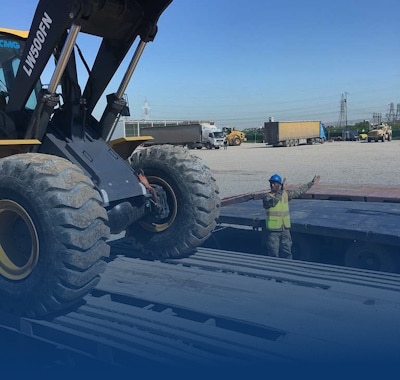
The process of moving a motor grader onto a hauling unit is a critical phase. It demands precision and expert knowledge to prevent damage and ensure safety. We prioritize meticulous planning for every loading and unloading operation.
Safe Equipment Securement Practices
Proper securement is non-negotiable. We use Grade 70 or higher transport chains for their superior strength. These are positioned at the manufacturer-recommended tie-down points on the machinery.
Oversized equipment requires more than a standard four-corner attachment. Our teams employ additional chains to prevent any movement during transit. This includes securing against forward, backward, and lateral shifts.
The foundation of safe transport lies in the initial securement. A chain is only as strong as its attachment point.
A pre-loading inspection is essential. We check for hydraulic leaks, loose components, or unstable attachments. Identifying these issues beforehand prevents hazards.
Professional Driver Best Practices
An experienced driver is your greatest asset. They possess the training to assess load angles and weight distribution. This expertise is vital for maintaining balance.
The loading surface must be level and firm. This prevents the hauling unit from shifting or settling. Adequate space is also crucial for the driver to maneuver safely.
We ensure our operators understand how to distribute weight across the deck. This maintains compliance with axle limits and ensures stable towing.
| Practice | Benefit | Key Consideration |
|---|---|---|
| Pre-Transport Inspection | Identifies potential hazards | Check for leaks and loose parts |
| Grade 70 Chain Usage | Superior securement strength | Exceeds standard requirements |
| Level Loading Surface | Prevents shifting during load | Essential for operator safety |
| Weight Distribution | Ensures axle limit compliance | Critical for stable transport |
Exploring Trailer Options: Flatbed, Drop-Deck, and Gooseneck Varieties
Selecting the correct hauling platform is a critical decision in the equipment moving process. We examine the primary options available to ensure you make an informed choice.
Advantages of Flatbed and Drop-Deck Trailers
Flatbed trailers are versatile workhorses. They handle loads up to 50,000 pounds and measure 48 to 53 feet long. Their open design accommodates cargo up to 8.5 feet wide and tall.
However, their high deck height often requires a crane or forklift for loading. This can be a limitation in remote field conditions.
Drop-deck trailers offer a smarter solution for taller equipment. Their two-level design features a higher front section that clears the tractor. The rear deck sits much closer to the ground.
This configuration increases height capacity. Many models include an 11-foot well and a 37-foot main deck. They typically accommodate machinery up to 10 feet high.
Benefits of Gooseneck and Removable Gooseneck Trailers
For the heaviest loads, gooseneck models excel. Removable gooseneck (RGN) variants provide superior weight distribution. Basic models handle 50,000 pounds, while specialized RGN units transport up to 150,000 pounds.
Lowboys, a gooseneck type, sit extremely low to the pavement. Their deck height can be as low as 24 inches. This low profile maximizes clearance for equipment up to 11.5 feet tall.
The detachable gooseneck feature is a significant benefit. It allows the front to lower, creating a ramp for drive-on loading. This eliminates the need for auxiliary equipment.
The pivoting hitch on a gooseneck unit enhances maneuverability during tight turns, a crucial advantage on congested job sites.
This design distributes tongue weight more effectively over the truck’s rear axle. It provides a stable and secure hauling experience.
| Trailer Type | Max Load Capacity | Max Height Accommodated | Key Feature |
|---|---|---|---|
| Flatbed | 50,000 lbs | 8.5 ft | Versatile, requires crane |
| Drop-Deck | Varies | 10 ft | Two-level, better clearance |
| Gooseneck/RGN | Up to 150,000 lbs | 11.5 ft | Low profile, drive-on capability |
Complying with DOT Regulations and Permitting for Oversized Loads
Navigating the legal framework for oversized grader transport is a critical operational step. We ensure every hauling operation meets stringent Department of Transportation standards. Compliance protects your construction investment and public safety.
Understanding Federal and State Regulations
The Federal Motor Carrier Safety Administration sets comprehensive cargo securement rules. Standard legal limits include a maximum height of 13’6″ and weight of 80,000 pounds. Most graders exceed these dimensions, triggering oversize requirements.
The Federal Bridge Formula determines allowable weight per axle configuration. Gross Vehicle Weight Rating (GVWR) represents the combined truck trailer and cargo weight. Exceeding limits without permits results in substantial fines.
Permitting and Escort Requirements for Oversized Equipment
Oversize permits require advance applications specifying exact dimensions and route. Costs typically reach several hundred dollars per state. Some jurisdictions restrict transport to specific days and times.
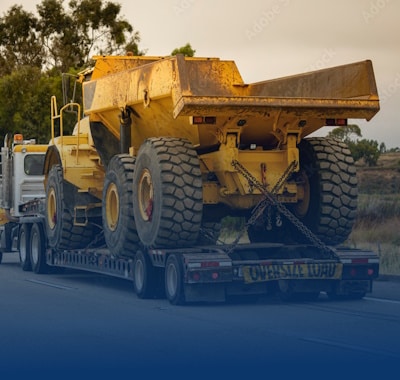
When loads exceed certain thresholds, escort vehicles become mandatory. These pilot cars warn traffic and assist with navigation. Proper signage including “OVERSIZE LOAD” banners must be displayed prominently.
Non-compliance can result in immediate load detention and fines exceeding $10,000. We manage all permitting to ensure your grader transport operates within legal parameters. Our expertise prevents costly violations.
Steps to Prepare Your Grader for Safe Transport
Pre-transport preparation safeguards your investment and streamlines the entire moving process. We guide clients through essential steps that protect equipment and ensure driver readiness.
Pre-Transport Inspection and Cleaning
Thorough cleaning serves multiple critical purposes. It makes tie-down points visible for secure loading. Clean surfaces also reveal existing damage before transport begins.
Our inspection protocol identifies hydraulic leaks and loose components. We document these issues with photographs. This prevents liability disputes during unloading.
Proper ground preparation is equally important. Drivers need level surfaces with firm compaction. Adequate space accommodates both truck and trailer maneuvers.
Documenting Equipment Conditions and Attachments
Comprehensive photo documentation provides crucial evidence of machinery condition. Capture images from multiple angles before the driver arrives.
Photograph all attachments and vulnerable components. Include hydraulic cylinders and blade edges. This creates a complete condition record for your equipment.
Share these photos with your assigned driver beforehand. Clear communication about attachment weights prevents surprises. It ensures optimal loading procedures for your specific grader model.
| Preparation Step | Primary Benefit | Key Action Required |
|---|---|---|
| Equipment Cleaning | Reveals damage and tie-down points | Thorough wash of entire machine |
| Site Preparation | Ensures safe loading area | Level ground with firm compaction |
| Photo Documentation | Creates condition evidence | Multiple angle photographs |
| Driver Communication | Prevents loading issues | Share attachment details early |
Final Thoughts on Securing a Safe and Efficient Haul
Successfully moving your grader hinges on a partnership built on expertise and the right equipment. Choosing the correct trailer from the available types—flatbed, drop-deck, or gooseneck—is vital for safety and compliance.
This hauling process demands careful attention to load weight, deck height, and proper securement at all tie-down points. Adhering to regulations protects your valuable machinery.
We simplify this complex task. Our network of vetted drivers across North America operates a full range of specialized trailers. Each truck and vehicle is fully insured for your construction assets.
Trust our team for your heavy equipment transportation. We ensure your grader moves securely from prepared ground to its destination. Your project’s success is our priority.
FAQ
What are the main types of trailers used for transporting graders?
We primarily use specialized heavy haul trailers like flatbeds, drop-decks, and gooseneck trailers. The right trailer depends on the grader’s dimensions and weight. Low-boy trailers are often ideal for their low deck height, which helps manage the overall height of the load for clearance under bridges and power lines.
How do you determine the correct trailer size and capacity for my equipment?
Our process starts with verifying your grader’s exact specifications, including its total weight, width, and height. We match these details to a trailer with the appropriate weight capacity and deck space. Proper axle configuration is critical to distribute the load legally and safely across state lines.
What safety measures are taken during the loading and unloading process?
A> Safety is our top priority. Our certified professionals use engineered securement protocols, including heavy-duty chains, binders, and blocking to prevent any movement. We follow strict procedures for ramp angles and ground conditions to ensure stable loading and unloading, protecting both the machinery and our team.
Are special permits required for hauling a grader?
Yes, transporting a grader typically requires oversized load permits because the equipment often exceeds standard legal dimensions. We handle all DOT regulations and permitting, including arranging for pilot cars or escorts when necessary, ensuring full compliance for a smooth journey.
What should I do to prepare my grader for transport?
We recommend a thorough pre-transport inspection. Clean the grader thoroughly, retract any blades or attachments, and document its current condition with photos. This preparation helps prevent damage and streamlines the loading process. Our team will guide you through each specific step for your model.
Why is experience important when choosing a heavy equipment transport company?
A> Experienced drivers and logistics coordinators understand the nuances of hauling complex machinery. We bring knowledge of route planning for height restrictions, proper securement points, and state-specific laws. This expertise minimizes risks and ensures your valuable construction equipment arrives safely and on time.