We Explain How to Move a Wheel Loader Long-Distance
Freedom Heavy Haul can offer expedited Pickup and Delivery for any size shipment anywhere in the USA. Contact us today for No Hassle, No Pressure Pricing.
Transporting heavy machinery requires careful planning and expert knowledge. Front-end loaders, in particular, present unique challenges for cross-country transit.
These powerful machines are distinct from tracked equipment. Their wheeled design offers excellent maneuverability on job sites. However, this same feature complicates extended journeys.
Driving a loader on public roads is often impractical. Legal restrictions frequently prohibit heavy equipment on highways. The machine’s lack of suspension creates an uncomfortable, potentially damaging ride.
Tires designed for rugged terrain wear quickly on pavement. The slow pace of travel further complicates any attempt at self-transport.
Our team understands these complexities. We provide reliable solutions for your equipment transportation needs. Our experience ensures your valuable machinery arrives safely.
We guide you through every critical step. This includes proper preparation, trailer selection, and securement methods. We also handle complex permit requirements.
Trust our professional heavy haul shipping services for your next project. We combine expert knowledge with a commitment to safety. Your equipment’s secure transit is our top priority.
Understanding the Basics of Wheel Loader Transportation
A thorough understanding of your equipment’s design and capabilities forms the basis for any transportation strategy. Wheel loaders represent a specialized category of construction machinery with unique characteristics.
Overview of Wheel Loaders in Construction
These versatile machines serve critical functions across various industries. Wheel loaders excel at material handling tasks like scooping, transporting, and dumping loose materials. We recognize three primary categories:
- Compact loaders (1-2 cubic yards) for confined spaces
- Medium loaders (2-4 cubic yards) for standard projects
- Large loaders (4-6+ cubic yards) for heavy applications
Major manufacturers like Caterpillar and Komatsu produce reliable equipment for diverse needs.
Benefits of Using Wheel Loaders on Wheels
The wheel-based design offers distinct operational advantages. Unlike tracked machinery, these loaders provide superior maneuverability on job sites. Their wheels prevent surface damage to paved areas during operation.
This design characteristic, while beneficial for daily use, creates specific transportation requirements. Our expertise helps navigate these complexities for various construction equipment types.
Planning Your Long-Distance Equipment Move
Strategic foresight forms the cornerstone of efficient heavy equipment logistics and transportation. We approach each project with meticulous attention to detail.
Evaluating Equipment Specifications and Weight
We begin by analyzing your machine’s exact specifications. The weight and size of your equipment directly influence our transportation strategy.
Different loader types present unique challenges. Compact models weigh around 9,000 pounds, while large industrial units exceed 100,000 pounds. This size variation demands specialized handling.
| Loader Type | Operating Weight | Bucket Capacity | Primary Applications |
|---|---|---|---|
| Compact | ~9,000 lbs | Landscaping, personal use | |
| Small | Varies | 1-2 cubic yards | Landscaping, construction |
| Medium | Varies | 2-4 cubic yards | Larger construction projects |
| Large | >100,000 lbs | Up to 43 cubic meters | Industrial applications |
Considering Route and Local Regulations
Route planning requires careful evaluation of potential obstacles. We identify bridge clearances and weight restrictions along your path.
Our team researches local and interstate regulations governing heavy equipment transportation.
Proper planning prevents costly delays and ensures regulatory compliance.
We coordinate all permit requirements before your equipment begins its journey. This proactive approach guarantees smooth transportation.
Step-by-Step: How to Move a Wheel Loader Long-Distance
Our systematic methodology transforms complex equipment transportation into a manageable, predictable process. We execute a carefully planned sequence of actions for every project.
Pre-Transport Preparation and Inspection
The initial step involves a comprehensive equipment assessment. We thoroughly clean the machine to identify secure tie-down points and document its condition with photographs.
This preparation process includes removing all loose items and personal belongings. We ensure doors are properly closed and the pick-up area is clear and level.
Loading the Loader onto the Trailer
Our team positions the appropriate trailer on stable, level ground. We securely chock the trailer wheels before the loading process begins.
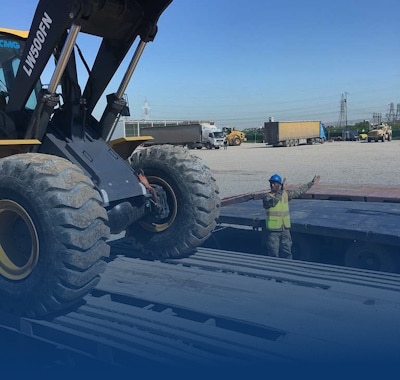
We then carefully drive or back the loader onto the trailer using proper ramps. This critical step requires precise coordination between our operator and transport specialists.
Securing the Equipment for Safe Transit
We meticulously secure the loader using heavy-duty chains and ratchet straps. Our experts attach these to the machine’s approved tie-down points.
A final verification step includes a slow-moving test to confirm stability. We cover exposed components and perform a last safety inspection before departure.
Choosing the Right Trailer and Equipment for Transport
The right transport equipment ensures both safety and efficiency during equipment moves. We carefully match your machinery to the optimal trailer based on specific dimensions and requirements.
Proper selection prevents overloading and ensures regulatory compliance. Our expertise guides this critical decision-making process.
Trailer Types Comparison: Flatbed vs. Lowboy
Different trailer designs serve distinct purposes in heavy equipment transportation. Flatbed trailers work well for compact and medium loaders under 48,000 pounds.
These standard trailers have height limitations around 8.5 feet. For taller equipment, we recommend step-deck or RGN trailers.
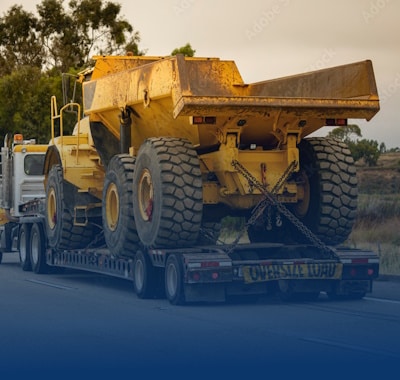
Lowboy trailers handle heavier industrial loaders exceeding 40 tons. Their low profile accommodates substantial weight while maintaining road clearance.
Matching Equipment to Trailer Capacity
We analyze your machine’s exact specifications before selecting the appropriate trailer type. The capacity must accommodate both weight and dimensional requirements.
Our team ensures the chosen trailer provides adequate structural support. This careful matching protects your investment during transit.
Finding the right trailer involves balancing safety considerations with practical logistics. We prioritize both aspects in our transportation planning.
Preparing Your Machine for Safe Transportation
The success of your equipment transfer begins long before the trailer arrives. We implement a comprehensive preparation protocol that protects your investment throughout the journey.
Cleaning and Inspecting the Wheel Loader
We start with a thorough cleaning of your machine. This process reveals pre-existing damage and identifies proper tie-down points. Our team documents the equipment condition with detailed photographs.
These images establish a clear record before your loader departs. We examine every component of the wheel loader for potential issues. This careful inspection prevents complications during transit.
Removing Loose Attachments and Personal Items
All loose attachments require secure fastening or removal. This includes buckets, blades, and auxiliary equipment. We ensure the bucket and arm are properly secured.
Our team verifies fluid levels and checks for leaks. We remove personal items and accessories like mirrors and lights. Every component receives individual attention to prevent loss.
“Proper preparation transforms complex transportation into predictable success.”
We coordinate flat, stable terrain at both locations. This careful approach minimizes damage risk. Your machine arrives ready for immediate operation.
Navigating Permits, Regulations, and Safety Standards
Navigating the complex web of transportation regulations demands specialized expertise. We manage the intricate compliance requirements that govern heavy equipment transit.
Our team understands that each jurisdiction presents unique challenges. Proper documentation protects your investment throughout the journey.
Understanding Local, Interstate, and International Rules
Regulatory requirements vary significantly across different regions. We secure all necessary permits based on your equipment’s specifications.
For cross-border shipments, we coordinate with customs brokers. This ensures smooth clearance at international checkpoints.
Our expertise includes navigating seasonal restrictions and special routing requirements. We plan routes that comply with all legal parameters.
Ensuring Proper Safety Certifications and Documentation
We verify that all carriers maintain current safety certifications. Proper insurance coverage provides essential protection for your loader.
Our compliance process includes comprehensive documentation management. We provide bills of lading, permits, and customs paperwork as needed.
This meticulous approach prevents costly delays and legal complications. Your equipment arrives safely and in full regulatory compliance.
Effective Loading and Securing Techniques
Mastering the loading process ensures your machinery arrives in perfect condition. We approach each loading operation with precision and professional expertise.
Our team understands that proper equipment positioning forms the foundation of secure transportation. We implement systematic protocols for every project.
Utilizing Proper Ramps and Loading Equipment
We select appropriate ramps based on your equipment’s specifications and trailer type. Flatbed trailers require heavy-duty ramps with sufficient capacity ratings.
Lowboy trailers often allow direct loading without additional equipment. Our professionals carefully drive the machinery onto the trailer at controlled speeds.
We make sure all loading operations occur on level ground with proper wheel chocking. This prevents trailer movement during critical loading phases.
Securing with Chains, Straps, and Tie-Down Points
Once positioned, we secure your equipment using heavy-duty chains and ratchet straps. Our team identifies manufacturer-specified tie-down points for optimal safety.
We ensure proper tension—secure enough to prevent movement but not damage components. The loader onto trailer positioning achieves balanced weight distribution.
Our final verification includes a movement test to confirm stability. This professional approach guarantees your equipment remains secure throughout transit.
Transportation Tips for a Smooth Long-Distance Move
Success in heavy equipment transit relies heavily on effective communication and strategic route planning. We implement proven strategies that ensure your machinery arrives safely and on schedule.
Our systematic approach begins the moment a driver accepts your transportation assignment.
Driver Coordination and Communication Best Practices
Immediate connection with your assigned professional forms the foundation of smooth operations. We facilitate direct contact to discuss specific requirements and timing expectations.
Responsiveness matters significantly in this industry. Experienced operators often work with tight schedules and may pursue alternative assignments without prompt confirmation.
Regular updates throughout the journey keep you informed about progress. This allows for coordinated delivery timing when your equipment reaches the destination.
Planning the Optimal Route and Timing
Strategic route selection considers multiple factors beyond simple distance. We analyze weather patterns, road construction projects, and traffic flow data.
Flexible scheduling often yields better results and pricing. Fixed dates can limit available options for qualified transportation providers.
Our drivers conduct regular inspections during scheduled stops. This proactive approach identifies potential issues before they become problems. Proper rest breaks maintain safety compliance throughout extended journeys.
Managing Costs and Shipping Logistics
Smart financial planning ensures your equipment transportation project stays on budget and schedule. We provide transparent pricing structures that account for all variables affecting your final costs.
Getting Accurate Quotes and Comparing Rates
Your transportation quote reflects multiple factors beyond simple distance. We analyze equipment size, weight, and route complexity to determine the fair price.
Our company explains each cost component clearly. This includes specialized trailer requirements and potential escort vehicles. Understanding these elements helps you evaluate competing offers effectively.
| Factor | Impact on Quote | Cost Range | Our Solution |
|---|---|---|---|
| Distance | Higher fuel and driver time | +15-40% | Route optimization |
| Equipment Weight | Specialized trailer needs | +20-60% | Proper capacity matching |
| Permit Requirements | Administrative fees | +5-25% | Full permit management |
| Timing Flexibility | Schedule integration | -10-30% | Advanced planning |
| Additional Services | Escort vehicles, insurance | +10-35% | Itemized pricing |
Budgeting for Permits and Additional Support Services
We recommend including contingency funds for unexpected regulatory requirements. Weather delays or route changes can affect your final price.
Our company provides guaranteed rates once your quote is accepted. This protects against surprise charges while ensuring fair compensation for professional drivers.
Proper budgeting makes your job more predictable. We help you plan for all aspects of heavy equipment transportation.
Final Insights for a Successful Equipment Move
Your equipment’s safe arrival at its new worksite validates the comprehensive approach we take to complex transportation challenges. Every successful relocation of heavy machinery demonstrates the value of professional expertise.
We emphasize that selecting the right transportation partner is crucial. Verified carriers with proper insurance protect your investment throughout the journey. Our company ensures your valuable machinery receives optimal care.
Different types of loaders require customized approaches. From compact wheel models to large construction equipment, each machine has specific needs. Proper preparation prevents damage and ensures safe transportation.
Make sure your bucket and attachments are secured correctly. The right trailer capacity matches your loader’s specifications. Compliance with regulations guarantees a smooth process.
Our commitment to safety protects your wheel loader, the driver, and other vehicles. Professional services provide peace of mind and save resources. Your equipment arrives ready for immediate work.
Trust our experienced team for your next heavy equipment transportation job. We make sure every detail receives proper attention from start to finish.
FAQ
What is the safest way to transport a wheel loader?
The safest method involves using the right trailer, such as a lowboy or step-deck, that matches the machine’s weight and dimensions. Properly securing the equipment with heavy-duty chains and binders is critical. We ensure every tie-down point is used to prevent any movement during transit.
How do I prepare my wheel loader for shipping?
Preparation includes a thorough inspection, cleaning the machine, and removing any loose attachments or items from the cab. We also recommend draining fluids to a minimum and ensuring the bucket is secured in a transport position to lower the profile.
What type of trailer is best for moving a compact wheel loader?
For compact wheel loaders, a standard flatbed trailer is often sufficient. The key is verifying the trailer’s capacity can handle the equipment’s weight. We assess each machine’s specs to match it with the optimal trailer for safe transportation.
Are special permits required for hauling heavy equipment?
Yes, overweight or oversized loads typically require state permits. The need depends on the equipment’s final weight and dimensions. We handle all permit acquisition, ensuring full compliance with local and interstate regulations for a smooth journey.
What is the average cost to ship a wheel loader long-distance?
The price varies based on distance, equipment size, and route specifics. We provide detailed quotes that include all potential costs, such as permits and pilot cars, so you have a clear budget for the job without surprises.
How is the wheel loader secured on the trailer to prevent damage?
A> We use industry-best practices, securing the frame and axles with grade-70 transport chains and load binders. The machine is positioned to distribute weight evenly. Our team double-checks all securement points before departure to guarantee safety.
Can I transport a wheel loader with its attachments?
A> It depends on the attachment and total dimensions. Some smaller attachments can travel with the machine if properly secured. For larger items, we often recommend separate transport to ensure safety and avoid exceeding legal size limits.
How long does the long-distance transportation process typically take?
A> Transit time depends on the distance and route planning. We coordinate closely with drivers to provide accurate timelines. Efficient loading and unloading, combined with strategic routing, helps us minimize delays and deliver your machinery on time.