Coordinating With Utility Companies for Overhead Clearances
Freedom Heavy Haul can offer expedited Pickup and Delivery for any size shipment anywhere in the USA. Contact us today for No Hassle, No Pressure Pricing.
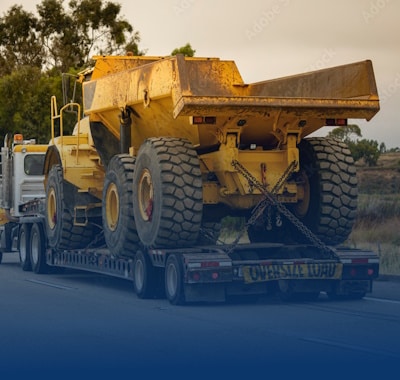
When a heavy haul load is tall, the biggest problem is often not the weight, it’s the sky. Power lines, cable lines, traffic signals, and even low-hanging tree canopies can stop a move instantly. Coordinating with utility companies for overhead clearances is the planning step that prevents a tall load from getting trapped under infrastructure it cannot safely pass.

To see where this fits in the overall workflow, read how heavy haul transport projects are planned and executed. This utility step sits right between route selection and real-world execution.
Why Overhead Clearance Is a “Plan-Ahead” Problem
Overhead issues rarely have quick fixes. A truck can’t simply “go around” a low wire once it’s on a permitted route, especially in a narrow corridor. If the line is owned by a utility provider, only trained crews can lift, drop, or temporarily de-energize it. That means a tall load needs an appointment, not a hope.
Once you accept that reality, utility coordination becomes less stressful. It turns from a scary unknown into a scheduled task.
Start With the Real Height, Not the Estimated Height
Overhead planning starts with one number: actual travel height.
That height should include:
- cargo height (with attachments and any stacked components)
- trailer deck height
- suspension behavior under load
- securement height (chains, binders, blocks, or protective materials)
Even small mistakes matter here. A few extra inches can be the difference between a clean pass and a blocked road.
This is one reason heavy haul teams rely on route planning built for oversized transport, because clearance risk must be evaluated on the exact corridor the load will follow.
Identify the “Overhead Hot Zones” on the Route
Not every mile is risky. Most clearance problems show up in predictable zones:
- older city streets with dense utility networks
- intersections with traffic signals and overhead arms
- rail crossings with low utility lines nearby
- industrial zones with multiple cable providers
- detours that push you off the original planned corridor
A smart plan marks these zones early, then validates each one.
If your route planning also includes broader risk review, it connects well with identifying potential hazards during heavy haul transportation, because overhead issues are one of the most common “trip-stoppers.”
What Utility Coordination Actually Looks Like
Utility coordination is not a single phone call. It usually includes:
- sharing the route segment details and load height
- confirming which company owns the lines (power, phone, cable)
- scheduling a crew and a time window
- defining the action (lift, drop, temporary disconnect, escort)
- ensuring the heavy haul team and utility team align on timing
This process works best when it’s treated like a partnership. The utility crew is not “helping a truck.” They are protecting infrastructure and public safety.
Timing Rules That Protect the Whole Project
Utility work often has fixed windows. Crews may be available only on weekdays. Certain actions may require permits or approvals. Some areas require additional coordination with city traffic control.
That timing must be added into the route schedule. If your load is permitted to travel only during limited hours, both schedules must match. Otherwise, the route becomes legal on paper but impossible in reality.
For loads that also face weather risk, timing connects naturally with planning for adverse weather conditions, because wind, storms, or visibility changes can force rescheduling.
Communication on the Day of the Move
Overhead coordination can fail when teams arrive with different expectations. The day-of plan should be clear:
- who leads the convoy at the clearance point
- who stops traffic and where
- who communicates with the utility crew
- what speed and positioning are required
- what “stop conditions” apply if something looks unsafe
This is why heavy haul projects rely on disciplined readiness checks. A consistent inspection routine supports this coordination, especially when visibility and safety equipment matter. That ties naturally to pre-trip inspection practices for heavy haul trucks.
What Equipment Owners and Construction Teams Gain From This Step
From the customer’s perspective, overhead coordination creates two big benefits:
- fewer delays caused by surprise obstacles
- reduced risk of damage to equipment and public infrastructure
That predictability matters on job sites. Crews often plan around delivery windows. A one-hour delay can ripple into crane scheduling, labor timing, and project sequencing.
Common Mistakes That Create Overhead Problems
If you want to avoid preventable failures, these are the usual triggers:
- using estimated height instead of measured height
- assuming posted clearance numbers are always reliable
- failing to confirm line ownership across multiple utility providers
- not scheduling crews early enough
- letting last-minute detours change the overhead risk profile
The simplest fix is to treat overhead planning as part of the route, not as a separate afterthought.
Conclusion
Coordinating with utility companies for overhead clearances is one of the most important steps for tall heavy haul loads. It starts with accurate travel height, identifies the overhead risk zones on the chosen route, and turns potential shutdown points into scheduled clearance events. When utilities, routing, timing, and convoy communication align, the move stays controlled and the project remains predictable. That calm predictability is what professional heavy haul transport should always deliver.