Heavy haul driving isn’t your typical trucking gig. While regular truckers move standard freight, you’ll be the one maneuvering 200,000-pound excavators down two-lane highways and navigating wind farms through mountain passes at 3 AM. The pay reflects it—top heavy haul drivers pull $70K-$90K annually, sometimes more—but getting there requires more than just a CDL.
Let me walk you through what actually matters.
What Makes Heavy Haul Different
Most people think trucking is trucking. It’s not.
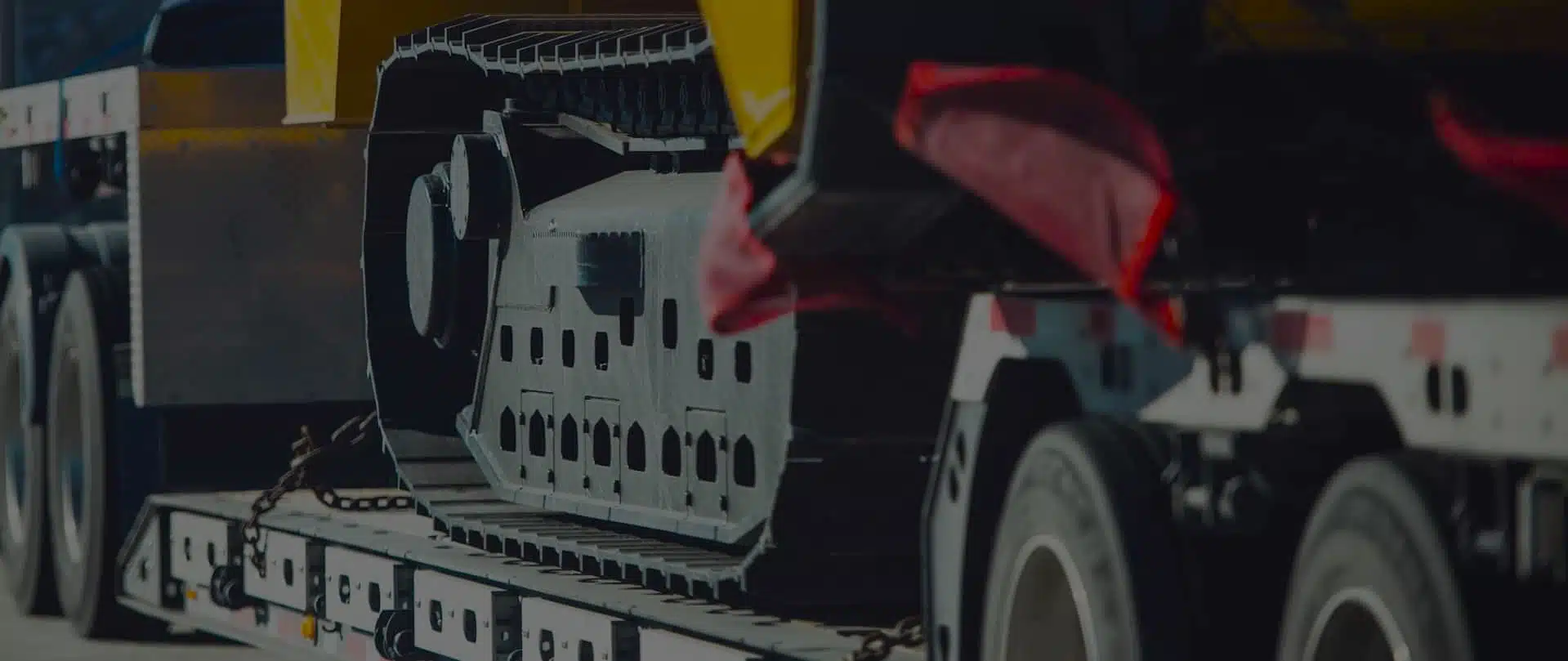
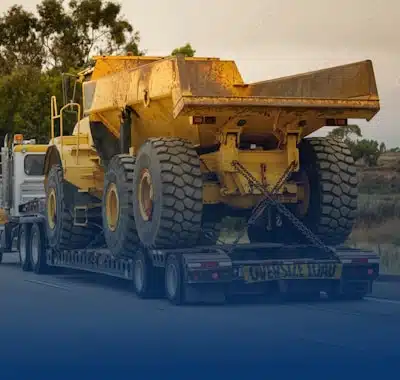
Heavy haul truck drivers transport oversized and overweight cargo: industrial equipment, construction machinery, prefabricated buildings, military vehicles, and components that can’t be broken down. We’re talking loads that require pilot cars, state permits, and route planning that considers bridge weight limits and overhead clearances down to the inch.
You’re not just driving. You’re coordinating logistics, understanding physics, and taking legal responsibility for cargo worth hundreds of thousands of dollars. One mistake with load securement can mean a $10,000 fine or worse—someone’s life.
The job demands sharp spatial awareness, patience (permits alone can take days), and the ability to work odd hours. Most heavy haul moves happen at night or on weekends when traffic is light.
The Requirements Everyone Glosses Over
Age and License: You need to be 21 and hold a valid Class A CDL. That’s the baseline. But here’s what matters more:
Your driving record needs to be spotless. Heavy haul companies won’t touch you with recent accidents, DUIs, or moving violations. Insurance costs are already sky-high for these operations—they can’t afford risky drivers.
The CDL Process: Getting your Class A CDL means passing written knowledge tests covering general trucking knowledge, air brakes, and combination vehicles. Then comes the skills test: pre-trip inspection, basic vehicle control, and on-road driving.
Most people finish CDL training in 3-8 weeks through truck driving schools. Community colleges offer programs that run 3-6 months with more comprehensive instruction. Either works, but the faster programs mean you’ll learn the rest on the job.
Experience Requirements: Here’s where it gets real. Almost no heavy haul company hires fresh CDL graduates. They want 2-3 years of verifiable commercial driving experience minimum. Many prefer 5+ years requirements.
Why? Because heavy haul is advanced-level trucking. You need to understand how a loaded truck behaves, how to manage weight distribution, and how to handle emergencies before you’re trusted with specialized equipment.
Start with dry van, flatbed, or regional delivery work. Build your skills, keep your record clean, and gain the road experience that makes you hireable.
The Certifications That Actually Matter
Oversize/Overweight Permits: Each state has different regulations. You’ll need to understand permit requirements, routing restrictions, and travel time limitations. Most companies handle permitting, but you need to read and follow permit conditions exactly.
Endorsements: Many heavy haul positions require or prefer additional CDL endorsements:
- Tandem/Triple Trailer Endorsement: For pulling multiple trailers
- Hazmat Endorsement: If you’ll haul certain industrial equipment or materials (requires TSA background check)
Specialized Equipment Training: Companies provide training on their specific equipment—lowboys, RGNs (removable gooseneck trailers), step decks, multi-axle trailers. This isn’t something you can learn in CDL school. You learn by doing, usually with a trainer riding along for weeks or months.
Load Securement Knowledge: Federal Motor Carrier Safety Regulations (FMCSR) Part 393 covers cargo securement. You need to know proper chain grades, working load limits, securement patterns, and inspection procedures. This isn’t optional—it’s literally federal law.
Your Step-by-Step Path
Step 1: Get Your Class A CDL
Choose a reputable truck driving school or community college program. Ask about job placement rates and partnerships with trucking companies. The training should cover:
- Vehicle inspection procedures
- Coupling and uncoupling
- Backing maneuvers
- Road driving in various conditions
- Hours of service regulations
- Basic cargo securement
Expect to invest $3,000-$7,000 if you’re paying out of pocket. Many carriers offer tuition reimbursement if you commit to working for them for a year.
Step 2: Build Your Foundation Experience
Take whatever driving job gets you behind the wheel. Flatbed work is ideal because you’ll learn load securement and tarping—skills that transfer directly to heavy haul.
During this time:
- Keep your CSA (Compliance, Safety, Accountability) scores clean
- Learn defensive driving in all weather conditions
- Practice backing in tight spaces
- Build relationships with dispatchers and other drivers
- Study how experienced drivers handle their equipment
This phase typically takes 2-3 years minimum. Don’t rush it.
Step 3: Understand FMCSR Compliance
The Federal Motor Carrier Safety Regulations govern everything in commercial trucking. Key sections for heavy haul:
- Part 382: Controlled substances and alcohol testing
- Part 391: Driver qualifications
- Part 393: Parts and accessories (including load securement)
- Part 395: Hours of service
- Part 396: Vehicle inspection and maintenance
You don’t need to memorize the entire regulation book, but you need working knowledge of what applies to your daily operations.
Step 4: Target Heavy Haul Companies
Once you have the experience, research companies that specialize in heavy haul. Look for:
- Safety ratings and insurance requirements
- Equipment quality and maintenance programs
- Home time policies (many heavy haul jobs are regional, not OTR)
- Pay structure (percentage of load vs. mileage vs. hourly)
- Training programs for new heavy haul drivers
Apply directly through company websites. Network at truck stops and industry events. Many heavy haul positions are filled through referrals—drivers who’ve proven themselves get recommended by current employees.
Step 5: Complete Company-Specific Training
Every heavy haul company runs differently. Expect several weeks of orientation and on-the-job training covering:
- Their specific equipment and trailers
- Customer relationships and service expectations
- Permit procurement procedures
- Route planning tools and requirements
- Load securement standards (often exceeding federal minimums)
Some companies pay during training; others don’t. Ask upfront.
Heavy Haul Specializations Worth Knowing
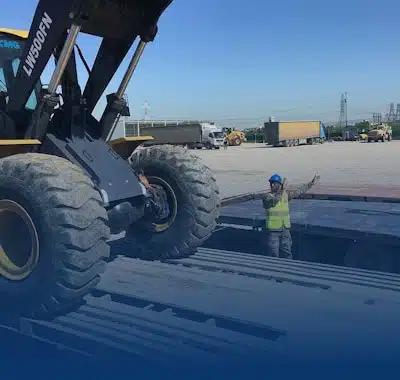
Construction Equipment: Moving dozers, excavators, cranes, and loaders. Requires understanding track widths, attachment removal, and coordination with equipment operators.
Wind Energy Components: Hauling turbine blades (sometimes 200+ feet long), nacelles, and tower sections. Extremely specialized with complex routing and escort requirements.
Modular Buildings: Transporting prefab homes, office buildings, and industrial structures. Demands precision placement and crane coordination.
Military and Defense: Moving tanks, armored vehicles, and specialized equipment. Often requires security clearances and strict protocols.
Each specialization has its own learning curve and pay scales.
The Money Talk
Entry-level heavy haul drivers with the minimum experience earn $55,000-$65,000 annually. With 5+ years in heavy haul, that climbs to $70,000-$90,000. Specialized niches like wind energy or oversized machinery can push past $100,000 for experienced drivers.
Most heavy haul companies pay percentage of revenue (typically 25-30% of what the load pays) rather than per-mile rates. A single wind blade move might pay $1,500-$3,000 to the driver.
Benefits vary widely. Larger companies offer health insurance, 401(k) matching, and paid time off. Smaller operators might offer higher pay but fewer benefits.
What Nobody Tells You
The waiting game is brutal. You might spend three days waiting for permits, then another day for weather to clear, then six hours for a crane to arrive. You’re paid to move freight, not to wait, so those delays eat into your income unless you’re on hourly.
Physical demands are real. You’ll climb on loads in all weather to install chains and binders. You’ll throw heavy tarps. You’ll spend hours in cramped positions securing cargo. Back problems and joint issues are common.
Stress levels run high. When you’re responsible for a $500,000 machine on a $15,000 trailer, pulling it with a $150,000 truck, every decision matters. One miscalculation on a tight turn can mean catastrophic damage.
Home time varies dramatically. Some heavy haul is regional with nightly or weekend home time. Other jobs keep you out for weeks. Know what you’re signing up for.
The Reality Check
Heavy haul isn’t for everyone. It requires:
- Extreme attention to detail
- Patience with regulations and delays
- Physical fitness and stamina
- Problem-solving skills under pressure
- Willingness to work irregular hours
But if you’ve got the skills and temperament, it’s one of trucking’s most respected specialties. You’re not just another driver—you’re a professional entrusted with complex, high-value cargo that keeps industries running.
Start with your CDL. Build clean, solid experience. Learn everything you can about load securement and regulations. Network with heavy haul drivers. When you’re ready, the opportunities are there.
The path takes time, but the drivers who commit to doing it right build careers that last decades.
Heavy Haul by the Numbers
| Metric | Details |
| Average Starting Salary | $55,000-$65,000/year for entry-level heavy haul with minimum experience |
| Experienced Driver Salary | $70,000-$90,000/year (5+ years heavy haul experience) |
| Top Specialization Pay | $100,000+/year (wind energy, military transport, specialized machinery) |
| Minimum Experience Required | 2-3 years verifiable commercial driving (most companies prefer 5+ years) |
| CDL Training Duration | 3-8 weeks (accelerated programs) or 3-6 months (community college) |
| CDL Training Cost | $3,000-$7,000 (many companies offer tuition reimbursement) |
| Typical Load Weight | 80,000-200,000+ lbs (regular freight limit is 80,000 lbs) |
| Common Pay Structure | 25-30% of gross load revenue (percentage-based vs. per-mile) |
| Permit Processing Time | 2-7 days per state (varies by route and load dimensions) |
| Industry Growth Rate | 6% projected growth through 2031 (faster than average for all occupations) |
| Driver Shortage Impact | 80,000 driver shortage nationwide creates strong demand for qualified operators |
| Average Load Value | $100,000-$500,000+ (machinery and equipment) |
FAQs About Becoming a Heavy Haul Truck Driver
1. Can I start heavy haul driving right after getting my CDL?
No, and any company that says otherwise is a red flag.
Heavy haul companies want drivers with 2-3 years of commercial driving experience minimum—many won’t even interview you without 5+ years. Fresh CDL graduates don’t have the road skills to handle 150,000-pound loads safely. You need to understand how loaded trucks behave in wind, rain, and emergency situations before you’re trusted with specialized equipment.
Start with flatbed, dry van, or regional work. Build your skills, keep your record spotless, and then transition to heavy haul once you’ve proven yourself. Trying to skip this step just wastes everyone’s time.
2. How much can I realistically make as a heavy haul driver?
It depends entirely on your experience and specialization.
Entry-level heavy haul drivers with minimum experience earn $55,000-$65,000 annually. After 5+ years in the specialty, you’re looking at $70,000-$90,000. Drivers in specialized niches like wind energy transport or military equipment can push past $100,000.
Most heavy haul pays percentage of load revenue (25-30%) rather than per-mile rates. A single complex move might pay you $1,500-$3,000, but you might only complete one or two per week when you factor in permits, planning, and delays. The money is good, but it’s not as simple as more miles equals more pay.
3. What’s the hardest part of heavy haul driving that nobody warns you about?
The waiting.
You’ll spend days waiting for permits to process, hours waiting for pilot cars to arrive, and entire mornings waiting for weather to clear. Most companies pay you to move freight, not to sit—so those delays cut directly into your income unless you’re on an hourly rate.
The physical demands surprise people too. You’re climbing on loads in freezing rain to install chains, throwing heavy tarps in 95-degree heat, and spending hours bent over securing cargo. Back problems and joint issues are occupational hazards nobody mentions in recruiting ads.
4. Do I need special endorsements beyond a Class A CDL?
Not always required, but they make you more hireable.
The Hazmat endorsement is valuable because some industrial equipment or components require it. That means passing a TSA background check and additional testing. The tandem/triple trailer endorsement helps if you’ll pull specialized multi-axle configurations.
More important than endorsements is your understanding of load securement regulations, permit compliance, and route planning. Companies provide equipment-specific training, but they expect you to know FMCSR cargo securement rules cold. That’s not an endorsement—that’s just the legal baseline for the job.
5. Is heavy haul driving harder on your body than regular trucking?
Absolutely, and it’s not even close.
Regular OTR truckers sit and drive. Heavy haul drivers physically secure loads—installing chains, tightening binders, climbing on equipment, throwing tarps. You’re outside in all weather conditions doing manual labor that tears up your back, shoulders, and knees.
You need legitimate physical fitness for this work. If you can’t handle repetitive heavy lifting and awkward positions, heavy haul will break you down fast. Most drivers in the specialty deal with chronic pain by their 40s or 50s. It’s just the reality of the job.
6. How often will I be home compared to regular OTR trucking?
It varies dramatically by company and specialization.
Some heavy haul operations are regional, getting you home nightly or on weekends. Others involve long-distance moves that keep you out for weeks at a time. Wind energy projects might station you in remote areas for months.
Ask specific questions during interviews: What’s the average time out versus home time? Are runs predictable or sporadic? How much control do drivers have over their schedules? The answers vary so much between companies that there’s no industry standard.
7. What disqualifies people from heavy haul jobs?
Your driving record is everything.
Recent accidents, DUIs, serious moving violations, or poor CSA scores will get your application rejected immediately. Heavy haul insurance is expensive—companies can’t afford risky drivers. Even if you have the experience, a bad record makes you unhireable.
Medical issues matter too. If you can’t pass a DOT physical or have conditions that limit your ability to do heavy physical work, this isn’t the right specialty. Some companies have strict age limits (usually won’t hire drivers over 60 for new positions) due to insurance requirements.
Failed drug tests, criminal records involving theft or violence, and patterns of job-hopping also raise red flags. Heavy haul companies invest serious time and money training drivers on their equipment—they want people who’ll stick around.