Identifying Potential Hazards During Heavy Haul Transportation
Freedom Heavy Haul can offer expedited Pickup and Delivery for any size shipment anywhere in the USA. Contact us today for No Hassle, No Pressure Pricing.
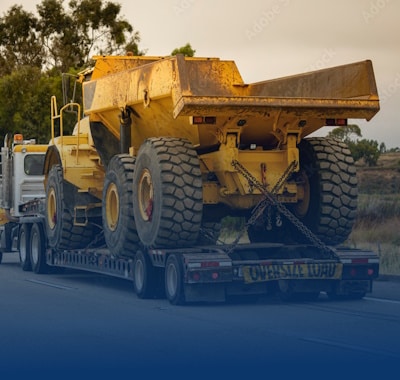
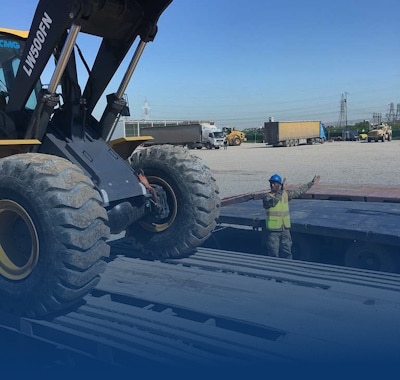
Identifying potential hazards during heavy haul transportation is the process of spotting the specific risks that can disrupt an oversized or overweight move before the load reaches them. A heavy haul load changes how a truck accelerates, turns, stops, and fits through space, so hazards are not “general driving problems.” They are predictable pressure points that show up on routes, at job sites, and around public infrastructure.
If you want to see how hazard identification fits into the full workflow from planning to execution, review how heavy haul transport projects are planned and executed.
Why Hazards Matter More in Heavy Haul
A heavy haul shipment interacts with the environment in a more sensitive way. A small clearance issue can stop the move. A weak shoulder can trap the trailer. A tight turn can force a complete reroute. The earlier hazards are identified, the more calmly the project runs and the more predictable the delivery becomes.
Hazard Category 1: Route Constraints That Don’t Show Up in Normal Navigation
Many heavy haul failures begin with route assumptions. Standard navigation tools do not think like a heavy haul planner, because they are not built for oversized geometry, weight limits, and escort coordination.
Common route-related hazards include:
- low clearances and “unmarked” height risks
- bridges with weight restrictions that conflict with axle loads
- construction zones that shrink lanes or remove shoulders
- turns that are technically possible but not safely controllable
- restricted corridors where oversize travel is limited by time windows
A strong baseline for avoiding these issues is detailed heavy haul route planning, because the hazard list becomes clearer when the route is verified rather than assumed.
Hazard Category 2: Overhead Risks and Utility Interactions
Height and overhead conflicts are stressful because they can stop a load in a public area, often without quick solutions. Overhead issues include power lines, low signals, cable lines, tree canopies, and temporary work-zone structures.
Overhead hazards tend to appear when:
- the load height is close to posted clearances
- the route passes through older city corridors with dense utility networks
- the job requires temporary lifting or repositioning of lines
- detours push the load onto streets that were never part of the permit plan
When overhead risk exists, proactive coordination for overhead utility clearances turns a potential shutdown into a controlled plan.
Hazard Category 3: Weather and Environment-Driven Instability
Weather changes how predictable the move feels. Wind can push tall loads. Rain can weaken shoulders. Ice changes braking reality. Heat can stress tires, brakes, and hydraulics. These conditions are not just “bad weather.” They are operational threats that can shift the safest decision from “go” to “pause.”
Weather hazards often include:
- high winds on open corridors for tall or wide loads
- reduced traction that increases stopping distance and drift risk
- shoulder softening in rain or thaw conditions
- visibility issues that raise escort and traffic interaction risk
If your project crosses regions or seasons, planning around adverse weather conditions helps keep the schedule realistic and the move safer.
Hazard Category 4: Load Stability, Securement Pressure, and Weight Behavior
Some hazards come from the load itself. A high center of gravity increases rollover sensitivity. A long load increases off-tracking through turns. A poorly balanced load increases braking stress and can push axle loads into risky territory.
Stability hazards increase when:
- the load is tall, narrow, or top-heavy
- attachments shift the balance or add unexpected height
- axle loads are close to route or bridge limits
- securement points are limited or uneven
When the weight behavior is understood early, optimal axle weight distribution can reduce both compliance risk and stability risk, which makes the entire trip feel more controlled.
Hazard Category 5: Mechanical Failures That Turn Into Route Failures
A mechanical problem is not only a vehicle problem. In heavy haul, it becomes a route and public-safety problem because stopping a wide or heavy load is harder to manage. A breakdown can block lanes, destroy time windows, and create an unsafe situation during recovery.
Mechanical hazards often include:
- tire failures under high heat or heavy stress
- brake issues on long grades
- hydraulic or trailer component problems
- lighting or visibility issues that affect escort coordination
This is why disciplined pre-trip inspection practices protect more than equipment, they protect the plan.
A Practical Hazard Identification Routine
Hazard identification works best when it is treated like a checklist that evolves with the project.
A practical routine looks like this:
- Confirm the load facts and trailer configuration early
- Review the route for clearance, weight, geometry, and staging options
- Identify overhead and utility exposure zones
- Overlay weather exposure and timing restrictions
- Stress-test the plan with “what changes first” thinking
- Validate readiness through inspection and communication planning
This approach keeps the team calm because it replaces uncertainty with prepared decisions.
What Hazard Awareness Gives Equipment Owners and Construction Teams
For equipment owners and construction companies, hazard identification is not a technical detail. It’s the difference between a clean project timeline and an expensive disruption. When hazards are anticipated, schedules become more predictable, job sites stay coordinated, and the delivery feels professional from start to finish.
Conclusion
Identifying potential hazards during heavy haul transportation is the planning habit that keeps a move safe, legal, and predictable. Hazards become manageable when route constraints are verified, overhead risks are coordinated, weather exposure is planned, load stability is understood, and mechanical readiness is confirmed. When these risks are addressed early, heavy haul transport stops feeling like a gamble and starts feeling like a controlled operation, exactly what serious projects need.