Minimizing Community Impact During Heavy Equipment Transport
Freedom Heavy Haul can offer expedited Pickup and Delivery for any size shipment anywhere in the USA. Contact us today for No Hassle, No Pressure Pricing.
Heavy equipment transport doesn’t happen in a vacuum. Oversized loads move through towns, past schools, across intersections, and alongside everyday traffic. Minimizing community impact is the practice of planning a heavy haul move so it stays safe, respectful, and low-disruption for the public, while still meeting the customer’s delivery needs.
This topic supports the bigger process described in how heavy haul transport projects are planned and executed, because “good execution” isn’t only about the load arriving, it’s also about how the move behaves along the way.
What Community Impact Really Means in Heavy Haul
Community impact is not just “people being annoyed.” It’s a real-world combination of:
- temporary traffic delays
- noise and congestion in sensitive areas
- blocked driveways, business entrances, or emergency routes
- confusion for drivers who don’t understand what’s happening
- safety risk when motorists make unpredictable moves
A professional heavy haul plan tries to reduce these effects, especially in dense or high-risk areas.
Start With Route Choices That Avoid Sensitive Corridors
The easiest way to reduce disruption is to avoid the most sensitive roads in the first place. Not every legal route is a smart route.
A route becomes high-impact when it passes through:
- school zones or heavy pedestrian areas
- downtown corridors with tight lanes and frequent stops
- residential streets with limited shoulder space
- business districts where blocked access creates conflict
- areas with frequent emergency response traffic
This is where transportation route planning for heavy hauls matters beyond compliance. The route is not only about bridges and clearances. It is also about public interaction.
Timing Is a Community Tool, Not Just a Scheduling Tool
A heavy haul move can feel very different depending on the time of day. Moving during high-traffic periods increases stress, unpredictability, and the chance of unsafe passing behavior.
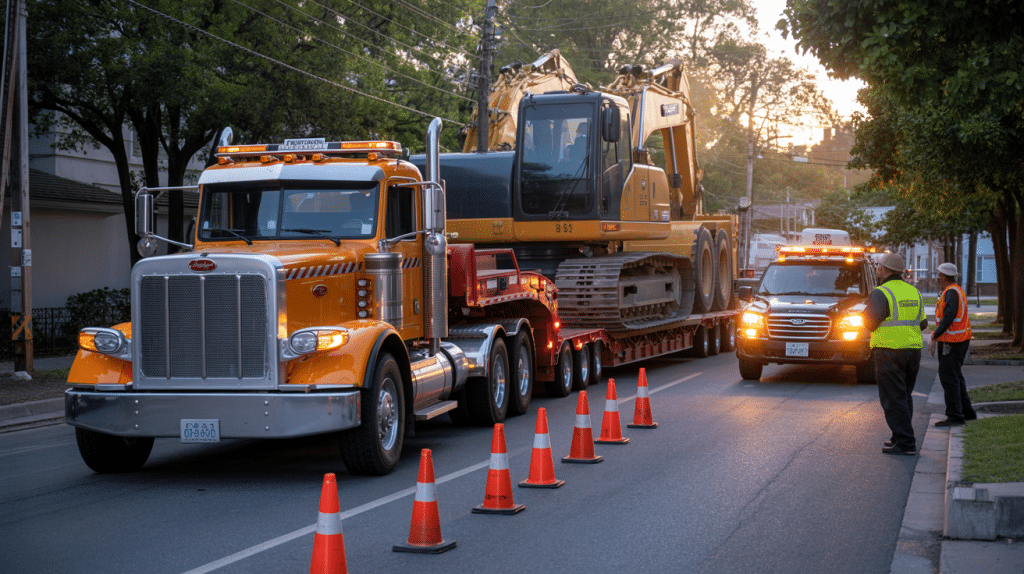
Responsible timing often means:
- avoiding morning and evening rush windows
- planning around school start and end times
- skipping major event times (sports, festivals, parades)
- traveling when visibility is good and traffic is lighter
Timing decisions also connect to planning around adverse weather conditions, because poor visibility or road conditions increase both risk and disruption.
Communication Reduces Confusion and Dangerous Behavior
Most public risk comes from confusion. Drivers who don’t understand the convoy may try unsafe passes, cut-ins, or last-second lane changes.
Strong transport teams reduce confusion through:
- clear escort positioning and lane control
- visible markings, signage, and lighting
- consistent convoy speed and spacing
- predictable movements at intersections and merges
When the convoy is understandable, the public behaves more safely.
Controlled Intersections and Tight Turns Should Be Planned, Not Improvised
The most disruptive moments are usually the slow ones: tight turns, lane shifts, intersection holds, and shoulder adjustments. Those moments need a plan.
Good planning includes:
- identifying the exact turn points that need extra space
- defining where traffic must be paused
- using spotters or escorts at the right positions
- choosing turn paths that reduce block time
These actions connect with identifying potential hazards during heavy haul transportation because many hazards are also community disruption points.
Overhead Work Should Be Coordinated With Minimum Disruption
If overhead lines or signals must be lifted, that activity can cause sudden local congestion. Utility coordination should be scheduled and timed carefully so disruption is controlled.
That is why overhead clearance coordination is not just a technical step. It is also a community impact step, because it shapes when and how a corridor is temporarily controlled.
Noise, Idle Time, and Staging Locations Matter
Some disruption doesn’t come from the convoy moving. It comes from staging, waiting, and idling near populated areas.
Better staging decisions include:
- choosing staging points away from residential zones
- limiting long idle periods near businesses or neighborhoods
- using locations with proper pull-off space
- avoiding staging that blocks road shoulders or entrances
These small choices add up to a more professional presence.
Mechanical Readiness Reduces Roadside Disruption
A breakdown on a standard truck is inconvenient. A breakdown on a wide or heavy load can block lanes, require specialized recovery, and trigger major delays for everyone.
That is why strong pre-trip inspection routines reduce community impact indirectly. They prevent the kind of incident that affects hundreds of drivers and creates public frustration.
Why This Matters for the Customer, Too
Minimizing community impact helps the customer in practical ways:
- fewer unplanned stops
- fewer complaints or enforcement issues
- fewer schedule disruptions caused by local conflict
- smoother deliveries into active job sites
A move that stays calm in public spaces is usually a move that stays on schedule.
Conclusion
Minimizing community impact during heavy equipment transport is part of what separates a professional heavy haul operation from a basic hauling service. When routes avoid sensitive corridors, timing reduces traffic conflicts, escorts maintain clear communication, overhead coordination is planned, and mechanical readiness prevents breakdowns, the move stays safe and respectful. That approach protects the public and it protects the customer’s project timeline, because a transport plan that works well in the real world is the plan that delivers reliably.