Planning for Adverse Weather Conditions in Heavy Haul Transport
Freedom Heavy Haul can offer expedited Pickup and Delivery for any size shipment anywhere in the USA. Contact us today for No Hassle, No Pressure Pricing.
Adverse weather planning in heavy haul transport is the practice of preparing for wind, rain, snow, ice, heat, and low visibility in a way that protects the load, the convoy, and the schedule. Weather is not a “background issue” in oversized hauling. It changes stopping distance, traction, stability, and even whether a permitted travel window can be used safely.
For the full context of where weather planning fits into the overall process, see how heavy haul transport projects are planned and executed. Weather decisions affect every phase from routing to execution.
Why Heavy Haul Is More Sensitive to Weather Than Standard Freight
Heavy haul loads behave differently because of size and physics. Tall loads catch more wind. Wide loads interact with traffic more closely. Heavy loads require longer braking distances and create more demand on tires and brakes. In poor weather, all of those realities become sharper.
When conditions change, the best decision is not always to “push through.” The best decision is to keep the move controlled and predictable.
Wind: The Hidden Risk for Tall and Wide Loads
Wind is one of the most underestimated heavy haul risks. It does not need to be a storm to cause problems. Crosswinds can push tall loads, increase lane drift, and create sudden instability during bridge crossings or open plains.
Wind risk increases when:
- the load is tall or has large flat surfaces
- the route crosses open terrain or elevated bridges
- escorts must manage tight traffic gaps
- visibility is reduced and reaction time shrinks
This is one reason route planners prefer corridors that reduce exposure. Strong heavy haul route planning includes weather exposure as part of route selection, not as a last-minute check.
Rain: Traction, Shoulders, and Stopping Distance
Rain is not only about slippery roads. It also weakens shoulders, affects staging areas, and increases stopping distance. A wide load that needs occasional shoulder use becomes more vulnerable when shoulders soften or flood.
Rain planning focuses on:
- reducing braking and acceleration stress
- avoiding low-lying flood-prone segments
- choosing staging points with stable ground
- allowing extra time for slower controlled travel
This is especially important when the pickup or delivery site is on unpaved ground, where mud can become the real bottleneck.
Snow and Ice: When “Legal” Doesn’t Mean “Safe”
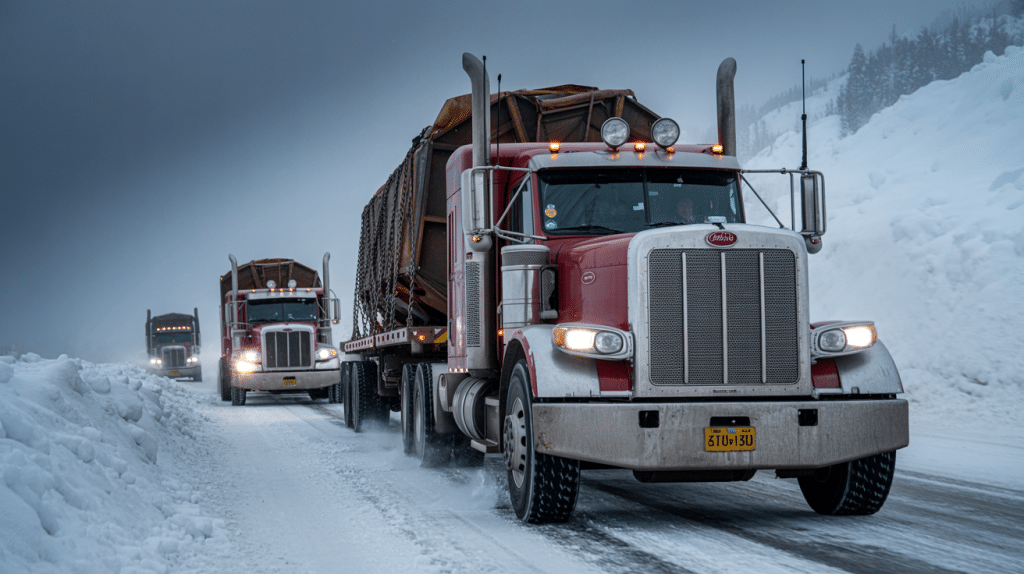
Permits may allow travel, but ice and snow change what is realistically safe. A heavy load can slide in ways that a normal truck cannot recover from quickly. Escorts may struggle to manage traffic. Recovery operations become more difficult and more dangerous.
In winter conditions, planning often includes:
- clear go/no-go rules before departure
- alternative scheduling windows
- route selection that prioritizes maintained highways
- staging options near safe parking and services
This is not about being cautious for no reason. It is about preventing an incident that becomes costly and public.
Heat: Tire Pressure, Brake Stress, and Equipment Fatigue
Hot weather introduces a different problem: component stress. Tires heat up, brakes work harder, and hydraulic systems can face greater strain. Long grades and stop-and-go traffic amplify these effects.
Heat planning includes:
- monitoring tire condition and pressure more carefully
- building inspection stops into the route
- avoiding long delays in heavy congestion when possible
- ensuring cooling systems and brakes are in top condition
This ties naturally into pre-trip inspections for heavy haul trucks, because equipment readiness becomes even more important when weather increases stress.
Low Visibility: Fog, Dust, and Heavy Rain
Visibility is a convoy safety factor. Escorts rely on communication and clear sightlines. The public must see and understand the convoy’s movements. In fog, dust, or heavy rain, the risk of sudden lane conflict increases.
Good visibility planning includes:
- ensuring all marker lights and warning signage are working
- using escort coordination discipline, not improvisation
- choosing travel times that reduce traffic and confusion
- pausing when visibility drops below safe levels
How Weather Planning Works in Real Operations
Weather planning is best when it’s built into the move in three layers:
Before the trip
- forecast review along the full route corridor
- identifying “weather exposure zones” (bridges, open plains, mountain passes)
- building schedule flexibility into permits and staging
During the trip
- real-time monitoring and communication
- planned inspection and staging stops
- readiness to pause rather than force movement
After sudden changes
- detour evaluation only if it remains compliant
- safe parking and staging options already identified
- customer communication that keeps expectations calm
When this process is done well, the move stays controlled even if the weather doesn’t cooperate.
Weather Can Create Secondary Hazards
Bad weather often triggers other hazards. Construction detours become harder. Road closures appear. Drivers face more fatigue. Recovery becomes more complex. That is why weather planning connects closely with hazard identification for heavy haul routes. Weather is often the spark that turns a small risk into a major disruption.
What Weather Planning Gives Equipment Owners and Construction Teams
For the customer, weather planning is mainly about predictability. Construction sites plan around deliveries. Equipment owners plan around downtime. When a heavy haul provider plans weather risk properly, customers receive realistic timelines and fewer surprise changes.
Instead of hearing “we’re delayed,” they hear “we planned for this and we have a controlled next step.”
Conclusion
Planning for adverse weather conditions in heavy haul transport is a critical part of safe execution. Wind, rain, snow, heat, and low visibility each change how an oversized load behaves, and those changes must be treated as operational factors, not bad luck. When weather exposure is included in routing, equipment readiness is confirmed through inspections, and staging options are built into the plan, heavy haul moves remain predictable even when conditions are not ideal. That predictability protects the load, the public, and the customer’s schedule.