Oversize Load Permits by State: The Complete 2026 Guide | Freedom Heavy Haul

Moving heavy equipment, large machinery, or oversized freight across state lines requires oversize load permits — and the rules are different in every state. A load that moves legally in Texas may need additional paperwork in New Mexico, and a route that’s straightforward in flat Kansas becomes complex in mountainous Colorado. This guide consolidates permit thresholds, legal limits, and key considerations for all 50 states, so you understand exactly what your load requires. Better yet, Freedom Heavy Haul handles every permit in-house — you never have to call a state permit office, calculate fees, or track multiple applications across state lines. Our permit team manages the process from start to finish, so you focus on your project while we handle the paperwork.

When Do You Need an Oversize Load Permit?

Federal regulations and state laws establish baseline dimensions beyond which a load is considered “oversize” and requires a special permit to move on public roads. A permit is required when your load — including the trailer — exceeds any one of these thresholds:

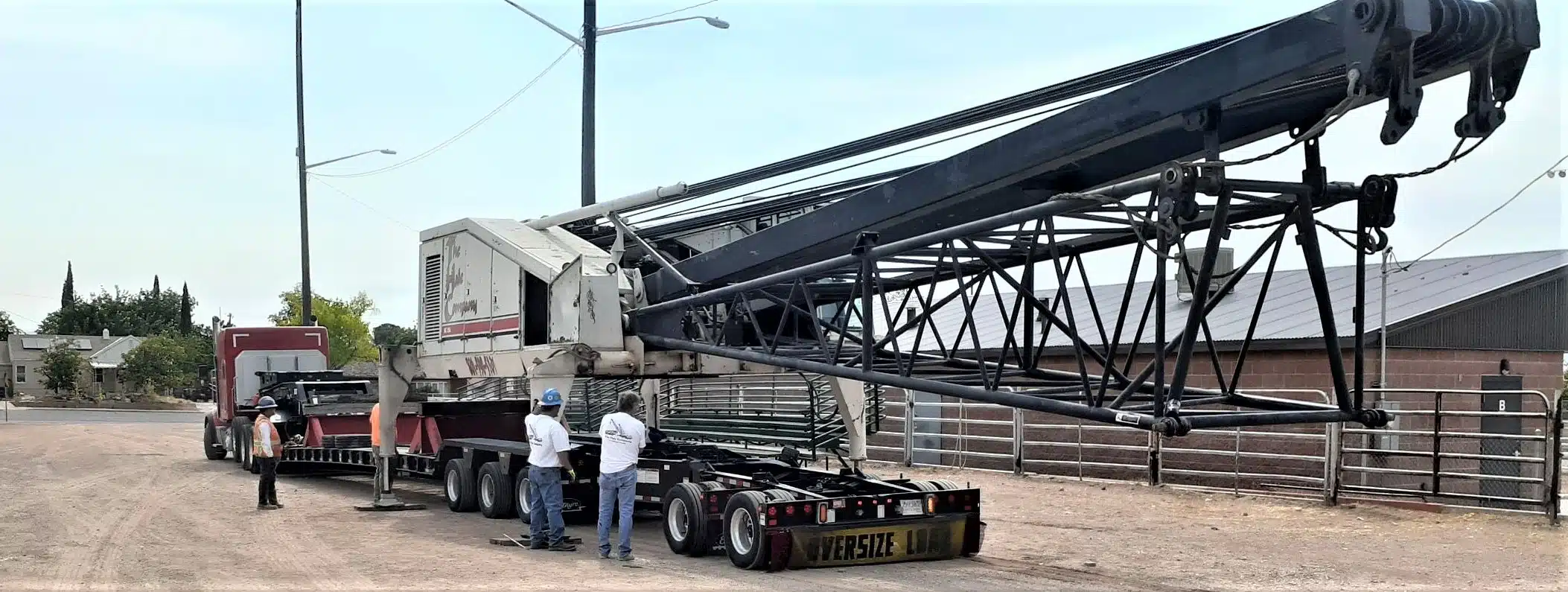
  • Width: 8 feet 6 inches (8’6″) — the most commonly triggered threshold. Many construction and agricultural machines exceed this even folded for transport.
  • Height: 13 feet 6 inches (13’6″) — bridges, overpasses, and utility lines are the constraint. Loaded height (trailer deck + load height) is what matters.
  • Length: 48 feet for a single vehicle; 65 feet for a combination vehicle. Long loads may also require front and rear pilot cars.
  • Weight: 80,000 lbs gross vehicle weight (GVW). Individual axle limits (20,000 lbs per single axle, 34,000 lbs per tandem) apply in addition to GVW.

Exceeding any single dimension — even if all others are within legal limits — triggers a permit requirement in every state. Moving without required permits risks fines up to $10,000+ per violation, equipment seizure, personal liability for road and bridge damage, and loss of carrier operating authority. It’s not a risk worth taking.

Freedom Heavy Haul’s in-house permit department is one of our most significant competitive advantages. Here’s exactly how the process works from the moment you book a move:

  • Load Measurement: We confirm exact loaded dimensions — width, height, length, and weight — before applying. Permit applications with inaccurate dimensions are rejected and must be re-filed.
  • Route Selection: Our team identifies permit-eligible routes in every state, checking bridge clearances, highway height restrictions, and road weight limits. Where the shortest route isn’t permit-eligible, we select the optimal compliant route.
  • Simultaneous Applications: We apply for permits in all states simultaneously — you don’t wait for State A before we apply in State B. This parallel processing minimizes total lead time.
  • Timeline — Standard Loads: Loads under 14′ wide and under 150,000 lbs typically receive permits in 24–72 hours per state, with many states offering same-day processing.
  • Timeline — Superloads: Loads exceeding 150,000 lbs or 16′ wide require bridge engineering reviews in most states — add 7–21 days per state for these loads. Early booking is essential.
  • Pilot Car Coordination: We arrange all required escort vehicles, certified to each state’s specifications — height poles, lights, flags, communication equipment, and proper certifications.
  • Permit Packet Delivery: Your driver receives the complete permit packet before departure — all state permits, routing conditions, time-of-day restrictions, and pilot car contact information.

State Permit Quick Reference Table

The table below shows standard permit thresholds for all 50 states. Note: Many states have higher limits for specific road classifications, annual permits, or agricultural equipment — consult Freedom Heavy Haul for your specific load and route.

StateMax Width (No Permit)Max HeightMax Weight (GVW)Permit AgencyNotes
Alabama8’6″13’6″80,000 lbsALDOTSuperloads >150K require 5-day notice
Alaska8’6″14′80,000 lbsAKDOT&PFHigher height limit statewide; seasonal weight restrictions
Arizona8’6″13’6″80,000 lbsADOT MVDSome highways allow 14′ height; extreme heat restrictions Jun–Sep
Arkansas8’6″13’6″80,000 lbsARDOTSpring weight restrictions on rural routes
California8’6″13’6″80,000 lbsCaltrans / CHPCARB emission regs apply to hauling trucks; strict night move requirements for wide loads
Colorado8’6″13’6″80,000 lbsCDOTAg equipment exemptions available; mountain pass restrictions in winter
Connecticut8’6″13’6″80,000 lbsCTDOTMany low bridges in older infrastructure
Delaware8’6″13’6″80,000 lbsDelDOTCompact state; permits processed quickly (same day available)
Florida8’6″13’6″80,000 lbsFDOTTurnpike authority separate; hurricane evacuation contraflow affects routing
Georgia8’6″13’6″80,000 lbsGDOTAnnual permits available for repetitive routes
Hawaii8’6″13’6″80,000 lbsHDOTIntrastate only; no land connection to mainland
Idaho8’6″14′80,000 lbsITDHigher height limit; ag equipment exemptions available
Illinois8’6″13’6″80,000 lbsIDOTAg equipment seasonal window permits; harvest season exemptions for local moves
Indiana8’6″13’6″80,000 lbsINDOT5-axle superloads require engineering study; spring weight restrictions in effect
Iowa8’6″13’6″80,000 lbsIowa DOTAg equipment harvest window permits; spring road restrictions Feb–Apr
Kansas8’6″13’6″80,000 lbsKDOTAg equipment local-move exemptions during planting/harvest
Kentucky8’6″13’6″80,000 lbsKYTCCoal country roads have strict axle weight rules; bridge formula strictly enforced
Louisiana8’6″13’6″80,000 lbsLADOTDMany movable bridges; coastal routes require tide coordination
Maine8’6″13’6″80,000 lbsMaineDOTSpring weight restrictions (Mud Season) Mar–May; coastal wind restrictions
Maryland8’6″13’6″80,000 lbsMDOT SHABay Bridge has load/height restrictions; Baltimore tunnel height restrictions
Massachusetts8’6″13’6″80,000 lbsMassDOTMany historic low bridges; night moves required for many oversize loads
Michigan8’6″13’6″80,000 lbsMDOTSpring weight restrictions Feb–Apr; bridge clearances vary significantly
Minnesota8’6″13’6″80,000 lbsMnDOTSpring load restrictions typically 10-ton routes; harvest window permits available
Mississippi8’6″13’6″80,000 lbsMDOTHurricane season road closures; some county road restrictions
Missouri8’6″13’6″80,000 lbsMoDOTAnnual permits available; no weekend travel restrictions for standard oversize
Montana8’6″14′80,000 lbsMDTHigher height limit; ag equipment exemptions; seasonal weight restrictions on secondary roads
Nebraska8’6″14’6″80,000 lbsNDOTHigher height limit; ag equipment harvest window permits widely used
Nevada8’6″14′80,000 lbsNDOTHigher height limit; mining equipment permits common; extreme heat restrictions
New Hampshire8’6″13’6″80,000 lbsNHDOTSpring weight restrictions; many covered bridges on rural routes
New Jersey8’6″13’6″80,000 lbsNJDOTDense urban corridors; Garden State Parkway separate permit authority
New Mexico8’6″14′80,000 lbsNMDOTHigher height limit; Permian Basin oil/gas traffic common; some county roads restricted
New York8’6″13’6″80,000 lbsNYSDOTThruway authority separate; NYC area extremely complex; many low bridges
North Carolina8’6″13’6″80,000 lbsNCDOTHurricane season coastal restrictions; ferry routes for Outer Banks
North Dakota8’6″14′80,000 lbsNDDOTHigher height limit; Bakken oil activity; spring weight restrictions on gravel roads
Ohio8’6″13’6″80,000 lbsODOTTurnpike separate authority; Marcellus/Utica shale traffic heavy in eastern OH
Oklahoma8’6″13’6″80,000 lbsODOTOil/gas corridor permits well-established; some county roads require separate county permits
Oregon8’6″14′80,000 lbsODOTHigher height limit; logging equipment common; mountain pass seasonal restrictions
Pennsylvania8’6″13’6″80,000 lbsPennDOTSteep grades in western PA; Marcellus shale traffic; Turnpike separate authority
Rhode Island8’6″13’6″80,000 lbsRIDOTSmall state; permits processed quickly; many old bridges
South Carolina8’6″13’6″80,000 lbsSCDOTHurricane season evacuations affect routing; coastal bridge restrictions
South Dakota8’6″14′80,000 lbsSDDOTHigher height limit; ag equipment exemptions; spring weight restrictions
Tennessee8’6″13’6″80,000 lbsTDOTMemphis bridge area restrictions; Nashville metro routing complex
Texas8’6″14′80,000 lbsTxDMVHigher height limit; loads up to 14′ wide may not need front escort on some roads; county road permits separate; Permian Basin special corridors
Utah8’6″14′80,000 lbsUDOTHigher height limit; mining equipment common; mountain pass winter restrictions
Vermont8’6″13’6″80,000 lbsVTransSpring weight restrictions (Frost Law); many covered bridges; ski season traffic
Virginia8’6″13’6″80,000 lbsVDOTNOVA metro area complex; Hampton Roads tunnel height restrictions
Washington8’6″14′80,000 lbsWSDOTHigher height limit; ferry system for island destinations; mountain pass winter restrictions
West Virginia8’6″13’6″80,000 lbsWVDOHCoal country routes with strict axle weights; steep mountain grades; narrow roads
Wisconsin8’6″13’6″80,000 lbsWisDOTSpring weight restrictions; Dairy Belt ag equipment common; frozen ground season allows higher weights
Wyoming8’6″14’6″80,000 lbsWYDOTHighest height limit in lower-48; mining/coal industry permits well-established; wind restrictions I-80

Getting Permit Costs Right

Oversize permit costs are a real line item in every heavy haul job, and understanding how they’re calculated helps you plan your project budget accurately.

How Permit Fees Are Calculated

Most states charge permit fees based on mileage within the state, load dimensions, and load weight. A heavier, wider load crossing a longer route in a state will cost more than a lighter load traveling 20 miles. Some states use flat per-trip fees for standard oversize loads; others have mileage-based formulas.

Typical Permit Cost Ranges

  • Standard Oversize (8’6″–12′ wide, under 80,000 lbs): $15–$50 per state for a single-trip permit
  • Extra-Wide Loads (12’–14′ wide): $50–$150 per state; front pilot car usually required
  • Heavy Loads (80,000–150,000 lbs): $50–$200 per state depending on axle configuration and miles
  • Superloads (150,000+ lbs or 16’+ wide): $200–$2,000+ per state; engineering review fees additional
  • Annual/Blanket Permits: Available in some states for operators with repetitive routes — significant cost savings over multiple single-trip permits

Freedom Heavy Haul provides all-in quotes that include estimated permit costs, pilot car fees, and transport charges in a single transparent price. No surprise invoices after your equipment is delivered.

Get Your Oversize Load Permits Handled

Stop spending hours on permit offices, fee schedules, and route mapping. Freedom Heavy Haul’s in-house permit team handles everything — from route selection and simultaneous multi-state applications to pilot car coordination and permit packet delivery to your driver.

Whether you’re moving one piece of construction equipment or coordinating a full rig move across four states, we manage the permit process so you don’t have to. Our team is available 24/7 — call (888) 510-4490 or submit our online quote form to get started. Most quotes, including permit cost estimates, are returned within 1–2 hours.

Frequently Asked Questions

What triggers an oversize load permit?

An oversize load permit is required when a vehicle or load exceeds any of these federal thresholds: 8’6″ wide, 13’6″ tall, 48′ long (single vehicle) or 65′ long (combination), or 80,000 lbs gross vehicle weight. Exceeding any single dimension — even if all others are legal — requires a permit.

How much does an oversize load permit cost?

Oversize load permit costs vary by state and load dimensions. Standard single-trip permits typically range from $15–$100 per state. Superload permits (loads over 150,000 lbs or 16′ wide) can cost $200–$2,000+ per state after engineering reviews. Freedom Heavy Haul provides all-in quotes that include estimated permit costs.

How long does it take to get oversize load permits?

Standard oversize permits (under 14′ wide, under 150,000 lbs) are typically issued in 1–3 business days per state. Some states offer same-day processing. Superload permits requiring engineering bridge analysis can take 7–21 days per state. Freedom Heavy Haul submits all state applications simultaneously to minimize total lead time.

Do I need a pilot car for my oversize load?

Pilot car requirements vary by state and load dimensions. Generally, loads over 12′ wide require one pilot car, and loads over 14′ wide require both front and rear escort vehicles. Some states require pilot cars for loads over 13’6″ tall. Freedom Heavy Haul coordinates all pilot car requirements as part of every permitted move.

Can I move an oversize load on weekends?

Most states allow oversize load movements on weekdays during daylight hours. Weekend travel restrictions vary by state — some prohibit oversize moves on Sundays, others restrict travel on holiday weekends only. Certain states restrict night moves for wide loads. Freedom Heavy Haul’s permit team knows every state’s travel time restrictions and plans routes accordingly.

Get Quote