
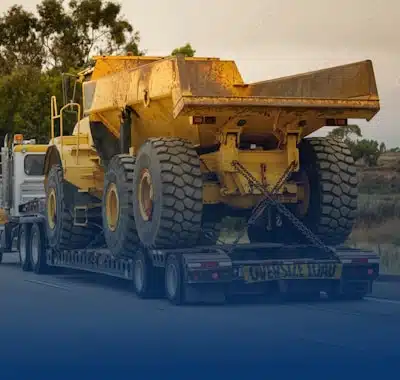
Every state has different oversize/overweight permit requirements, processing times, travel restrictions, and escort rules. This guide covers the key state-level requirements you need to know — and connects to our detailed state pages for full per-state breakdowns.
Understanding the Federal Framework First
Before diving into state differences, here’s the federal baseline that all state rules build on.
Federal Legal Limits (Without Permits)
Any load exceeding these limits requires state permits:
- Gross Vehicle Weight: 80,000 lbs
- Single axle: 20,000 lbs
- Tandem axle group: 34,000 lbs
- Width: 8.5 feet (102 inches)
- Height: 13.5 – 14 feet (varies by state)
- Length: 48 – 53 feet (varies by configuration)
When a load exceeds any one of these limits — even if all others are within range — it requires oversize/overweight (OS/OW) permits from every state it travels through.
The Federal Bridge Formula
The bridge formula governs how much weight any combination of axles can carry based on the distance between them. The formula prevents damage to bridge structures by ensuring weight is distributed appropriately.
The simplified version: The farther apart your axle groups are, the more total weight they can legally carry.
Formula: W = 500 × [(LN / (N-1)) + 12N + 36]
Where:
- W = maximum weight in lbs
- L = distance in feet between the outermost axles
- N = number of axles
For heavy haul purposes, this means that multi-axle configurations can carry significantly more weight than the per-axle limits suggest — as long as axle spacing meets the formula.
Kingpin to Rear Axle Distance: Federal law limits the distance from the kingpin (the trailer coupling point) to the center of the rear axle group. The maximum is 41 feet on Interstate highways. This limit prevents heavy trailers from turning through areas not designed for their swing radius.
Bridge Formula vs. Gross Weight
Many loads are limited by the bridge formula rather than gross weight. A load might be under 80,000 lbs GVW but still require a permit because its axle configuration concentrates weight in a way that violates the bridge formula. Your carrier should be calculating this before they quote.
Permit Types: What You’ll Actually Be Filing
Single-Trip Permits
Issued for one specific move on a defined route. Required for most oversize loads. Valid for the dates specified — typically 5–10 days to allow for weather delays.
Annual / Blanket Permits
Cover repeated movements within a state for loads within pre-defined standard dimensions. Common for contractors who move equipment frequently within a single state. Save significant time and permit fees for high-volume operators.
Superload Permits
For loads exceeding most state single-trip permit thresholds (typically 200,000+ lbs GVW and/or extreme dimensions). Require detailed route surveys, engineering certification in many states, and sometimes weeks of advance planning.
Trip Permits
Short-duration permits for registration or tax purposes — different from oversize permits; relevant when moving unregistered equipment.
State-by-State Key Requirements
Southeast Region
Georgia
- Max OS/OW without superload: 150,000 lbs GVW, 14 ft wide, 15 ft high
- Annual permit available for loads within 120,000 lbs GVW, 12 ft wide, 14.5 ft high
- Travel restrictions: no travel on Sundays on some routes; nighttime travel required for loads over 14 ft wide
- Notable: Georgia has relatively fast permit processing (3–5 days standard)
Florida
- Single-trip max: 225,000 lbs GVW, 14 ft wide, 14.5 ft high
- Annual permit available for standard OS configurations
- Requires permit for loads over 8.5 ft wide (same as federal)
- Notable: Florida’s permit processing is efficient; online portal available; some toll roads have their own oversize requirements
Alabama
- Single-trip max: 200,000 lbs GVW
- State police escort required for loads over 16 ft wide
- Travel restrictions: no oversize moves on Sundays or holidays for some load classes
- Notable: Alabama requires separate district permits in some cases; processing can run 5–7 days
Mississippi
- Single-trip max: 200,000 lbs GVW
- Known for slower permit processing: standard loads 5–7 days; super loads 3–4 weeks
- State police escort required for super loads
- Notable: Mississippi requires MS Highway Patrol escort for loads over 200,000 lbs
Tennessee
- Annual permit available for loads within standard OS dimensions
- Super load threshold: 200,000 lbs GVW or loads over 16 ft wide
- Notable: Tennessee processes standard permits quickly via online portal (2–4 days)
South Carolina
- Single-trip permits only (no statewide annual blanket permit for most classes)
- Known for slower processing: 5–10 days for standard loads
- Super load review by SCDOT Bridge Management: 4–6 weeks
- Notable: South Carolina requires a permit for loads over 12 ft wide in some counties; local restrictions can apply
North Carolina
- Standard processing: 3–5 business days
- Annual permits available for qualifying configurations
- Bridge formula strictly enforced; NCDOT reviews bridge ratings on file permits
- Notable: NC requires a permit for loads over 90,000 lbs GVW on certain highway classifications
Texas
Texas deserves its own section. It’s the largest state by road miles that heavy haul traverses, has its own distinct permit structure, and is the origin or destination for a significant portion of oil, gas, and agriculture equipment moves.
Texas permit thresholds:
- Oversize begins at 8.5 ft wide, 14 ft high, 65 ft long
- Overweight begins at 80,000 lbs GVW
- TXDOT super load threshold: 254,000 lbs GVW, or width over 20 ft, height over 18 ft
Texas Annual Permits: Available for loads within 125,000 lbs GVW, 14 ft wide, 14.5 ft high, 95 ft long
Texas permit processing: Fast by state standards — online portal, standard loads typically 1–3 days
Notable Texas rules:
- Texas requires a separate permit for loads crossing certain county roads with lower bridge ratings
- The Texas Farm-to-Market road system has restrictions that don’t apply to US/State highways
- Loads crossing from Texas into Louisiana, Arkansas, or Oklahoma often face permit turnaround differences; plan for the longer state’s timeline
Midwest Region
Ohio
- Annual permits widely used for construction and agriculture
- Super load threshold: 225,000 lbs GVW
- Ohio requires ODOT bridge review for super loads
- Notable: Ohio has extensive permit restrictions around state-route bridges with lower ratings
Indiana
- Annual permits available
- Standard processing: 3–5 days
- Notable: Indiana restricts oversize moves during the spring weight restriction period (typically March–May) — loads that would normally be legal may be restricted or reduced
Illinois
- Multi-trip permits available for qualifying loads
- Super load threshold: 200,000 lbs GVW
- Notable: Illinois requires IDOT route approval for super loads; processing can run 2–3 weeks for complex routes
Michigan
- Among the strictest states for spring weight restrictions — some routes restricted February through April
- Annual permits for qualifying configurations
- Notable: Michigan’s spring thaw period creates significant delays; plan moves through Michigan outside February–April when possible
Minnesota
- Seasonal weight restrictions apply (spring restriction period)
- Annual permits available
- Notable: MnDOT has detailed bridge rating database; super load review checks all structures on route
Great Plains
Kansas
- Annual permits for loads within 120,000 lbs, 14 ft wide
- Fast processing: 1–3 days for standard loads
- Notable: Kansas routes through wheat country experience congestion during harvest season (June–July) — plan accordingly
Nebraska
- Annual permits available
- NDOR super load review required for loads over 200,000 lbs
- Notable: Nebraska restricts oversize moves during spring thaw period on certain highways
Oklahoma
- Annual permits available for qualifying loads
- Super load threshold: 200,000 lbs GVW
- Notable: Oklahoma is a major corridor for oil-field equipment; permit volume is high and processing is generally efficient (3–5 days)
Western Region
California
- Among the most complex permit states in the country
- California Bridge Law: California’s state bridge formula is more restrictive than the federal formula. California limits maximum gross weight on state highways based on a different axle-spacing calculation. Loads legal under federal bridge formula may still require special permits in California.
- Standard oversize threshold: 8.5 ft wide, 14 ft high, 65 ft long, 80,000 lbs GVW
- Caltrans super load threshold: 200,000 lbs GVW, or loads over 16 ft wide or 15 ft high
- Annual permits available but with restrictions
- Processing: 5–10 days for standard; super loads 3–6 weeks; Caltrans requires route survey for all super loads
- Notable: California restricts travel on Bay Area bridges and in the Los Angeles basin during peak traffic hours; night travel required for wide loads in urban areas
Colorado
- Annual permits available for qualifying configurations
- Mountain routes add complexity: steep grades, tight turns, and seasonal closures (I-70 mountain corridor restrictions apply to oversized loads)
- Notable: CDOT restricts oversize moves on certain mountain passes October–April; chain requirements apply
Arizona
- Annual permits available
- Standard processing: 3–5 days
- Notable: Arizona restricts oversize moves during extreme heat hours on some desert routes (unusual among states); summer daytime restrictions can apply to loads over 14 ft wide
Washington
- Annual permits available
- Seasonal restrictions: spring weight restrictions apply
- Notable: Washington has specific bridge restrictions in the Puget Sound region and detailed permit requirements for coastal routes
Oregon
- Annual permits available
- Oregon DOT requires detailed route surveys for super loads
- Notable: Oregon has strict weight restrictions on some coastal and mountain routes; forest road regulations apply to certain logging region routes
Permit Processing Timeline by State — Quick Reference
| State | Standard Load (3–5 days) | Super Load (2–4 weeks) |
|---|---|---|
| Texas | 1–3 days | 2–3 weeks |
| Florida | 2–4 days | 3–4 weeks |
| Tennessee | 2–4 days | 2–3 weeks |
| Georgia | 3–5 days | 3–4 weeks |
| Oklahoma | 3–5 days | 2–3 weeks |
| Kansas | 1–3 days | 2–3 weeks |
| Mississippi | 5–7 days | 4–6 weeks |
| South Carolina | 5–10 days | 4–6 weeks |
| California | 5–10 days | 4–8 weeks |
| Illinois | 5–7 days | 2–4 weeks |
Travel Hour Restrictions
Most states restrict when oversize loads can travel based on width, height, and highway classification. Common restrictions:
- Nighttime travel required for loads over 14 ft wide in most states (move between sunset and sunrise rather than daytime)
- No travel on Sundays or holidays for some load classes
- No travel during peak traffic — many urban corridors (LA, Atlanta, Chicago, Dallas) restrict oversize moves during morning and afternoon rush hours
- No travel during inclement weather — loads over 14 ft wide are typically restricted in rain, fog, or wind above 35 mph
Your carrier is responsible for knowing and complying with all travel restrictions — make sure yours has a dispatch team tracking these in real time.
Multi-State Permit Strategy
For interstate moves, permits must be filed for every state on the route — simultaneously when possible. The permit lead time is set by the slowest state on the route.
Example: LA to Dallas to Chicago
- Texas: 1–3 days
- Oklahoma: 3–5 days
- Missouri: 3–5 days
- Illinois: 5–7 days
The controlling timeline is Illinois at 5–7 days. File all permits simultaneously; the move can proceed once all are in hand.
For super loads, each state may require its own review:
- Some states require bridge analysis by a licensed PE
- Some states require state police coordination scheduled weeks in advance
- Some states require Caltrans / NCDOT / TxDOT route approval that isn’t delegable to the carrier
Freedom Heavy Haul manages all of this in-house. We don’t rely on third-party permit brokers — our permit team has direct relationships with state DOT permit offices nationwide.
State-Specific Heavy Haul Pages
For complete permit requirements, route recommendations, common loads, and local contacts in each state, see our full state guides:
[State page links — internal links to all 50 state pages on the site]
Each state page covers: permit requirements, super load thresholds, escort rules, travel restrictions, common routes, and local insights from our drivers who run those corridors regularly.
Have a Multi-State Move? Let Us Handle the Permits.
Permit research across 4–6 states is a full day’s work. Our team does it daily. Call (866) 305-6018 or request a quote online — we’ll identify the permit requirements for your specific route, give you a realistic timeline, and handle the filings.
Freedom Heavy Haul — all 48 contiguous states, all permit types, in-house.