Construction equipment transport is priced by conditions, not by machine name alone. Two pieces of equipment may look similar in size and still cost very different amounts to move because the real price comes from how the machine loads, how it sits on the trailer, what the route allows, and how much control the project requires from start to finish.
This article fits within the broader structure behind heavy haul transport costs and project pricing, where equipment, timing, permits, route difficulty, and trailer choice all shape the final quote together.
Construction equipment is one category, but not one pricing pattern
A skid steer, a wheel loader, an excavator, and a bulldozer may all fall under “construction equipment,” yet they do not create the same hauling conditions. One machine may load quickly and travel on a simpler setup. Another may need lower deck height, more careful securement, or a more restrictive route because of its height, width, or balance.
That is why construction equipment pricing starts with the actual machine, not the general category.
Machine dimensions are usually the first major cost driver
Construction equipment begins affecting price the moment its dimensions narrow the carrier’s options. Height can create clearance problems. Width can trigger escort or lane-control requirements. Length can affect trailer choice and turning space. Weight can change axle configuration, permit work, and bridge planning.
The important thing is that these dimensions do not affect price equally on every job. Their impact depends on what kind of transport problem they create along the route.
Weight matters, but placement matters too
A machine’s total weight is important, but so is how that weight is carried. Some construction equipment is compact and dense. Some is long with uneven balance. Some carries most of its mass through tracks or counterweights. These differences affect how the load should sit on the trailer and how much effort it takes to make the move legally workable.
That is one reason quotes can change significantly even between machines that appear similar at first glance. The issue is not only “how heavy?” but also “how difficult is this weight to carry correctly?”
Attachments and working configuration can raise the price quietly
Buckets, blades, forks, booms, rippers, and specialized attachments often change transport cost more than customers expect. They can increase total height, extend overall length, change center of gravity, or create additional securement demands. In some cases, the attachment should stay on the machine. In other cases, removing it creates a much cleaner move.
Those decisions matter because they can change:
- trailer needs
- permit conditions
- route feasibility
- loading and unloading method
- total project time
A quote built around the wrong machine configuration often becomes less accurate than the customer expects.
Trailer requirements often separate lower-cost moves from higher-cost ones
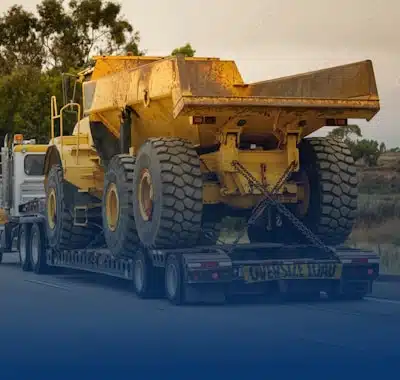
Some construction equipment can move on relatively accessible trailer setups. Other machines need low-profile decks, detachable systems, or more specialized axle arrangements. Once the move depends on more specific equipment, the cost usually rises because the carrier is assigning a more specialized solution rather than a more ordinary one.
Customers often see this most clearly when comparing machines that require different trailer setups even over the same route. The equipment may be going to the same jobsite, but the trailer requirement changes the entire structure of the quote.
Loading and unloading conditions are part of the price
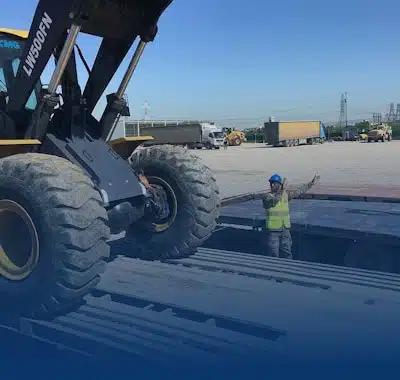
Construction equipment does not always load from neat, open yards. It may be picked up from soft ground, tight sites, roadside projects, utility corridors, or partially active construction zones. That affects the cost because awkward site conditions usually slow the operation and increase the level of care required.
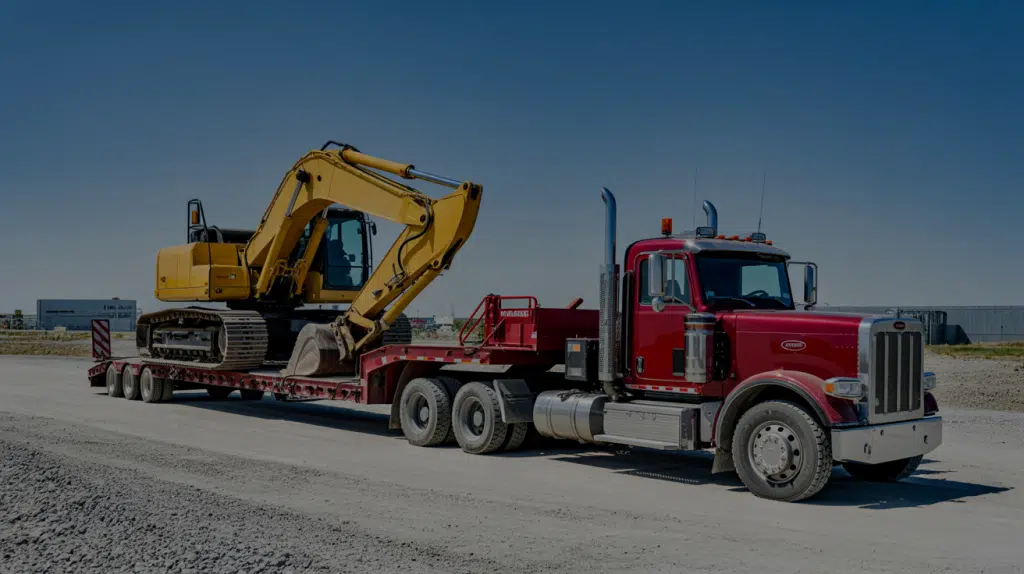
Loading and unloading become more expensive when the site creates:
- poor approach angles
- limited maneuvering space
- unstable ground
- lifting instead of drive-on loading
- repeated repositioning or staging delays
Those costs are not always obvious on the quote line by line, but they are built into the project effort.
Route conditions can affect construction equipment pricing more than distance
A relatively short move can still price high if the route includes restricted bridges, narrow urban sections, low clearances, or difficult turning points. Construction equipment often moves between live work environments and developed areas, which means the route may create more restrictions than the machine alone.
That relationship becomes clearer through how route complexity changes heavy haul pricing, because the road conditions between the two sites often matter as much as the equipment itself.
Permits and escorts become cost drivers when the machine leaves “ordinary” limits
Not every piece of construction equipment requires extensive permit work, but once the machine becomes taller, wider, heavier, or more route-sensitive, permit and escort requirements can begin shaping the whole move. These are not just added fees. They often define how the load may travel, when it may move, and how much coordination the transport team must carry around the project.
In practical terms, the machine becomes more expensive to move when it stops behaving like ordinary freight and starts behaving like a managed heavy haul operation.
Timing can increase the cost even when the machine stays the same
A construction machine does not become physically different because the calendar changes, yet the price can still change. Seasonal conditions, site deadlines, compressed schedules, and high-demand hauling periods all affect availability and flexibility. A move planned calmly and early often prices differently from one that must happen immediately around other project pressure.
That matters because construction transport is usually tied to project timelines, and project timelines often push cost upward when flexibility disappears.
Better information usually leads to a better quote
Construction equipment quotes become more accurate when the customer provides:
- exact machine model
- operating weight
- attachment details
- true transport dimensions
- pickup and delivery conditions
- time expectations
Without those details, the carrier is pricing uncertainty along with transport. When the facts are clearer, the quote becomes more precise and the project usually becomes smoother.
Conclusion
Cost factors in moving construction equipment come from the actual transport demands the machine creates. Dimensions, weight, attachments, trailer requirements, site conditions, route difficulty, permits, and timing all shape the final price. A quote is not simply the cost of hauling a machine from one point to another. It is the cost of moving that specific machine under those specific conditions without delay, damage, or avoidable risk.