

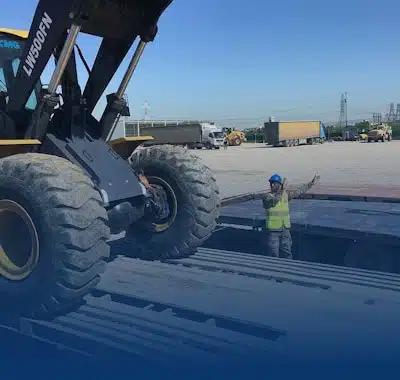
Heavy haul transport pricing is shaped by constraints, not mileage alone. A shipment becomes more expensive when its size, weight, route, timing, or equipment needs demand more planning, more control, and more specialized execution. A relatively simple move with legal dimensions and an easy route will never be priced the same way as a project that requires permits, escorts, specialized trailers, and schedule coordination across multiple restrictions.
That is the core idea behind heavy haul pricing: the quote reflects the transport challenge, not just the trip distance.
Why heavy haul pricing works differently from standard freight
Standard freight usually moves within a familiar system. The trailer type is common, the route is flexible, and the load fits normal legal dimensions. Heavy haul changes that structure. Once a shipment becomes oversized, overweight, or difficult to route, the carrier is no longer pricing only transportation. The carrier is pricing the work required to make the transport safe, legal, and predictable.
That extra work can include route review, trailer matching, axle planning, permit coordination, escort scheduling, loading support, and timing restrictions. As those layers build, the quote becomes more complex because the move itself becomes more controlled.
The load itself is the first pricing factor
The shape and weight of the cargo create the first layer of cost. A tall load may trigger clearance issues. A wide load may require escorts and lane control. A long load may affect turning space, trailer choice, and route flexibility. A dense load may create axle and bridge challenges even if the dimensions look manageable.
That difference matters because heavy haul pricing is built around the transport problem the load creates. A customer looking more closely at why oversized freight costs more than standard transport will usually see that restrictions, not just scale, are what change the quote.
Trailer requirements can change pricing quickly
The trailer is part of the transport solution, not just the surface the cargo sits on. Some shipments can move on simpler equipment. Others require lower-deck setups, detachable systems, multi-axle trailers, or more specialized support. Once equipment becomes more specific, availability narrows and execution becomes more demanding.
Because of that, the trailer type behind a heavy haul quote often has a direct effect on final project pricing. The more tailored the trailer must be to the load, the more the quote reflects that setup.
Route conditions often shape cost more than customers expect
A route that looks short on a map can still be expensive if it crosses restrictive bridges, low-clearance corridors, construction zones, narrow turns, or heavily controlled urban sections. In heavy haul, distance and difficulty are not the same thing. A longer route with cleaner infrastructure may be easier and more economical than a shorter route full of operational pressure points.
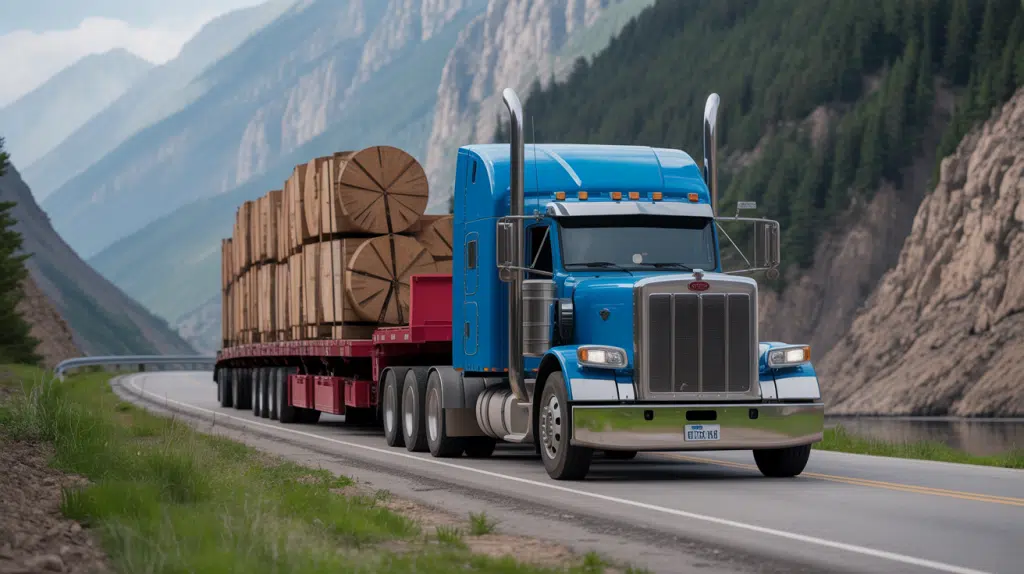
That is where route complexity starts influencing heavy haul pricing in a very real way. The route affects time, control, risk, and sometimes even whether the original trailer plan remains workable.
Permits and escorts add more than line-item cost
Permits and escorts are often treated as simple extras, but in practice they change how the move is structured. Permit conditions may narrow travel windows, define exact routing, or limit how and when the load can move. Escorts may affect lane usage, convoy behavior, and coordination through specific sections of the route.
A move that requires more legal oversight tends to require more operational control as well. That relationship becomes clearer when you look at the cost impact of permits and escort requirements, especially on loads that move across multiple jurisdictions.
Distance still matters, but it does not work alone
Mileage still affects fuel, labor time, equipment usage, and exposure to delays over the course of the move. Even so, distance is only one part of the quote. In heavy haul, 200 difficult miles can create more cost than 600 manageable ones if the shorter move carries more restrictions.
A customer comparing routes should think about travel distance as one factor inside a larger pricing picture. That is exactly where distance and oversized transport pricing becomes more useful than a simple per-mile assumption.
Equipment category also changes the transport quote
Different types of equipment create different planning pressures. A compact machine may be easier to load and secure than a large machine with multiple movement points. A piece of construction equipment may need different handling, trailer support, or attachment control than a generator, crusher, or industrial unit.
That is one reason construction equipment transport costs can follow different pricing logic from other heavy haul categories, even when the trip distance is similar.
Seasonal timing can increase cost without changing the load
The load may stay the same while the transport environment changes around it. Seasonal weather, road conditions, reduced travel windows, regional restrictions, and shifting project demand can all influence price. A move scheduled during a calmer period may be easier to route and execute than the same move during a season with more operational pressure.
Customers planning around weather and road risk often understand the quote better after reading about how seasonal conditions raise heavy haul transport costs. The cargo may be identical, but the execution environment is not.
Pricing becomes clearer when the carrier has better information
One of the fastest ways to reduce confusion in a heavy haul quote is to provide clear project details early. Accurate dimensions, true operating weight, attachment information, pickup conditions, delivery access, and timing expectations help the carrier build a more realistic price from the start.
When key facts are missing, the quote often stays broader because the risk stays broader. Customers who want a cleaner, faster pricing process usually benefit from knowing what to prepare before requesting a heavy haul quote.
The quote is really the cost of controlled execution
A heavy haul quote is not just a number attached to a truck move. It is the cost of solving a transport problem correctly. The more the move asks from the carrier in terms of planning, compliance, route control, trailer setup, timing, and equipment coordination, the more detailed and project-specific the pricing becomes.
That is why two moves with similar mileage can still produce very different quotes. The difference usually comes from the conditions around the load, not from the distance alone.
Conclusion
Heavy haul transport costs are shaped by the realities of the project: the load, the trailer, the route, the legal requirements, the distance, the season, and the amount of control the move demands. A quote becomes higher when the shipment creates more restrictions, more coordination, or more specialized execution. Once customers see heavy haul pricing through that lens, the number makes more sense. It is not simply the cost of movement. It is the cost of moving the load safely, legally, and without avoidable disruption.