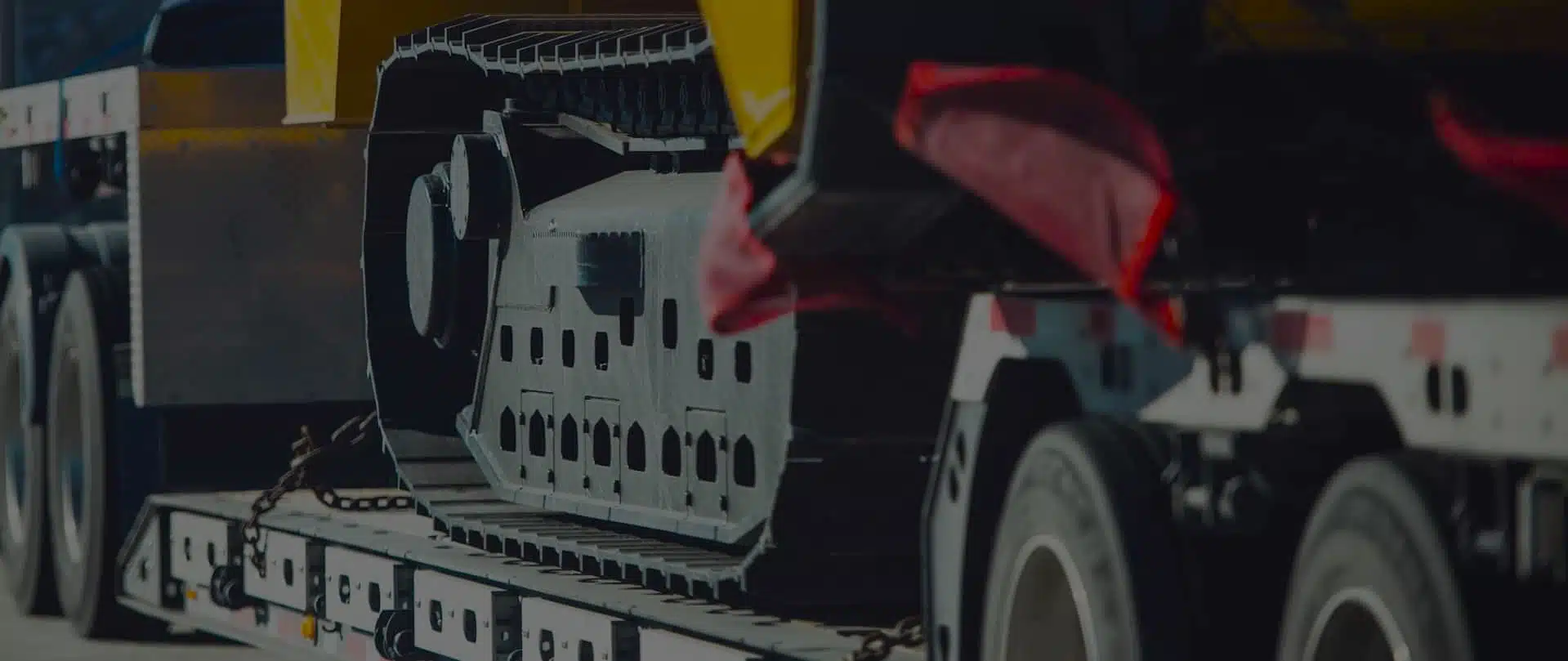
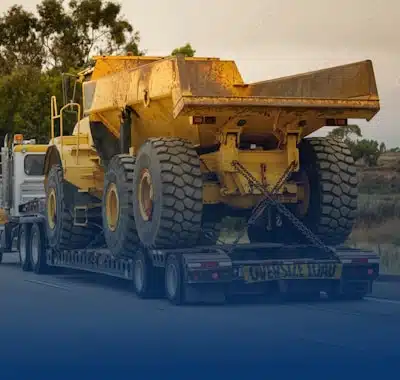
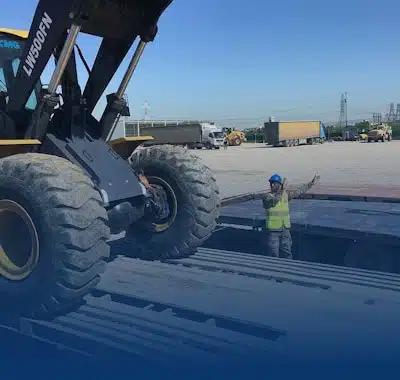
Two heavy haul moves can cover the same distance, carry similar machines, and still produce very different quotes. One of the biggest reasons is the trailer. In heavy haul work, the trailer is not just transport equipment. It shapes loading method, travel height, axle behavior, route flexibility, and how much control the move will need from start to finish.
That is part of the broader pricing structure explained in what affects heavy haul transport costs and project pricing, where equipment choice sits beside route conditions, permits, timing, and load dimensions.
The quote changes when the trailer stops being common
A standard trailer is easier to source, easier to schedule, and easier to work into an ordinary dispatch plan. A specialized trailer changes that. Once a load needs a lower deck, a detachable front, extra axle support, or a trailer designed around unusual dimensions, the move becomes more specific. Specific equipment usually means narrower availability, more planning, and more project control.
That is the first pricing shift. The carrier is no longer assigning “a trailer.” The carrier is assigning the right trailer for one particular transport problem.
Trailer type affects more than capacity
Customers often focus on whether a trailer can carry the weight. That matters, but it is only one part of the decision. Trailer type also changes:
- overall transport height
- loading angle and loading method
- axle placement and weight distribution
- turning behavior on restricted routes
- securement geometry and deck support
- route feasibility through bridges, turns, and work zones
Once those variables start changing, the quote changes with them.
Lower decks often solve one problem while creating a more specialized move
A lower trailer deck can make a difficult load possible. It can reduce travel height, improve stability, and open cleaner route options. At the same time, low-profile and specialized setups are not priced like ordinary equipment. They are usually in higher demand, more limited in supply, and more closely tied to specific types of jobs.
So the customer is not only paying for the physical trailer. The customer is paying for the transport capability that trailer makes possible.
Detachable and purpose-specific trailers increase planning value
Some loads are easier and safer to load with detachable gooseneck or purpose-built heavy haul setups. That reduces loading stress and improves machine access, especially for large equipment that must be driven or carefully positioned onto the deck. When that type of trailer is required, the move often becomes smoother operationally, but it also becomes more specialized commercially.
That is why trailer choice influences the quote even before route work begins. The equipment decision changes the project structure early.
Trailer type can change the route, and the route can change the trailer
A taller trailer may be easier to assign, but it can create clearance problems. A lower trailer may solve those clearance problems, but it may also change loading conditions, axle distribution, or turning behavior. In real heavy haul planning, those decisions often move together rather than separately.
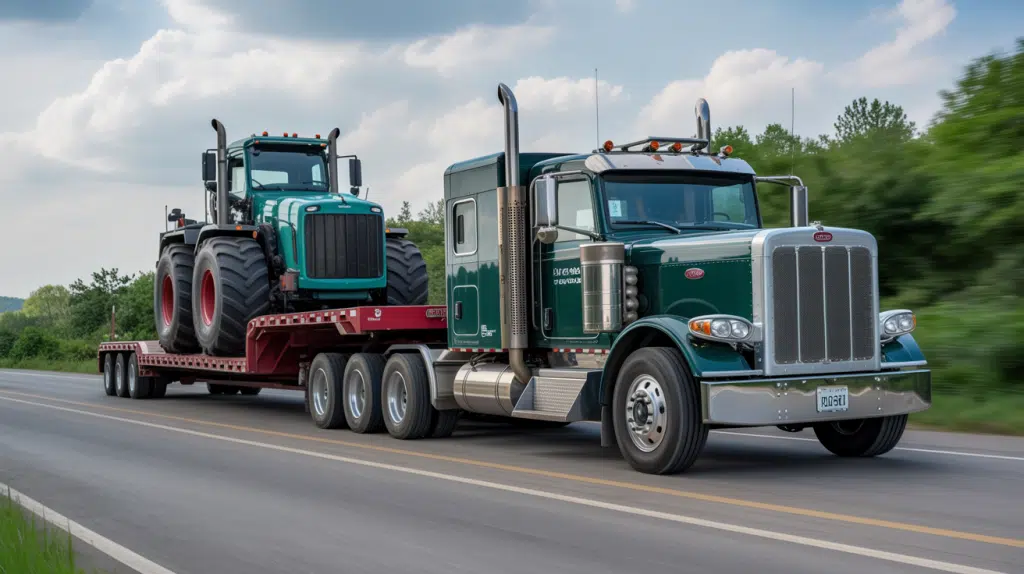
That is where route complexity starts raising heavy haul pricing, because once the trailer and the route begin shaping each other, the quote becomes more project-specific.
Axle-related trailer setups usually carry higher pricing pressure
Some trailer types are chosen mainly because of how they distribute weight. When a move needs additional axle support, broader footprint, or more controlled loading across infrastructure, the trailer is doing more than carrying the load. It is helping make the move legally workable.
That kind of setup usually raises cost because:
- the trailer system is more specialized
- planning becomes more precise
- permits may depend on exact configuration
- route approval may rely on how the trailer carries the weight
The trailer is influencing both feasibility and compliance at the same time.
Simpler trailers keep flexibility higher
Not every load needs a specialized trailer. When the shipment can move safely on a more standard setup, the quote often benefits from that flexibility. Trailer availability is broader. Scheduling options are easier. Route planning may stay simpler. That does not mean the move is effortless. It means the carrier has more ordinary tools available to execute it.
Heavy haul quotes usually become more expensive when the list of workable trailer options becomes smaller.
Trailer type is often one of the clearest signals of project difficulty
From a customer’s side, trailer requirements are one of the easiest ways to understand why one heavy haul quote is higher than another. If the move requires more specialized equipment, it usually means the shipment itself is creating more transport difficulty through height, weight, dimensions, loading method, or route limitations.
In that sense, trailer choice becomes a visible sign of how demanding the project really is.
Conclusion
Trailer type influences heavy haul quotes because the trailer affects far more than carrying capacity. It changes how the load is loaded, how high it travels, how weight is distributed, how flexible the route remains, and how specialized the whole project becomes. When a move can use simpler equipment, pricing usually stays more flexible. When the move depends on a more specialized trailer, the quote rises because the transport itself has become more controlled, more limited, and more demanding to execute well.