


Heavy haul transport costs are determined by the amount of control a shipment requires from pickup to delivery. A load that moves on a common trailer, follows a simple route, and stays within manageable dimensions will usually cost less than a load that needs special equipment, route analysis, permits, escorts, and strict timing. In that sense, heavy haul pricing is not built from distance alone. It is built from the level of difficulty the project creates.
For the broader pricing picture, this article connects to what affects heavy haul transport costs and project pricing, where the full cost structure is explained across equipment, route, permits, and timing.
The load itself is the starting point
The first thing that determines price is the cargo. Weight matters, but weight is only one part of the picture. Height, width, length, and shape all affect how the move must be executed. A compact but dense load may create axle and bridge challenges. A tall load may create clearance problems. A wide load may require escorts and traffic control. A long load may affect turning space, trailer selection, and route options.
That means the quote usually begins with one question: what kind of transport problem does this load create?
Equipment requirements shape the quote quickly
Once the load is understood, the next cost driver is the equipment needed to move it. Some shipments can travel on relatively straightforward trailer setups. Others require detachable goosenecks, low-deck trailers, multi-axle systems, or additional support equipment. Specialized setups usually cost more because they are less common, more demanding to plan, and more limited in availability.
The equipment decision also affects how flexible the route and schedule can be, which makes it one of the strongest cost variables in a heavy haul move.
Route difficulty often matters more than customers expect
A route can increase price even when the trip is not especially long. Narrow roads, low clearances, bridge restrictions, urban choke points, construction zones, and difficult turning areas all add effort and reduce flexibility. Those conditions can increase permit work, trailer requirements, travel restrictions, and overall execution complexity.
That is where route complexity starts changing heavy haul pricing in a very practical way. A difficult route asks more from the carrier than a clean one, even when the mileage looks similar.
Permits, escorts, and legal restrictions add cost in layers
Many heavy haul moves require more than a truck and trailer. They require legal approval and controlled movement. Permits may define the exact route, travel hours, and conditions under which the load is allowed to move. Escorts may be needed for width, height, or public-road safety. Those are direct costs, but they also create indirect cost by limiting timing and adding coordination.
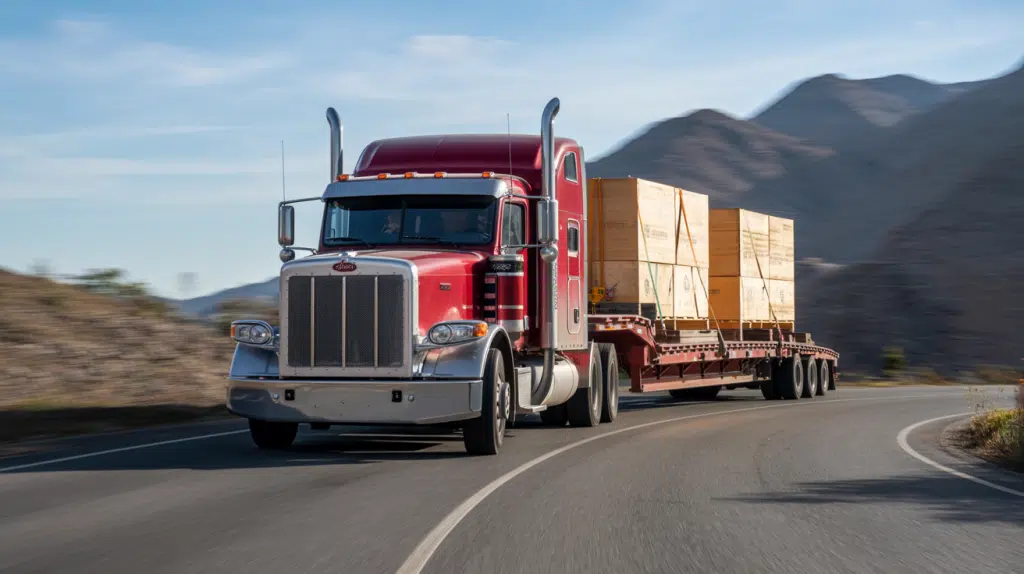
The more regulated the move becomes, the more structured the project becomes, and that structure shows up in the final quote.
Loading and unloading conditions also matter
Transport cost is influenced by more than the highway portion of the move. Site access, loading angles, lifting requirements, surface conditions, and unloading difficulty can all affect project pricing. A clean yard with easy trailer access creates a different level of effort than a tight site with soft ground, limited maneuvering space, or specialized lifting needs.
That is why two loads with similar dimensions can still price differently if one is much harder to handle at the start or end of the trip.
Time pressure changes the cost profile
A flexible project is usually easier to price than a rushed one. If the move must happen within a narrow time window, during a difficult season, or around strict site deadlines, the carrier may have fewer options for equipment assignment, routing, and scheduling. That reduced flexibility can push price higher because the project becomes harder to execute smoothly.
Heavy haul transport becomes more expensive when timing removes room for adjustment.
The quote reflects execution, not just movement
At its core, the cost of heavy haul transport comes from the amount of work required to move the load safely, legally, and predictably. The load, the route, the equipment, the permit conditions, the site access, and the project timing all shape that number. A quote is not just a price for miles traveled. It is the cost of solving a transport problem correctly.
Conclusion
What determines the cost of heavy haul transport is not one number but a set of connected realities. The cargo creates the first challenge. The trailer and route define the next. Permits, escorts, site conditions, and timing add additional layers of complexity. When those factors stay simple, pricing stays simpler too. When they become more demanding, the quote rises because the project requires more control, more planning, and more specialized execution.