Substation equipment is moved by heavy haul carriers through careful planning around weight, sequence, site access, lifting needs, and installation timing. A substation may include transformers, switchgear, breakers, control houses, steel structures, buswork, grounding materials, and support components, but those pieces do not all move the same way. Some are dense and heavy. Some are sensitive to moisture or vibration. Some are long, awkward, or tied to a narrow construction window.
That is why substation transport is not treated as a simple equipment delivery. Each load has to arrive in the right condition, at the right time, and in the right order so the utility project can continue without unnecessary delay.
Substation equipment usually moves as part of a larger utility project
A substation move often supports a larger project such as a new power connection, grid upgrade, utility expansion, emergency replacement, industrial power installation, or maintenance outage. The equipment may be delivered over several days or in multiple coordinated loads.
This is where heavy haul transport for energy, power and utility infrastructure becomes different from routine freight. The carrier is not only moving equipment to a location. The carrier is supporting the sequence of electrical construction, installation, and energization work.
Transformers often shape the heaviest part of the move
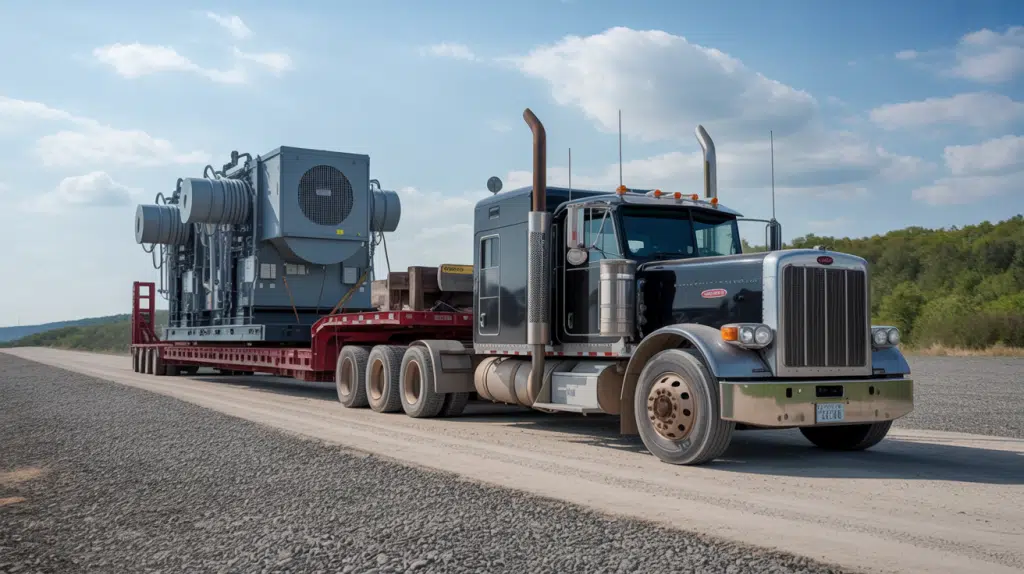
In many substation projects, the transformer is the most demanding piece of equipment to move. It may require specialized trailers, axle planning, bridge review, controlled lifting, and careful final placement. Its dense weight can affect the route long before the truck reaches the substation.
When transformers are transported for utility projects, the same planning discipline often influences the rest of the substation delivery. Support points, lifting access, staging space, route approval, and timing must all work together because the transformer is usually central to the project schedule.
Switchgear and control units need protected handling
Substation equipment is not always heavy in the same way. Switchgear, control units, relay panels, cabinets, and control houses may be lighter than transformers, but they can be more sensitive to handling, moisture, vibration, and impact.
These components often need:
- stable support during transport
- protection from road spray or weather
- careful securement that avoids panels and connection points
- controlled unloading
- clean staging near the installation area
The carrier should treat these loads as working electrical systems, not just boxed equipment on a trailer.
Breakers, buswork, and steel structures may travel separately
A substation project may involve many related components that arrive separately. Circuit breakers, bus sections, steel supports, insulators, grounding materials, cable trays, and other parts may not require the same trailer as a transformer, but they still need organization.
The challenge is often sequencing. If the structural steel arrives late, installation may wait. If the control equipment arrives before the site has protected storage, it may be exposed unnecessarily. If small components are delivered without clear labeling or staging instructions, crews may lose time sorting them at the site.
A good heavy haul plan keeps the project sequence in view, even for smaller support loads.
Trailer choice depends on the equipment type
Substation equipment can require several trailer types across one project. A transformer may need a multi-axle or specialized heavy haul trailer. A control house may need a low deck or open-deck setup based on height and width. Long steel pieces may need proper support across the trailer. Smaller components may move on flatbeds if they can be secured and protected safely.
The trailer should match the load’s main constraint:
- heavy weight
- tall profile
- long material
- sensitive surfaces
- crane loading
- final placement needs
Choosing the trailer only by availability can create problems later in route planning, unloading, or staging.
Route planning must account for loaded dimensions and infrastructure
Substation sites are often reached through roads that were not built for large, heavy deliveries. The route may include rural roads, narrow turns, low clearances, bridge restrictions, utility lines, or unpaved final access. A route that works for standard service trucks may not work for a loaded heavy haul trailer.
Route planning should confirm:
- bridge capacity
- overhead clearance
- turning room
- road width
- utility-line concerns
- final-mile access
- staging options
- whether escorts or traffic control are needed
For heavy or oversized substation loads, the final few miles can be just as important as the highway route.
Site access can control the delivery plan
Substation sites often have fenced entrances, gravel roads, limited turning space, overhead equipment, active crews, and restricted work areas. The carrier needs to know whether the trailer can enter, stage, unload, and exit safely.
Before delivery, the utility team should confirm:
- correct gate or entrance
- gate width
- internal road condition
- unloading area
- crane or rigging location
- overhead wires or structures
- staging area for multiple loads
- site contact and delivery rules
If those details are unclear, the delivery may lose time at the most critical point.
Lifting and unloading support should be ready before arrival
Many substation components require cranes, forklifts, rigging crews, jacking systems, or other unloading support. The transport carrier may bring the load to the site, but the site still needs the right equipment and crew to receive it.
Unloading delays can happen when:
- the crane is not ready
- the unloading pad is not prepared
- the site contact is unavailable
- the final placement area is blocked
- the wrong component arrives first
- ground conditions have changed after weather
The equipment should not arrive before the site can safely handle it.
Weather can affect substation delivery
Weather can create serious delivery problems for substation projects. Rain can soften gravel access roads. Wind can affect crane work and tall loads. Snow and ice can reduce traction. Moisture can affect electrical components if protection is not planned correctly.
For sensitive electrical equipment, weather protection should be considered before loading. Tarps, covers, sealed packaging, or protected staging may be needed depending on the cargo. The plan should protect the equipment while still allowing securement checks and safe unloading.
Delivery timing should match utility project sequence
Substation equipment often arrives during a narrow project window. A transformer may be tied to a planned outage. Switchgear may need to arrive before electrical crews can continue. Control units may need protected staging before installation. Steel structures may need to arrive before major components can be set.
This is why delivery timing must match the work sequence. A load arriving safely but out of order can still delay the project. The best plan delivers each component when the site is ready to receive, unload, and use it.
What utility teams should prepare before substation equipment transport
Utility teams can help heavy haul carriers plan more accurately by preparing complete information early.
Helpful details include:
- equipment list by load
- dimensions and weight for each component
- lifting and support-point details
- transformer accessory list
- switchgear or control-unit protection needs
- pickup and delivery site photos
- access road and gate information
- crane or unloading support schedule
- staging and laydown space
- required delivery order
- site contact information
These details help the carrier understand the project, not just the shipment.
Conclusion
Substation equipment is moved by heavy haul carriers through coordinated planning around cargo type, trailer selection, route access, lifting support, staging, and delivery sequence. Transformers, switchgear, breakers, control units, steel structures, and support components each create different transport needs, but they all serve the same larger goal: keeping the utility project moving.
A successful substation delivery is not just safe arrival. It is organized arrival. When each load reaches the site in the right condition, in the right order, and with the site ready to receive it, heavy haul transport becomes a quiet but essential part of building reliable power infrastructure.