Power generation equipment is transported by planning around weight, sensitivity, support points, delivery timing, and the site where the equipment will be installed or staged. A generator, turbine component, packaged power unit, engine skid, cooling system, or fuel-related module may look like industrial cargo, but it often supports a critical power function. That makes the move more than a simple heavy haul shipment.
A power generation load may be needed for a utility upgrade, backup power project, temporary energy site, industrial plant, data center, construction project, or emergency replacement. If the equipment arrives late, damaged, or without the right unloading support, the delay can affect the larger power plan behind it.
Power generation transport starts with the equipment type
Power generation equipment covers several kinds of cargo. Some units are compact and dense. Others are long, tall, skid-mounted, weather-sensitive, or built with exposed connection points. The transport plan should begin by identifying the equipment’s real shipping condition, not just its general category.
Before planning the move, the carrier should confirm:
- equipment type and model
- shipping weight
- transport height, width, and length
- base frame or skid details
- lifting and support points
- whether accessories travel attached or separately
- whether the unit needs weather protection
- pickup and delivery site access
These details help the carrier choose the trailer, route, permits, loading method, and delivery plan.
Generators and packaged power units can be dense loads
Generators and packaged power units are often heavy for their size. Their compact shape can create concentrated weight, which affects axle planning, trailer selection, and bridge review. A generator may not be extremely wide or long, but it can still require careful heavy haul planning because the weight sits in a relatively small footprint.
When energy, power and utility infrastructure is moved by heavy haul transport, the trailer must match the equipment’s real weight behavior, not only its outside dimensions. A compact power unit can create more road and trailer pressure than its size suggests.
Turbine and engine components may need special support
Turbines, engines, and rotating equipment can require careful support because internal alignment and component condition matter. The equipment may be built for heavy operation, but that does not mean it should be supported casually during transport.
A safe support plan should consider:
- approved lifting points
- base-frame support
- no-contact areas
- vibration sensitivity
- whether the equipment must stay level
- whether special cradles, beams, or blocking are needed
The goal is to keep the equipment stable and supported through the correct parts of its structure.
Skid-mounted equipment must be checked as one system
Many power generation components travel on skids or frames. That can simplify handling, but it does not remove the need for planning. The skid, equipment, accessories, and connection points should be reviewed as one transport unit.
The carrier should confirm whether the skid is designed for lifting, whether it can sit directly on the trailer, and whether any mounted parts extend beyond the frame. A skid-mounted generator or power unit may look ready to move, but the support and securement plan still need to protect the equipment on top of the skid.
Electrical and control components need protection during transport
Power generation equipment often includes panels, controls, wiring, housings, sensors, cooling components, exhaust parts, or connection points that can be damaged by moisture, vibration, impact, or careless securement.
These sensitive areas should be identified before loading. Chains, straps, blocking, and covers should protect the unit without pressing against parts that cannot tolerate transport force.
This is similar to how electrical switchgear and control units are transported with attention to moisture, vibration, support, and handling. Power generation cargo may be heavier, but its electrical and control features still need protection.
Trailer choice depends on weight, height, and loading method
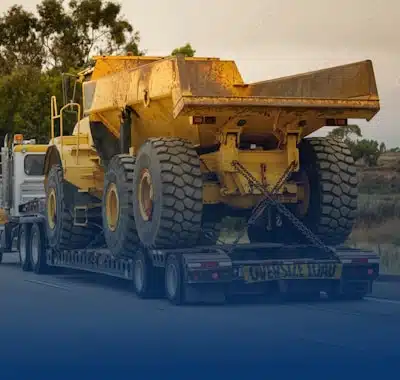
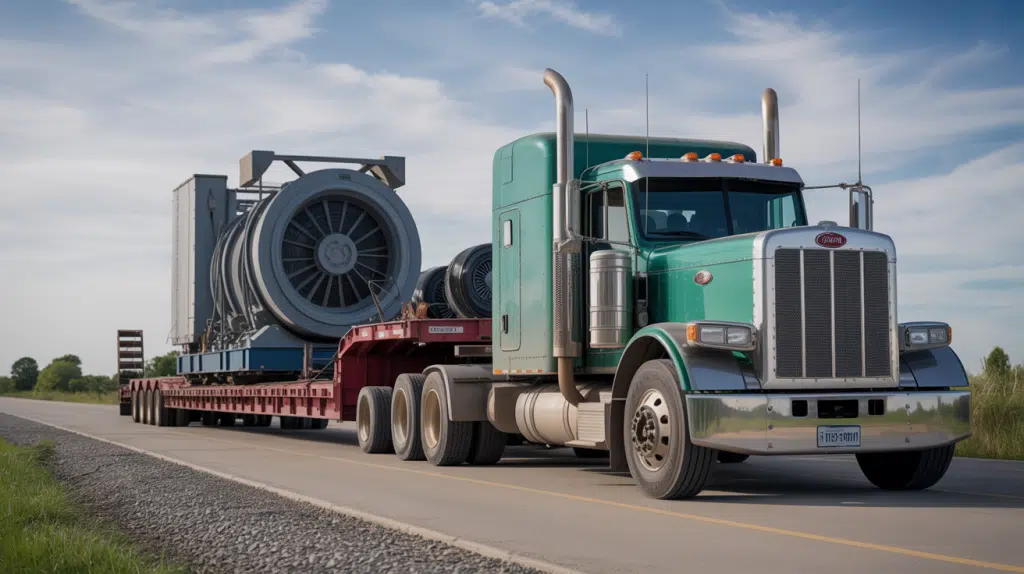
Power generation equipment may move on a flatbed, step deck, lowboy, RGN, multi-axle trailer, or modular setup depending on its size and weight. A smaller generator may be suitable for a simpler open-deck trailer. A large turbine component or dense power unit may need more axle support or a lower deck.
The trailer choice should account for:
- total weight
- loaded height
- deck capacity
- axle distribution
- lifting method
- securement access
- route restrictions
- delivery-site unloading conditions
A trailer that fits the cargo physically still has to work legally, safely, and practically through the route.
Route planning protects both equipment and infrastructure
Power generation equipment may need route review for bridges, overhead clearances, road width, turning space, utility lines, and final-mile access. Dense loads may raise bridge and axle concerns. Tall units may raise clearance concerns. Long or skid-mounted cargo may affect turning and staging.
A good route plan should fit the loaded trailer, not just the truck. It should also consider whether the destination has enough room for staging, lifting, unloading, and final placement.
Loading should be controlled and equipment-specific
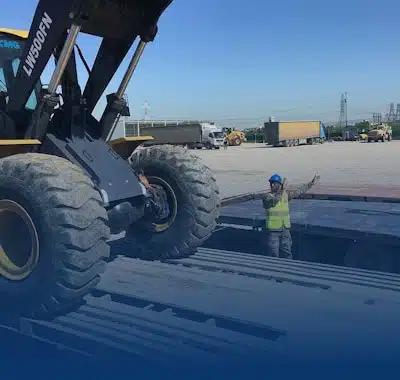
Some power generation equipment can be loaded by crane, forklift, gantry, or skidding system. Other units may be loaded using specialized handling support. The loading method should match the unit’s lifting points, weight distribution, and site conditions.
Before loading, the team should confirm:
- who provides lifting or handling equipment
- where the trailer will be positioned
- whether the ground can support the loading operation
- how the equipment will be placed on the deck
- whether accessories or covers need adjustment
- who approves final securement
A controlled loading plan reduces the chance of twisting, scraping, shifting, or damaging the equipment before transport begins.
Delivery timing can affect the power project
Power generation equipment is often tied to a larger schedule. A generator may be needed before temporary power can start. A turbine component may need to arrive during a maintenance window. A packaged power unit may support a site that cannot afford long downtime.
That means the delivery should match site readiness, unloading support, crane availability, and installation timing. A power unit arriving too early may have nowhere safe to stage. A late delivery may slow the entire project.
Remote and temporary sites can complicate delivery
Some power generation equipment is delivered to industrial yards, substations, energy sites, rural facilities, construction projects, or temporary power locations. These sites may have gravel roads, soft ground, narrow gates, limited staging space, or weather-sensitive access.
Before delivery, the site should confirm:
- correct entrance
- access road condition
- turning room
- unloading surface
- crane or forklift availability
- final placement area
- overhead hazards
- site contact information
The final approach can be the hardest part of the move if the site is not ready.
What project teams should prepare before transport
Project teams can help the move go smoother by sharing complete equipment and site details early.
Helpful information includes:
- generator or equipment type
- confirmed shipping weight
- transport dimensions
- lifting and support-point drawings
- skid or base-frame details
- weather-protection requirements
- pickup and delivery site photos
- crane, forklift, or rigging needs
- delivery window
- installation or startup schedule
- site contact information
These details help the carrier build the plan around the equipment’s real transport needs.
Conclusion
Transport planning for power generation equipment requires careful attention to weight, support, protection, trailer choice, route limits, loading method, site access, and delivery timing. Generators, turbines, engine skids, packaged power units, and related systems often support critical power work, so the move must protect both the cargo and the schedule behind it.
A successful power generation equipment move does not simply deliver a heavy unit. It delivers a working asset in the right condition, at the right time, and in the right place so the project can continue without unnecessary disruption.