Concrete equipment is moved by heavy haul carriers with timing, site access, trailer selection, and unloading needs planned around the construction phase it supports. A concrete pump, curb machine, screed, mixer-related unit, batching component, or paving support machine may not always be the largest piece of equipment on a job site, but it often arrives at a moment when the project schedule is already sensitive.
Concrete work depends on sequence. The surface must be ready, crews must be available, access must be clear, and the equipment must be placed where it can work without blocking trucks, materials, or finish crews. That is why moving concrete equipment is not only a transport task. It is a schedule-support task.
Concrete equipment transport starts with the type of machine
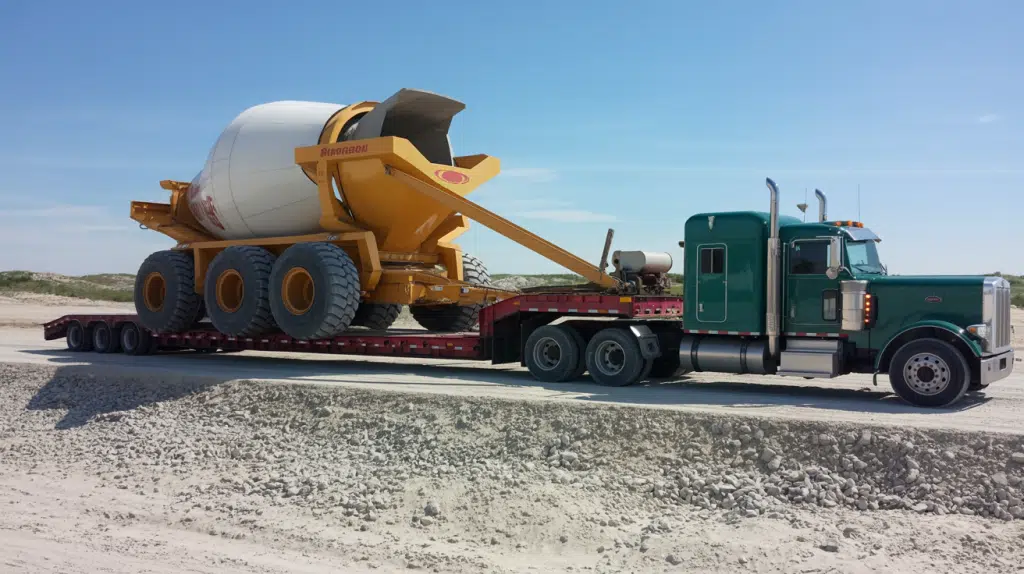
Concrete equipment comes in different forms, and each one creates a different transport plan. A concrete pump may create height, boom, and outrigger considerations. A curb machine may need careful loading and surface access. A screed may be long, awkward, or attachment-sensitive. A batching or plant component may need lifting support instead of drive-on loading.
Before transport is scheduled, the carrier should confirm:
- equipment type and model
- operating or shipping weight
- transport height, width, and length
- whether the machine is self-propelled
- whether a boom, conveyor, screed, or attachment stays mounted
- whether the equipment needs crane, forklift, or ramp loading
- pickup and delivery site conditions
These details help the carrier decide how the equipment should be loaded, secured, routed, and delivered.
Trailer choice depends on height, weight, and loading method
Some concrete equipment can move on a flatbed, step deck, or lowboy. Other machines may need an RGN or more specialized trailer depending on weight, height, deck access, and route restrictions. A concrete pump with a tall boom structure may need a lower transport profile, while a smaller curb machine may be easier to handle with a simpler trailer setup.
When construction site equipment and machinery is moved by heavy haul transport, the trailer should match the machine’s working shape, not only its name. Concrete equipment often includes booms, frames, conveyors, or working arms that change the transport profile.
Booms, conveyors, and working parts should be secured before loading
Concrete equipment often includes moving parts that must be folded, locked, lowered, or otherwise controlled before transport. A boom left in the wrong position can increase height. A conveyor can change length or securement needs. A screed section may require separate support. A mounted attachment may create contact risks during loading or travel.
Before loading, the crew should confirm:
- whether moving parts are fully folded or locked
- whether attachments travel mounted or separately
- whether any parts increase height or width
- whether hydraulic components are protected
- whether loose items have been removed or secured
- whether the machine can be safely restrained on the trailer
The equipment should be prepared for travel before the trailer is positioned, not adjusted in a rush after loading starts.
Loading conditions can affect concrete equipment quickly
Concrete machines often work around uneven ground, fresh site preparation, roadwork areas, paving zones, and tight access points. Those environments can make loading more sensitive. A machine may need a straight approach, stable ground, and enough room for the trailer to align properly.
Loading can become harder when:
- the surface is soft or recently graded
- the trailer cannot sit level
- site traffic is active nearby
- the machine has low clearance
- the equipment has long working parts
- support equipment is not ready
A controlled loading setup helps protect the machine and prevents the transport from starting with unnecessary stress.
Concrete equipment may need careful cleaning or preparation
Some concrete equipment may need basic preparation before transport, especially if it has recently been used. Loose material, buildup, washout needs, or unsecured tools can create problems on the trailer or road. Equipment should be prepared so it is safe to load, secure, and move without loose debris or uncontrolled parts.
This does not mean the carrier handles all cleaning or service work. It means the customer should make sure the equipment is in a safe transport condition before pickup.
Securement should account for shape and working components
Concrete equipment can have unusual frames, moving parts, hoses, arms, conveyors, wheels, drums, or support legs. Securement should hold the machine without stressing weak parts or damaging hydraulic lines, panels, guards, or working surfaces.
A good securement plan controls:
- forward and rearward movement
- side movement during turns
- vertical movement from road shock
- folded or movable components
- contact points that could rub during travel
- parts that need separate restraint
The machine should ride as one stable load, with working parts controlled and protected.
Delivery timing is often the biggest issue
Concrete work is highly schedule-sensitive. A machine may be needed before a pour, paving phase, curb installation, slab preparation, or finishing operation. If the equipment arrives late, crews may wait and material timing may become harder to manage. If it arrives too early, it may block site access before the concrete work area is ready.
This is where heavy haul delivery timing affects construction projects directly, because concrete equipment is often tied to a short work window rather than a flexible drop-off.
The best delivery time is the one that matches crew readiness, site access, traffic control, and the next phase of the job.
Unloading should place the equipment where it can work
Concrete equipment should not be unloaded simply wherever the trailer can stop. It should be placed where it can reach the work area without blocking material trucks, pumps, finish crews, or other construction equipment.
Before delivery, the site should confirm:
- correct entrance
- unloading location
- surface stability
- path from unloading point to work area
- overhead hazards
- traffic-control needs
- final machine position
- site contact for receiving the equipment
A good unloading plan helps the equipment become useful immediately instead of creating another site movement problem.
Roadwork and paving projects may need extra coordination
Concrete equipment is often delivered to road projects, sidewalks, curbs, bridges, commercial slabs, public works sites, or active construction zones. These locations may involve lane closures, temporary traffic control, restricted access, or staged work areas.
In these cases, the carrier may need to coordinate around:
- lane access
- public traffic
- work-zone timing
- escort or pilot requirements
- staging room
- site crew availability
- safe unloading near active roads
The delivery should support the work zone instead of adding confusion to it.
What contractors should prepare before moving concrete equipment
Contractors can help the transport go smoother by sharing complete equipment and site details early.
Helpful information includes:
- equipment type and model
- operating or shipping weight
- transport dimensions
- boom, conveyor, screed, or attachment details
- whether the machine runs and drives
- whether any parts need to be removed or folded
- pickup and delivery site photos
- ground condition at both sites
- traffic-control or access restrictions
- required delivery time
- site contact information
These details help the carrier choose the right trailer, loading method, route, and delivery plan.
Conclusion
Concrete equipment is moved by heavy haul carriers with careful attention to machine type, moving components, trailer choice, loading conditions, securement, delivery timing, and site placement. These machines often support time-sensitive work, so the transport plan should match the construction schedule as well as the equipment dimensions.
A successful concrete equipment move does not simply deliver a machine to the job site. It delivers the right equipment at the right time, in the right position, so the concrete phase can continue without unnecessary delay.