Heavy haul transport for construction site equipment and machinery is not just about moving machines from one location to another. It is about keeping construction work moving without unnecessary delays, damage, or site confusion. An excavator may be needed before digging begins. A bulldozer may be required before grading can continue. A crane may need to arrive in sequence with crews, rigging, and lift plans. When one machine arrives late or unprepared, the delay can spread across the whole project.
Construction equipment transport works best when the machine, trailer, route, site access, delivery timing, and unloading plan are matched before the truck arrives. The equipment is heavy, but the real challenge is coordination. The move must support the job site, not interrupt it.
Construction equipment transport starts with the machine’s job
Construction machines are working assets. They are not moved just because they need storage or relocation. They are moved because a project needs digging, grading, lifting, compacting, trenching, paving, pouring, or material handling to happen at the right time.
That means transport planning should begin with the machine’s role on site. A backhoe going to a small utility job does not create the same transport problem as a crane being delivered for a lift. A telehandler going to a crowded commercial project does not need the same delivery plan as a roller moving between roadwork phases.
The more clearly the machine’s purpose is understood, the easier it becomes to choose the right trailer, route, loading method, and delivery window.
Excavators need balance, attachment control, and safe site access
Excavators are common on construction sites, but they still require careful hauling. Their tracks, boom, stick, bucket, and counterweight all affect transport height, balance, loading angle, and securement. A short move between sites can still create problems if the excavator is not prepared in its travel position.
When excavators are moved between construction sites, the transport plan should account for boom position, attachment setup, ground conditions, and whether the machine can load and unload safely at both locations. The goal is not simply to move the excavator quickly. The goal is to deliver it ready to work.
Bulldozers need undercarriage protection and controlled loading
Bulldozers are built for tough ground work, but that does not mean they can be loaded carelessly. Tracks, rollers, sprockets, blades, and rippers can all be affected by steep loading angles, poor trailer alignment, or rough site conditions.
For grading projects, bulldozers are transported with attention to track support, blade position, trailer strength, and loading geometry. A dozer may look simple because it is compact and powerful, but its weight is concentrated through the undercarriage. That is why loading and deck placement matter before the machine ever reaches the road.
Crane deliveries depend on sequence and site readiness
A crane delivery can affect the whole construction schedule. Unlike smaller machines, cranes may arrive as multiple components, including the carrier body, boom sections, counterweights, jibs, mats, rigging, or support equipment. If one component arrives out of order, the site may not be able to assemble or use the crane efficiently.
That is why cranes delivered to construction sites need more than a route and trailer. They need delivery sequencing, staging space, access planning, and coordination with the lift schedule. A crane is not just another machine arriving at the gate. It is often a central part of the project’s next major step.
Telehandlers need preparation for height, forks, and job-site movement
Telehandlers are versatile machines, but their boom, forks, frame height, and tire setup can create transport concerns. They may be easier to drive on and off a trailer than some tracked machines, yet they still need correct placement, attachment control, and route height review.
When telehandlers are prepared for heavy haul transport, the boom position, fork attachment, machine height, and loading surface should be checked carefully. A telehandler often works in tight site areas, so the delivery plan should also confirm where it will go after unloading.
Compactors and rollers need stable loading and secure placement
Compactors and rollers are heavy for their size, and their drums or tires can make loading and securement different from other machines. They may not be especially tall, but they can be dense, slippery on certain surfaces, or awkward to position if the loading area is uneven.
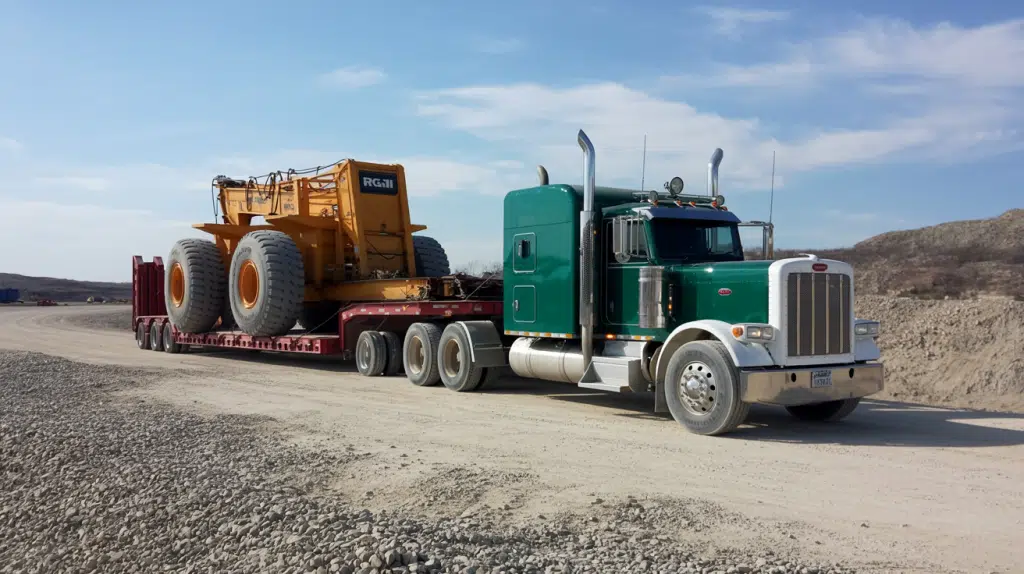
A good plan for moving compactors and rollers safely should consider traction, deck placement, securement points, and whether the equipment can unload directly into its work zone. Roadwork projects often run on tight timing, so these machines need to arrive when the surface preparation or compaction phase is ready.
Trenchers and utility machines often move into tight work zones
Trenchers and utility machines are often delivered to projects with limited access, active crews, narrow road edges, or temporary traffic control. Their size may vary, but their delivery environment can be complicated.
When trenchers and utility machines are transported, the carrier needs to think about more than machine weight. The route into the site, unloading position, ground condition, and immediate work area all matter. Utility work often happens in confined spaces, so delivery planning can prevent the machine from blocking the project before it even starts.
Concrete equipment needs timing that matches the pour or placement schedule
Concrete equipment can include pumps, mixers, curb machines, screeds, batch-related units, and other specialized machinery. These machines are often tied to narrow project timing because concrete work depends on sequencing, crew readiness, and site preparation.
For that reason, concrete equipment moved by heavy haul carriers should be scheduled around the project phase it supports. A delayed delivery can affect crews, material timing, and the work window. A well-planned delivery helps the equipment arrive before it is urgently needed, not after the schedule is already under pressure.
Construction attachments can change the whole transport plan
Buckets, blades, forks, breakers, grapples, rippers, augers, compactors, and boom sections may travel with machinery or as separate loads. These attachments can change weight, width, height, securement needs, and loading behavior.
When construction attachments are transported with machinery, the decision should be made early: will the attachment stay mounted, travel separately, or require its own securement plan? A machine may fit the trailer, but its attachment may create the real transport issue.
Delivery timing affects crews, rentals, and project flow
Construction sites often depend on timing more than many people realize. A machine arriving too early may block access or sit in the wrong area. A machine arriving late may stop a crew from starting work. A machine arriving without the right site contact may create unloading delays.
That is why heavy haul delivery timing affects construction projects directly. Transport should align with site readiness, crew schedules, traffic-control windows, rental periods, crane support, and unloading space. Good timing makes the machine useful as soon as it arrives.
Trailer choice depends on the construction equipment being moved
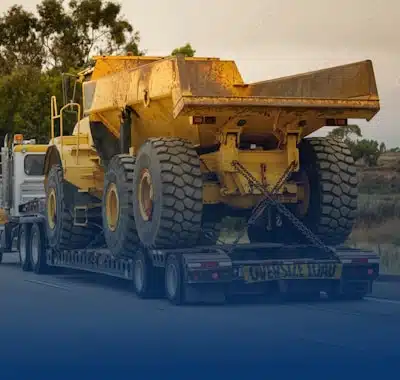
Construction machinery may need a lowboy, RGN, flatbed, step deck, double-drop, or multi-axle setup depending on height, weight, loading method, and route restrictions. The trailer should not be chosen only because it is available. It should be chosen because it fits the machine and the delivery environment.
A tracked dozer may need a lower loading angle. A telehandler may need enough deck space and height clearance. A crane component may need long support. A compact roller may need strong restraint and stable placement. Each machine creates a different trailer question.
Site access can be harder than the road miles
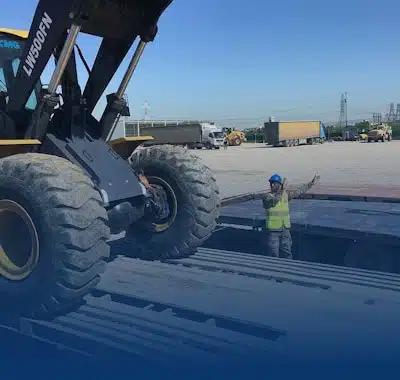
Many heavy haul construction deliveries are difficult because of the site, not the highway. A job site may have mud, temporary roads, narrow entrances, overhead wires, parked materials, active crews, or limited staging space. These details can affect whether the trailer can enter, align, unload, and exit safely.
Before delivery, the site should confirm:
- which entrance the truck should use
- where the trailer can stage
- whether the ground is stable
- whether overhead hazards exist
- where the equipment should be placed
- who will receive the delivery
- whether support equipment is needed
These simple details help prevent confusion when the machine is already at the gate.
Customers should prepare equipment details before transport
Construction equipment transport becomes easier when the customer provides accurate information early. Useful details include:
- machine make and model
- operating weight
- transport height, width, and length
- attachment details
- whether the machine runs, steers, and brakes
- pickup and delivery site photos
- ground condition at both sites
- access restrictions
- required delivery time
- site contact information
This information helps the carrier choose the right trailer, route, permits, loading method, and delivery plan.
Conclusion
Heavy haul transport for construction site equipment and machinery works best when the move is planned around the machine’s role on the project. Excavators, bulldozers, cranes, telehandlers, rollers, trenchers, concrete equipment, and attachments each create different transport needs. Some need height control. Some need careful loading. Some need precise delivery timing. Some need extra staging or support equipment.
The core reality is simple: construction equipment transport is part of construction planning. When the machine, trailer, route, site access, unloading method, and project schedule are aligned, the equipment arrives ready to work and the job site keeps moving with fewer delays.