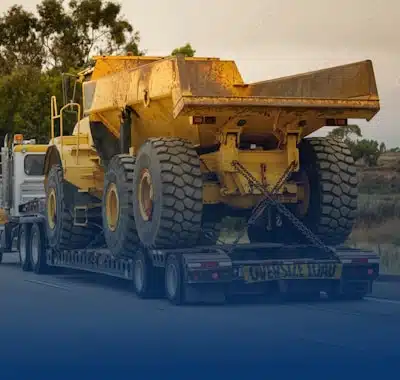
Construction attachments are transported with machinery when the attachment can travel safely without creating extra height, width, balance, loading, or securement problems. A bucket, blade, fork, breaker, grapple, ripper, auger, broom, compactor wheel, or boom section may look like a secondary part of the machine, but during transport it can change the entire move.
An attachment can make a machine wider. It can add length. It can reduce ground clearance. It can block tie-down points. It can create a loose movement risk if it is not locked, lowered, removed, or restrained correctly. That is why attachment planning should happen before the trailer arrives, not after the machine is already loaded.
Attachments can travel mounted or separately
Some attachments stay mounted during transport because they are secure, compact, and do not create major route or loading issues. Other attachments should travel separately because they make the machine too wide, too tall, too long, or harder to secure.
The decision depends on the attachment, the machine, the trailer, and the route. A small bucket may stay mounted on an excavator. A wide dozer blade may need special width planning. A large breaker or auger may be safer as a separate load. Forks on a telehandler may need to be lowered, removed, or secured depending on the transport setup.
When construction site equipment and machinery is moved by heavy haul transport, attachments should be treated as part of the load profile, not as an afterthought.
The attachment changes the machine’s transport dimensions
The machine’s listed dimensions do not always match its transport dimensions. Once attachments are included, the final height, width, length, and weight can change enough to affect permits, route choice, trailer selection, and securement.
A bucket may extend the machine’s length.
A blade may increase width.
A boom attachment may affect height.
A rear ripper may reduce clearance during loading.
Forks may create contact or visibility issues.
This is why the carrier needs to know how the machine will actually travel. The transport plan should be based on the machine in its loaded condition, not the machine in its basic model specification.
Excavator attachments need careful position control
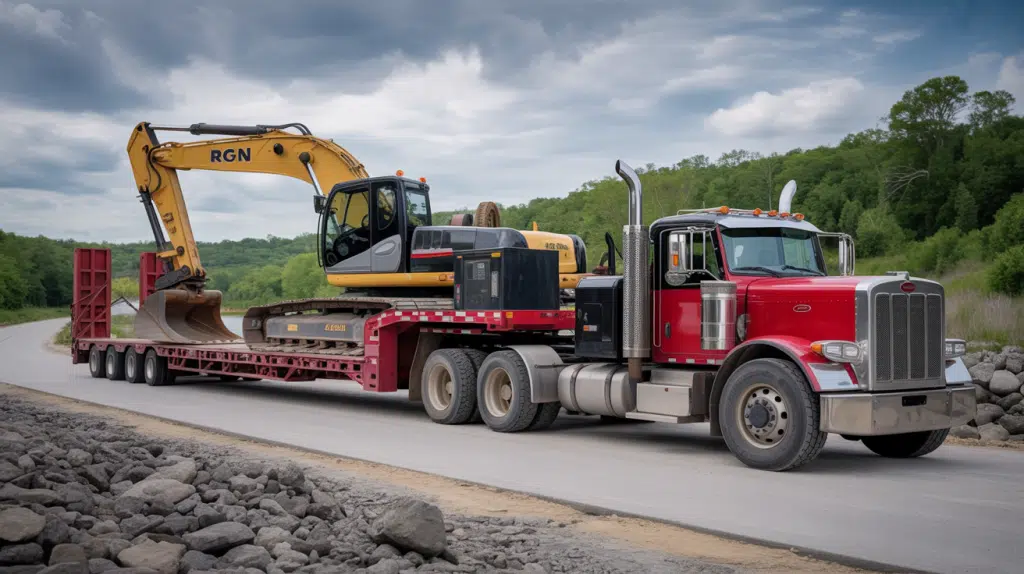
Excavators often move with buckets, hammers, grapples, thumbs, augers, or other tools. These attachments can affect boom position, deck clearance, and tie-down access. A bucket may be simple to secure if it stays tucked and controlled, but a hammer or grapple may need more careful support or separate transport.
When excavators are moved between construction sites, the boom, stick, bucket, and attachment position can decide the loaded height and securement plan. A small change in attachment position can make the difference between a clean move and a clearance or loading problem.
Bulldozer blades and rippers can create width and clearance issues
Bulldozer attachments are often heavy, wide, and close to the ground. A blade can increase transport width, while a ripper can affect loading angle and rear clearance. If these parts are not positioned correctly, the dozer may drag, scrape, or exceed route limits.
On grading projects, blades and rippers should be checked before loading begins. The carrier and contractor should decide whether the attachment stays mounted, is raised, is secured in place, or needs to move separately.
The dozer may be rugged, but its transport setup still needs precision.
Telehandler forks and tools should not be left loose
Telehandlers often travel with forks, buckets, jibs, platforms, or truss booms. These attachments can change the machine’s length and balance, and loose forks or tools can create a movement risk during transport.
Forks should be lowered, positioned, removed, or restrained so they cannot shift or bounce during the trip. If a telehandler carries a larger attachment, the transport team should confirm whether it affects the trailer choice or route height.
A telehandler may be easier to move than larger machines, but its attachment setup can still create preventable problems.
Attachment weight can affect trailer placement
Attachments are not always light. A bucket, breaker, blade, counterweight, or compaction attachment can change the machine’s front-to-rear balance. If the attachment stays mounted, it may shift the center of gravity and affect where the machine should sit on the trailer.
This matters because deck placement affects axle loading, trailer stability, and securement angles. A machine loaded with a heavy front attachment may not sit the same way as the same machine without it.
The trailer should carry the full machine-and-attachment combination correctly, not just the base machine.
Loose attachments may need their own securement plan
If an attachment travels separately, it still needs a proper securement plan. It may need blocking, chocking, cradles, straps, chains, edge protection, or support points that prevent movement and damage.
Separate attachments can be awkward because they may have curved surfaces, sharp edges, teeth, cutting edges, hydraulic connections, or uneven weight. A bucket may need to sit so it does not rock. A breaker may need support to protect hydraulic fittings. A blade may need stable placement so it does not shift during braking or turns.
A separate attachment is not just extra cargo. It is a load that needs its own restraint logic.
Hydraulic lines and connection points should be protected
Many attachments include hoses, couplers, pins, brackets, cylinders, or electrical connections. These parts can be damaged if chains, straps, or blocking are placed carelessly. They can also be affected by vibration or rubbing during transport.
Before securement, the crew should identify:
- exposed hoses
- hydraulic couplers
- sharp edges
- fragile brackets
- pin locations
- loose hardware
- areas that should not be used as tie-down points
The attachment should arrive ready to reconnect or work, not just arrive physically present.
Attachments can affect loading and unloading
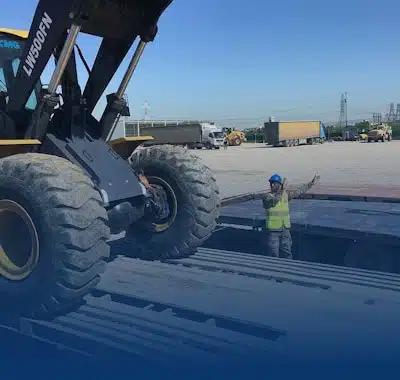
Attachments may change how the machine moves onto or off the trailer. A wide blade can limit alignment. A rear ripper can drag. A bucket can reduce clearance. Forks can affect visibility. A mounted tool can make the machine longer and harder to turn in a tight loading area.
Before loading, the crew should confirm whether the attachment position allows:
- straight trailer approach
- safe ramp clearance
- proper deck placement
- enough room for spotters
- safe unloading at the destination
- trailer exit after delivery
A transport setup that works at pickup should also work at delivery.
Contractors should decide attachment handling before pickup
Attachment decisions should not be made while the driver is waiting. The contractor should know whether each attachment will stay mounted, be removed, travel with the same load, or require a separate trailer.
Before transport, contractors should confirm:
- which attachments are included
- whether they stay mounted
- whether they affect height, width, or length
- whether loose parts are removed or secured
- whether hydraulic lines are protected
- whether separate attachment loads are needed
- where the attachments should be unloaded at delivery
These details help the carrier plan the move without last-minute changes.
Conclusion
Construction attachments are transported with machinery when they can travel safely without creating unnecessary risk. Buckets, blades, forks, breakers, grapples, rippers, augers, and other tools can change a machine’s dimensions, balance, loading behavior, securement needs, and delivery plan.
The safest approach is to treat every attachment as part of the transport plan. If it stays mounted, it must be positioned and secured correctly. If it travels separately, it needs its own support and restraint. When attachment planning is handled early, the machine loads cleaner, travels safer, and arrives ready for the work waiting at the construction site.