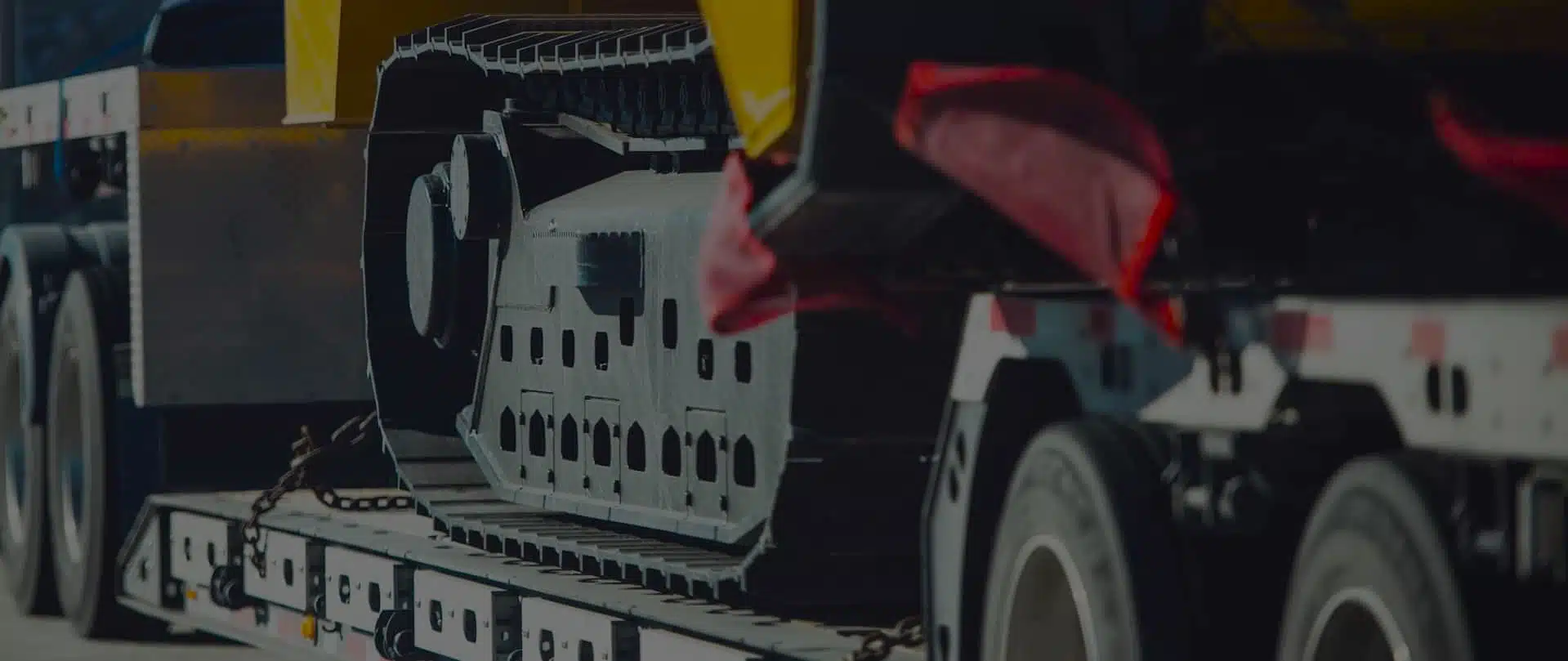
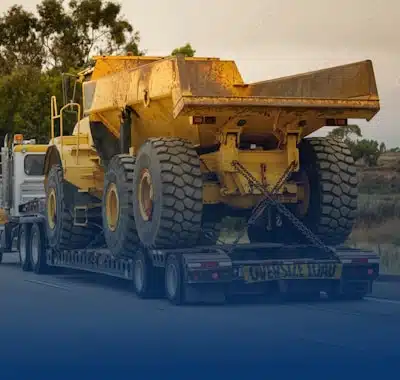
Excavators are moved between construction sites by matching the machine’s size, weight, attachment position, trailer type, loading method, route, and delivery access. An excavator may look like one familiar piece of construction equipment, but its tracks, boom, stick, bucket, counterweight, and upper structure all affect how it should travel.
A short move from one site to another can still create real transport risk. The machine may be tall once loaded, heavy through the track frame, awkward to secure, or difficult to unload if the destination site is crowded or soft. That is why excavator transport should be planned around the actual machine and the actual job site, not treated like a routine equipment shuffle.
Excavator transport starts with the machine configuration
Before an excavator is loaded, the carrier needs to understand how the machine will travel. The boom position, bucket position, attachment setup, and track width all affect the final transport profile.
A safe plan usually confirms:
- machine make and model
- operating weight
- track width
- overall height in transport position
- boom, stick, and bucket position
- whether attachments stay mounted or travel separately
- whether the machine runs, steers, and brakes properly
These details help determine trailer choice, route clearance, loading method, and securement approach.
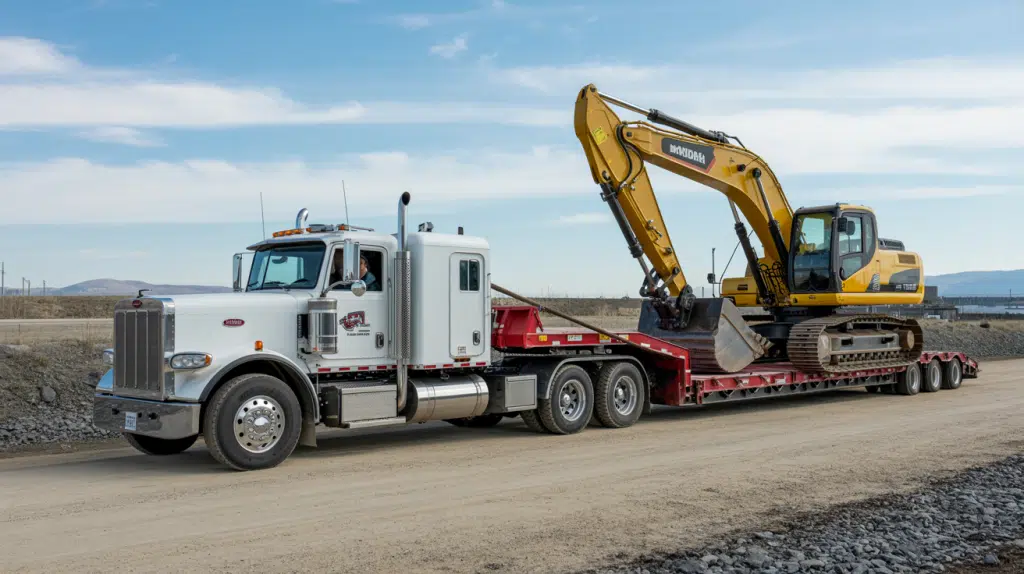
Excavators are usually moved on low-profile heavy haul trailers
Many excavators are tall enough that trailer height becomes important. A higher trailer can make the loaded machine too tall for certain bridges, overpasses, utility lines, or site entrances. Lower-profile trailers help reduce that risk by keeping the machine closer to the road.
When heavy haul transport for construction site equipment and machinery is planned correctly, the trailer is selected around the machine’s real transport height, not only its weight. For excavators, that often means using a lowboy, RGN, or similar heavy haul trailer that can support the machine while helping control height.
Boom and attachment position can change the whole move
The boom and attachment are often the most important parts of excavator preparation. If the boom is positioned too high, the load may become overheight. If the bucket or attachment is not controlled, it can affect securement, clearance, or deck placement.
Before loading, the crew should decide whether the bucket, hammer, grapple, auger, or other attachment will stay on the excavator or travel separately. A mounted attachment may save time, but it can also add length, width, height, or extra securement needs.
This is where construction attachments transported with machinery can change the transport plan, because the attachment may create more risk than the excavator body itself.
Loading depends on ground condition and trailer alignment
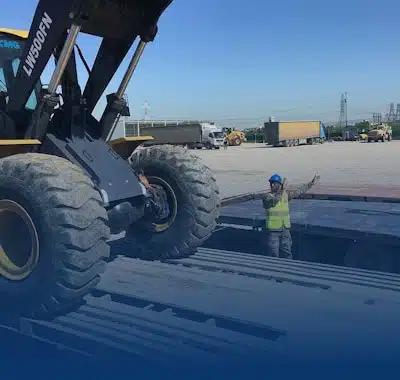
Excavators can often drive onto a trailer under their own power, but that does not mean loading should be rushed. The trailer needs stable ground, enough approach space, and a safe loading angle. The operator also needs clear spotter guidance, especially when the machine is moving up onto the deck.
Loading can become difficult when:
- the ground is soft or muddy
- the trailer cannot align straight
- the approach path is narrow
- the ramps or deck angle are too sharp
- the excavator has low clearance
- nearby materials or workers limit movement
A smooth loading process should feel slow, controlled, and deliberate. If the machine is fighting the site before it reaches the trailer, the setup should be checked again.
Track placement affects deck position and balance
An excavator carries much of its weight through the undercarriage and track frame. Once it reaches the trailer, the machine must be placed where the trailer can carry that weight correctly.
Poor deck placement can overload axle groups, create uneven balance, or make securement harder. The excavator should sit centered side to side and positioned so weight is distributed properly between the tractor and trailer groups.
This matters even on shorter moves between nearby construction sites. A short distance does not remove the need for proper placement.
Securement must control the body and moving components
An excavator is not secured only by holding the tracks. The machine body, boom, arm, bucket, and attachment all need to be controlled for transport. The securement plan should prevent movement during braking, turning, vibration, and road shock.
A good securement plan usually checks:
- approved tie-down points
- track restraint
- boom and attachment position
- chain angles
- contact points that could rub or damage the machine
- re-check needs after the first travel segment
The goal is to make sure the excavator stays stable without creating avoidable damage to paint, hoses, guards, or hydraulic components.
Route planning still matters between construction sites
Moving an excavator between construction sites may sound like a local job, but route planning still matters. The loaded height, width, weight, and turning needs can affect which roads are safe and legal.
A construction-site transfer may need to avoid:
- low overpasses
- weak bridges
- narrow city streets
- tight turns
- work zones
- utility lines
- restricted roads
- school zones or traffic-sensitive areas
The route should support the loaded trailer, not just the truck alone.
Delivery access can be harder than pickup
Excavator moves often become difficult at the delivery site. A site may be active, muddy, crowded, or still under preparation. The trailer may need room to stage, line up, unload, and exit without blocking crews or other deliveries.
Before delivery, the receiving site should confirm:
- correct entrance
- unloading location
- ground stability
- overhead hazards
- machine path after unloading
- site contact
- whether the excavator should be placed directly near the work area
A well-planned delivery helps the excavator become useful immediately instead of sitting in the wrong place.
Timing matters when excavators support active crews
Excavators are often needed early in a construction sequence. They may support trenching, digging, grading, utility work, demolition, or site preparation. If the excavator arrives late, crews may wait. If it arrives too early, it may block access or sit in a congested area.
That is why <a href=”/how-heavy-haul-delivery-timing-affects-construction-projects/”>heavy haul delivery timing affects construction projects</a> so directly. The delivery should match site readiness, crew schedule, unloading space, and the next phase of work.
What contractors should prepare before moving an excavator
Contractors and site teams can help the move go smoother by preparing accurate information before scheduling transport.
Helpful details include:
- excavator make and model
- operating weight
- track width
- height in travel position
- attachment details
- pickup and delivery site photos
- ground condition at both sites
- whether the machine runs properly
- access restrictions
- delivery timing needs
- site contact information
These details help the carrier choose the right trailer, route, and loading plan.
Conclusion
Excavators are moved between construction sites by preparing the machine, choosing the right trailer, controlling boom and attachment position, loading on stable ground, placing the machine correctly on the deck, securing all movement points, and planning delivery around site readiness.
An excavator may be common construction equipment, but it still needs careful heavy haul planning. When the transport method matches the machine and the site, the excavator arrives safely, unloads smoothly, and gets back to work without unnecessary delay.