
Cranes are delivered to construction sites through careful sequencing, route planning, component handling, and site coordination. A crane is not always delivered as one complete machine. Depending on the crane type and project size, the delivery may include the carrier body, boom sections, jib sections, counterweights, mats, rigging, support trucks, and other components that need to arrive in the right order.
That is what makes crane delivery different from many other construction equipment moves. A bulldozer or excavator may arrive and begin work soon after unloading, but a crane often needs staging, assembly, inspection, and lift preparation before it becomes useful on site.
Crane delivery starts with the lift schedule
A crane usually arrives because a project needs lifting work to happen at a specific stage. That may involve steel placement, precast panels, HVAC units, bridge components, concrete forms, utility structures, or other heavy materials. Because the crane supports a scheduled lift, delivery timing matters as much as transport safety.
If the crane arrives too early, it may block access or occupy staging space before the site is ready. If it arrives too late, crews, rigging teams, trucks, and other project phases may wait. This is why heavy haul transport for construction site equipment and machinery should treat crane delivery as part of the project schedule, not just another equipment drop-off.
Cranes often travel as multiple loads
Many cranes are too large or too heavy to move as one complete unit. Instead, the move may be split into several loads. The main crane body may travel separately from counterweights, boom sections, mats, jibs, hooks, and rigging equipment.
That creates a delivery sequence. The site may need mats first, then the crane body, then counterweights, then boom sections and support components. If those loads arrive out of order, assembly can slow down even when each load was transported safely.
A crane delivery is successful when the right parts arrive in the order the site can use them.
The crane body needs the right trailer and route
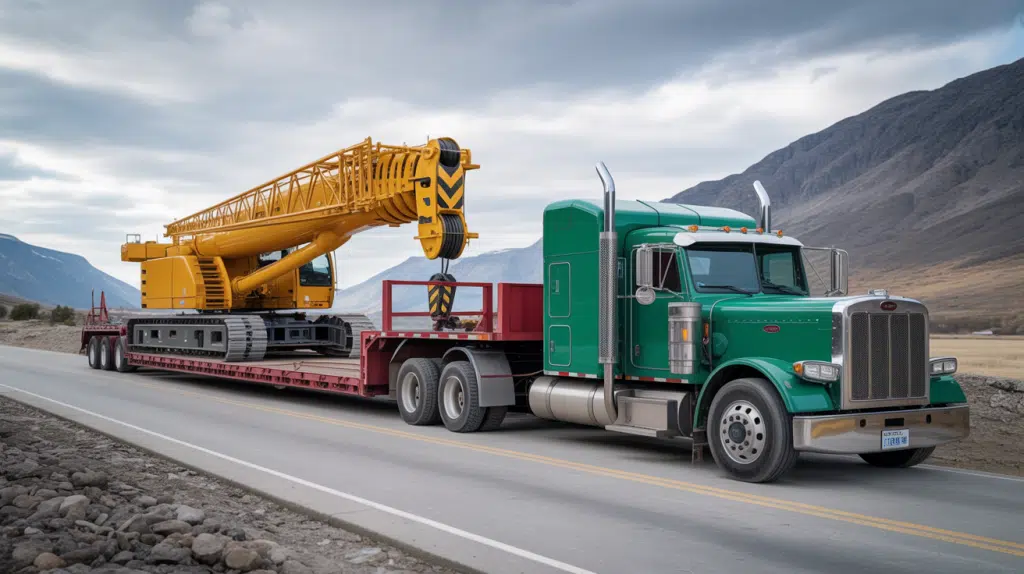
The main crane body is often the heaviest and most route-sensitive part of the move. It may require a lowboy, RGN, multi-axle trailer, or another heavy haul setup depending on the crane’s weight, height, width, and loading method.
The route may need to account for:
- bridge limits
- low clearances
- tight turns
- construction zones
- city street restrictions
- escort requirements
- final-mile access
- staging space near the site
A crane body may be compact compared with long boom sections, but it can still create major weight and permit concerns.
Boom sections create length and staging challenges
Boom sections and jibs may not be as heavy as the crane body, but they can be long, awkward, and difficult to stage on a crowded site. These components may need extendable trailers, flatbeds, or other open-deck setups depending on length and support requirements.
The delivery plan should confirm where boom sections will be placed after arrival. If they are unloaded in the wrong area, crews may need to move them again before assembly. That adds time and can increase site congestion.
The site should have enough laydown space for each section before the trucks arrive.
Counterweights require careful handling
Counterweights may look simple, but they are dense and heavy. They need proper deck placement, securement, and unloading support. If counterweights arrive before the site has space to receive them, they can quickly become obstacles.
The crane assembly plan should identify:
- how many counterweight loads are coming
- where each one will be staged
- what equipment will unload them
- when they are needed in the assembly sequence
- whether they can be placed near the crane setup area
Counterweights are not just extra cargo. They are part of the crane’s working setup, so their delivery order matters.
Crane mats and support equipment may need to arrive first
Crane mats, outrigger pads, rigging gear, and support components are often needed before the crane can be assembled or used safely. If those items arrive late, the main crane may sit idle even after it reaches the site.
A good delivery plan treats support equipment as essential, not secondary. The crane may be the most visible load, but the support gear often determines whether the site can prepare the crane work area properly.
Site access can be the hardest part of crane delivery
Construction sites are rarely empty when a crane arrives. There may be active crews, stored materials, temporary fencing, traffic control, narrow access roads, soft ground, and limited turning space. A crane delivery may require more site preparation than other equipment because several trucks may need to enter, stage, unload, and exit in sequence.
Before delivery, the site should confirm:
- correct entrance for each truck
- staging area for crane components
- ground stability for heavy loads
- overhead hazards
- crane assembly area
- traffic-control needs
- trailer exit path
- site contact for each delivery phase
The delivery should be planned around the site as it exists on delivery day, not as it looked earlier in the project.
Unloading method should be confirmed early
Crane components may need cranes, forklifts, loaders, telehandlers, rigging crews, or other support equipment for unloading. The required method depends on the component size, weight, shape, and placement location.
If unloading support is missing, the delivery can stall quickly. The truck may arrive on time but wait because the site is not ready to receive the load.
A smoother crane delivery confirms unloading support before dispatch. This includes who provides the equipment, where it will operate, and who has authority to approve unloading.
Weather can affect crane delivery and assembly
Weather matters more when crane components are being delivered and staged for assembly. Wind can affect long boom sections and lifting operations. Rain can soften staging areas. Snow or ice can reduce traction and slow unloading. Poor visibility can affect escorts and site movement.
A crane delivery plan should allow room for weather decisions, especially when the crane is tied to a narrow lift window. A short delay may be safer than pushing the delivery into conditions that create assembly or site-access problems.
Delivery timing affects the whole lift plan
Crane delivery is closely tied to project timing. The crane may be needed for a specific lift window, road closure, lane closure, night operation, or crew schedule. If one component arrives late, the entire lift plan can be affected.
That is why heavy haul delivery timing affects construction projects so strongly when cranes are involved. The delivery schedule should match site readiness, support equipment, assembly order, and the lift plan itself.
What contractors should prepare before crane delivery
Contractors can help crane delivery go smoother by preparing the site and sharing complete information early.
Useful preparation includes:
- crane type and component list
- expected number of loads
- delivery sequence
- site entrance details
- staging and laydown areas
- ground condition near assembly zone
- unloading equipment availability
- traffic-control needs
- overhead hazard information
- site contact for delivery coordination
- crane assembly schedule
These details help the carrier and project team coordinate the move before the first truck reaches the site.
Conclusion
Cranes are delivered to construction sites through coordinated planning, not simple equipment drop-off. The crane body, boom sections, counterweights, mats, rigging, and support components may each need different trailers, staging areas, and unloading methods. When those pieces arrive in the right order, the site can assemble the crane more efficiently and keep the lift schedule on track.
A successful crane delivery protects more than the crane. It protects the timing, space, and coordination that the construction project depends on.