
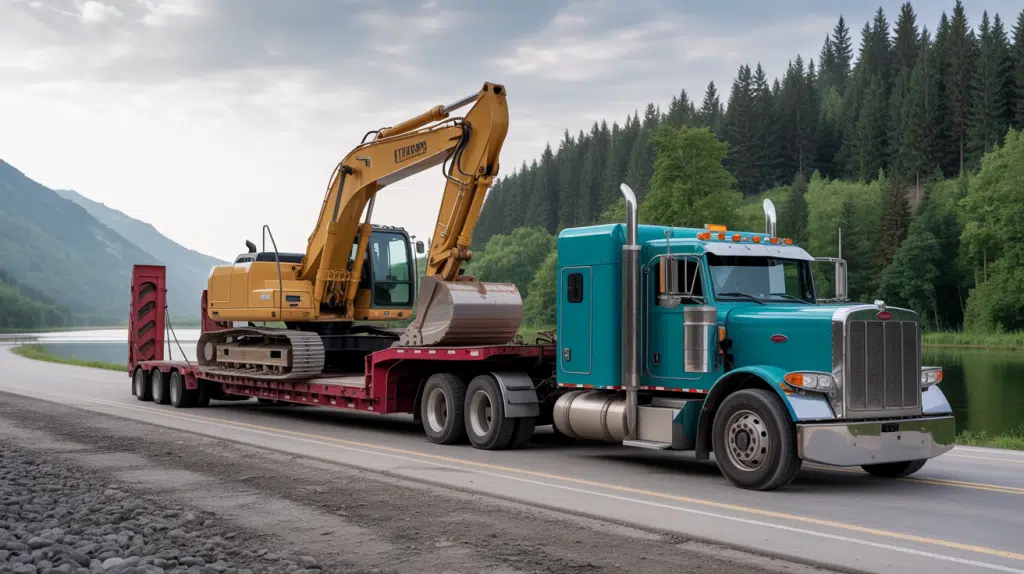
Heavy haul carriers reduce transport delays by solving problems before the truck is already on the road. Oversized equipment moves through a chain of decisions: load details, trailer choice, permits, route approvals, escorts, site access, weather timing, and delivery readiness. If one part of that chain is weak, the project can slow down quickly.
Delay prevention in heavy haul is not about rushing. It is about removing uncertainty early enough that the move can happen safely, legally, and on schedule.
Accurate load details prevent early planning delays
A heavy haul carrier needs the real dimensions and weight of the equipment before the transport plan can be trusted. If the load height is measured without attachments, or the weight is guessed from an old spec sheet, the route, permit, and trailer plan may all need revisions later.
Carriers reduce this risk by confirming:
- loaded height, width, and length
- operating or shipping weight
- attachment position
- whether parts are removed or included
- machine condition and loading method
- special handling or securement concerns
The earlier these details are confirmed, the less likely the project is to lose time through rework.
Route review keeps the move from getting trapped
Oversized loads cannot always take the shortest route. Low bridges, narrow turns, weak roads, construction zones, utility lines, railroad crossings, and local restrictions can all create delay. A route that looks easy on a map may not work once the actual load size and trailer configuration are considered.
A good carrier reviews the route against the load before dispatch. This is part of heavy haul risk management for oversized equipment projects, because route problems are easier to fix before permits, escorts, and delivery crews are already scheduled around the wrong path.
Permit timing must be built into the schedule
Permits can delay a heavy haul project when the load needs extra review, when multiple states are involved, or when route changes affect approval. Carriers reduce this risk by submitting accurate information, allowing enough time for review, and avoiding last-minute changes whenever possible.
Permit planning usually considers:
- load dimensions
- gross weight and axle configuration
- origin and destination
- approved travel routes
- escort requirements
- travel time restrictions
- bridge or infrastructure reviews
A permit is not just paperwork. It is the legal path the load is allowed to follow.
Escort coordination prevents waiting time
Some oversized loads require pilot cars, escort vehicles, police support, or traffic control. If escorts are late, unavailable, or not coordinated with the permitted travel window, the truck may wait even when the cargo is ready.
Carriers reduce delays by aligning escort timing with:
- pickup schedule
- permit travel hours
- difficult route segments
- urban movement windows
- bridge or traffic-control requirements
- final-mile delivery timing
Good escort coordination keeps the convoy moving instead of pausing for missing support.
Site readiness matters as much as road readiness
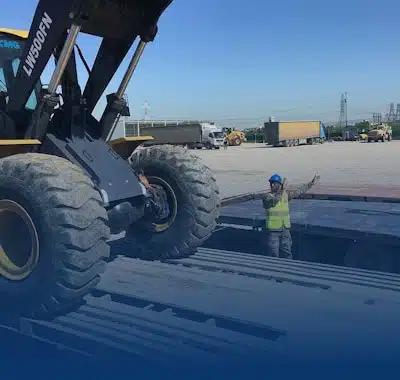
Many heavy haul delays happen at pickup or delivery, not on the highway. A machine may be ready, but the site may not be. The trailer may arrive and find soft ground, blocked access, no receiving contact, missing crane support, or no clear unloading area.
Carriers reduce this risk by asking about the site before the truck arrives. They may request photos, access details, ground conditions, gate widths, staging space, or contact information. When the site is prepared, loading and unloading happen with fewer surprises.
Loading and unloading plans reduce downtime
A heavy haul move can be delayed if the loading method is unclear. Some equipment can drive onto a trailer. Other cargo may need a crane, winch, forklift, or special support. If this is discovered too late, the project may wait for equipment or crews that should have been scheduled earlier.
A carrier reduces this delay by confirming how the equipment will be loaded and unloaded before dispatch. That includes checking whether the machine runs, whether the ground is stable, whether the trailer can align, and whether the delivery site can receive the load safely.
Weather decisions protect the schedule from bigger delays
Weather can cause delay, but ignoring weather can create even larger delays. Rain can soften loading sites. Wind can affect tall or wide loads. Snow and ice can reduce traction. Heat can increase equipment stress. Poor visibility can make escorted movement harder.
A good carrier watches the weather and adjusts when necessary. That may mean shifting a loading time, choosing a safer staging window, delaying movement, or preparing the site differently. The goal is not to avoid every weather delay. The goal is to prevent weather from turning into damage, unsafe movement, or a longer project disruption.
Communication keeps small issues from becoming major delays
Heavy haul projects involve many people: customers, dispatchers, drivers, permit teams, escort crews, site contacts, crane operators, and receiving teams. If information does not move between them, delays become more likely.
Clear communication helps confirm:
- pickup readiness
- delivery timing
- route updates
- permit status
- escort coordination
- site access instructions
- unloading requirements
- changes in weather or ground condition
When communication reduces heavy haul transport risk, it often does so by catching small problems before they reach the driver, the site, or the customer’s project schedule.
Staging gives the carrier options
Staging areas help prevent delays by giving the truck a safe place to wait, inspect, coordinate, or enter the delivery site at the right time. Without staging, the convoy may block roads, arrive before the site is ready, or struggle to reposition near the destination.
Carriers use staging to manage:
- permit timing
- escort handoffs
- inspection stops
- delivery windows
- crane availability
- site congestion
- final-mile access
A planned staging point keeps the move controlled when timing changes.
Contingency planning reduces disruption when things change
Even strong plans can meet real-world changes. A road may close, weather may shift, a site may fall behind, or a permit condition may require adjustment. Carriers reduce delays by having backup thinking in place.
A practical contingency plan may include:
- alternate staging areas
- revised delivery windows
- backup contacts
- route adjustment options
- weather decision points
- communication triggers
- equipment support options
This does not mean the original plan is weak. It means the project is prepared for reality.
What customers can do to help reduce delays
Customers play an important role in keeping heavy haul projects on schedule. The carrier can plan better when the customer provides complete and accurate information early.
Helpful details include:
- exact equipment dimensions and weight
- current photos of the equipment
- attachment details
- whether the machine runs and drives
- pickup and delivery site photos
- ground condition at both sites
- gate widths and access restrictions
- required delivery date or time window
- site contact information
- crane or unloading support needs
These details help the carrier avoid guessing, and less guessing usually means fewer delays.
Conclusion
Heavy haul carriers reduce transport delays by planning around the real conditions of the load, route, permits, escorts, weather, pickup site, and delivery site. Delays often happen when important details are missing, assumed, or discovered too late. A professional carrier reduces those delays by confirming information early, coordinating the right support, reviewing the route carefully, communicating clearly, and preparing contingency options.
A heavy haul move does not become faster by rushing. It becomes faster by being planned well enough that fewer things stop it.