Communication reduces heavy haul transport risk because oversized equipment moves through many connected decisions. The carrier needs accurate load details. The driver needs clear pickup and delivery instructions. The permit team needs the correct route information. The escort team needs timing updates. The receiving site needs to be ready before the trailer arrives. If one part of that communication chain breaks, a small misunderstanding can become a delay, a route problem, or an unsafe delivery situation.
In heavy haul transport, communication is not just customer service. It is part of risk control. A clear message at the right time can prevent a wrong entrance, missed permit window, unprepared unloading site, or last-minute route issue.
Heavy haul projects involve many people
A standard shipment may involve a shipper, driver, and receiver. A heavy haul project can involve many more people, including:
- customer or equipment owner
- carrier dispatcher
- permit coordinator
- driver
- escort or pilot car team
- site supervisor
- crane or unloading crew
- safety team
- receiving contact
- project manager
Each person may control a different part of the move. If they are not working from the same information, the project becomes easier to disrupt.
That is why heavy haul risk management for oversized equipment projects depends on communication as much as route planning, permits, weather checks, and site preparation.
Accurate load information prevents planning mistakes
Many heavy haul risks start with incomplete load details. If the equipment height, width, length, weight, or attachment position is wrong, the trailer choice, permit application, route plan, and securement approach may all be affected.
Good communication helps confirm:
- exact machine model
- true operating or shipping weight
- transport height, width, and length
- attachment details
- whether parts are removed or included
- whether the machine runs, steers, and brakes
- whether special handling is needed
A carrier can plan more accurately when the customer shares clear details early. The move becomes less dependent on guessing and more dependent on confirmed information.
Site communication prevents pickup delays
Pickup sites are not always simple. The equipment may be in a yard, on a construction site, at a farm, inside an industrial facility, or near a remote work area. The driver needs to know where to enter, who to contact, what surface conditions exist, and whether the machine is ready.
Without that information, the truck may arrive and wait while the site clears space, finds the right contact, moves materials, or prepares the machine. Those delays can affect permits, escort timing, and the rest of the schedule.
Clear pickup communication should confirm:
- correct entrance
- site contact name and phone number
- machine location on the property
- access restrictions
- loading surface condition
- overhead hazards
- whether support equipment is needed
- whether the machine is ready to load
A few clear details before arrival can prevent a long delay after arrival.
Delivery communication protects the final handoff
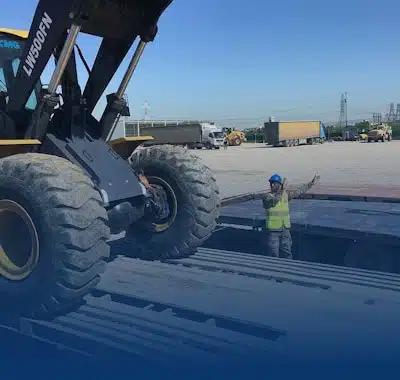
The delivery side needs just as much communication as pickup. A heavy haul driver should not arrive at the destination without knowing where to stage, where to unload, who will receive the equipment, and whether the site is ready.
This matters because delivery is often where project pressure is highest. Crews may be waiting. A crane may be scheduled. Traffic control may be active. The equipment may need to be placed in a specific position.
When heavy haul carriers reduce transport delays, they often do it by confirming the delivery details before the truck reaches the site, not by trying to solve everything at the gate.
Route updates need to reach everyone quickly
Oversized loads are sensitive to route changes. A construction zone, bridge restriction, weather issue, police requirement, or final-mile access problem can affect the movement plan. When route information changes, everyone connected to the move needs the update.
That may include the driver, escorts, dispatcher, customer, receiving site, and unloading crew. If one team is working from the old plan, the move can lose time quickly.
Good route communication helps answer:
- Is the approved route still usable?
- Has the travel window changed?
- Do escorts need a different meeting point?
- Will arrival time shift?
- Does the receiving site need to adjust?
- Is staging required before final delivery?
Heavy haul routes are not just directions. They are coordinated movement plans.
Communication reduces permit-related confusion
Permits can create timing pressure because oversized and overweight loads may be limited by approved routes, travel windows, escort rules, and state or local restrictions. If permit status is unclear, the customer may expect movement before the load is legally allowed to move.
Clear communication helps everyone understand whether the permit is approved, still pending, under review, or affected by route changes. This prevents unrealistic expectations and helps the project team plan labor, cranes, access, and delivery timing more accurately.
A permit delay becomes harder when nobody knows it is happening. It becomes easier to manage when the customer hears about it early.
Weather communication prevents unsafe assumptions
Weather can change a heavy haul plan quickly. Rain may soften a job site. Wind may affect a wide or tall load. Snow and ice may affect loading, route timing, or escort movement. Heat may require slower work or more careful inspection.
If the carrier sees weather risk but the site does not know, the delivery plan may not be ready. If the site sees muddy access but does not tell the carrier, the truck may arrive with the wrong unloading expectation.
Clear weather communication should include:
- route conditions
- pickup and delivery ground condition
- wind concerns
- visibility issues
- timing changes
- whether staging may be needed
- whether the delivery site is still usable
Weather risk becomes more manageable when updates are shared before the move reaches the problem.
Communication helps prevent wrong-site and wrong-gate problems
Many heavy haul delivery locations have more than one gate, entrance, yard, building, or staging area. A truck carrying oversized equipment may not be able to turn around easily if it enters the wrong place.
Wrong-gate problems can cause:
- lost time
- unsafe reversing or turning
- traffic disruption
- site confusion
- unloading delays
- permit or escort timing issues
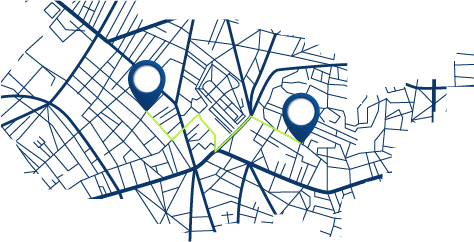
The simple fix is clear instruction before arrival. A map pin, entrance photo, gate number, site contact, or delivery note can save significant time.
Communication keeps support crews aligned
Some heavy haul moves require cranes, forklifts, loaders, rigging crews, police escorts, pilot cars, or traffic-control teams. If one support crew is late or unaware of the current timing, the entire move may wait.
Good communication keeps support crews aligned around:
- arrival time
- staging location
- unloading method
- equipment needed
- safety restrictions
- site access
- who gives final approval
The larger the move, the more important this becomes. Heavy haul coordination works best when nobody is surprised by the next step.
Communication reduces stress for customers
Customers often feel stress during heavy haul projects because the equipment is expensive, the schedule matters, and the move can look complicated. Regular communication helps reduce that uncertainty.
A customer does not need every small technical detail, but they do need useful updates:
- the permit status
- pickup readiness
- route or weather changes
- expected delivery timing
- site preparation needs
- any issue that may affect the schedule
When customers know what is happening, they can make better decisions on their side. That protects the project as much as it protects the shipment.
Poor communication can turn small problems into larger ones
A small issue is often manageable if shared early. A blocked gate, muddy unloading area, delayed permit, missing contact, or changed machine attachment can usually be solved. But if the issue is discovered after the truck arrives, options become limited.
Poor communication can lead to:
- waiting time
- rerouting
- missed delivery windows
- unprepared crews
- unsafe unloading conditions
- avoidable project stress
In heavy haul, silence is rarely helpful. Early information gives the team more choices.
What customers should communicate before the move
Customers can reduce risk by sharing clear details before pickup and delivery. Helpful information includes:
- exact equipment dimensions and weight
- photos of the machine and attachments
- pickup and delivery contact names
- correct gate or entrance information
- site access restrictions
- ground condition updates
- crane or support equipment needs
- required delivery window
- weather or site changes before arrival
- final placement instructions
These details help the carrier build a realistic plan and respond quickly if conditions change.
Conclusion
Communication reduces heavy haul transport risk by keeping the customer, carrier, driver, escort team, permit team, and receiving site aligned around the same plan. It helps confirm load details, pickup access, delivery readiness, permit timing, weather changes, route updates, support crew needs, and final placement instructions.
The safest heavy haul projects are not only planned well. They are communicated well. When the right information reaches the right people early, problems become easier to solve, delays become easier to manage, and oversized equipment moves with more control from pickup to delivery.