Heavy haul risk management is the process of identifying what could delay, damage, or disrupt an oversized equipment move before the problem happens. A heavy haul project can involve permits, escorts, route restrictions, weather changes, site access issues, equipment condition, loading challenges, and delivery timing. If one of those pieces fails, the entire move can become slower, more expensive, or harder to control.
That is why risk management in heavy haul is not about fear. It is about preparation. The goal is to make the project predictable enough that the customer knows what to expect, the carrier knows what to control, and the equipment reaches the destination without unnecessary damage, delay, or confusion.
Why risk management matters in heavy haul transport
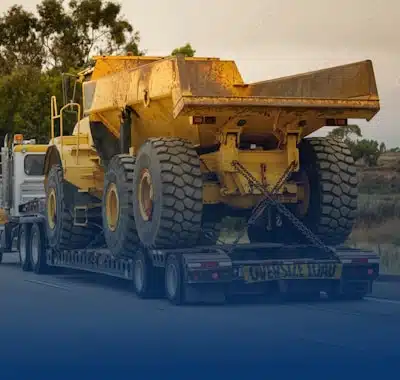
Oversized equipment does not move like standard freight. The load may be too wide for normal lanes, too tall for certain clearances, too heavy for some bridges, or too sensitive for rough handling. The route may require permits, escorts, special timing, or staging. The pickup and delivery sites may also create their own problems if access is tight, ground is soft, or support equipment is not ready.
Because of that, common risks in heavy haul transport projects usually come from several areas at once: the cargo, the route, the permits, the weather, the site, and the schedule. A strong plan does not wait for these risks to appear on the road. It looks for them early.
Transport delays are reduced by planning around real constraints
Heavy haul delays often happen when the plan assumes conditions will stay simple. But real projects rarely stay simple. Permits can take longer than expected. A route can change. Weather can affect movement windows. A delivery site can become crowded. A machine may need more preparation before loading.
Professional carriers reduce those delays by confirming the details before dispatch. They check cargo dimensions, route feasibility, permit timing, escort requirements, site access, and delivery readiness. When heavy haul carriers reduce transport delays, they usually do it by removing uncertainty before the truck is already committed to the move.
Route changes should be expected, not treated as failure
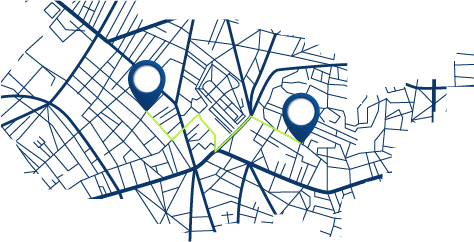
A planned route can change for many reasons. Construction zones, bridge restrictions, low clearances, traffic control, road closures, permit changes, utility conflicts, or final-mile access problems can all force a revised plan. In heavy haul, a route change is not automatically a sign of poor planning. Sometimes it is the safest response to new information.
The real risk is not that the route changes. The risk is having no process for dealing with the change. That is why route changes during oversized load moves should be planned as a possibility from the beginning, especially when the load is tall, wide, long, heavy, or moving through unfamiliar infrastructure.
Weather can turn small issues into serious transport risks
Weather affects heavy haul in practical ways. Rain can soften job sites and rural access roads. Wind can make tall or wide loads harder to control. Snow and ice can reduce traction during loading or travel. Extreme heat can stress tires, brakes, and equipment systems. Fog or poor visibility can also affect escort coordination and movement timing.
That is why weather creates risk in heavy haul transport beyond simple comfort or inconvenience. It can change the route, the loading method, the travel window, the staging plan, and the final delivery process. A good risk plan treats weather as a project variable, not as background noise.
Permit delays can affect the whole project schedule
Permits are a major part of oversized equipment transport because the load may need approval for size, weight, route, travel time, escort use, and sometimes bridge review. If permit details are incomplete or inaccurate, approvals can slow down. If the route requires special review, the schedule can shift before the equipment ever moves.
That is why permit delays affect heavy haul project schedules so directly. A late permit can delay pickup, change delivery timing, affect escort availability, or force a project team to adjust labor and equipment plans at the destination.
Communication reduces risk before and during the move
Many heavy haul problems become worse when people do not share information early enough. The carrier may need updated site conditions. The customer may need revised timing. The driver may need new access instructions. The escort team may need route updates. The receiving site may need to know when the trailer is actually entering the property.
Clear communication keeps those details connected. When communication reduces heavy haul transport risk, it does so by preventing small misunderstandings from becoming job-site delays, wrong entrances, missed delivery windows, or unsafe unloading conditions.
Contingency planning keeps the project moving when conditions change
A contingency plan answers the question: what do we do if the original plan changes? That might include an alternate route, a backup staging area, a revised delivery window, a different unloading approach, or a communication trigger when weather or access conditions shift.
This matters because oversized equipment projects have less room for improvisation. A standard truck can often detour quickly. A heavy haul convoy may not have that flexibility. That is why contingency planning supports oversized equipment delivery by giving the team safe options before the project reaches a pressure point.
Last-minute problems usually come from missing early details
Last-minute heavy haul problems often feel sudden, but many begin earlier. A machine weight was estimated instead of confirmed. A site entrance was not checked. An attachment changed the transport height. A permit needed more time. The ground at delivery became soft. A crane was not ready. A contact person was unavailable.
These issues can be reduced when the project team identifies the fragile points before movement begins. A review of what causes last-minute heavy haul transport problems helps customers and carriers prevent the kinds of surprises that create the most stress.
Risk planning protects both equipment and timelines
Heavy equipment is expensive, but the project timeline around it can be just as valuable. A delayed excavator can hold up a crew. A late transformer can affect an installation window. A damaged machine can interrupt a job before it starts. A missed delivery window can create cost across labor, rentals, traffic control, cranes, or site access.
That is why risk planning protects equipment and project timelines at the same time. It protects the physical cargo, but it also protects the work that cargo is meant to support.
The main risk areas in oversized equipment projects
A practical heavy haul risk plan usually looks at several areas together:
- cargo size, weight, shape, and sensitivity
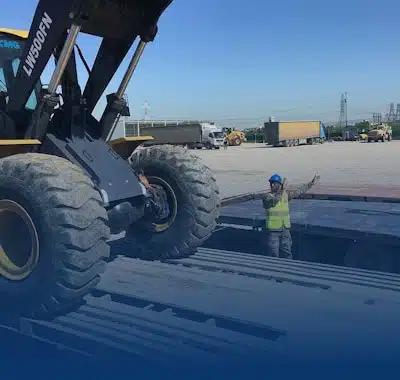
- loading and unloading site conditions
- permits and route approvals
- bridges, clearances, and road restrictions
- escort and traffic-control requirements
- weather and seasonal conditions
- staging space and final-mile access
- communication between carrier, customer, and site team
- contingency options if the plan changes
These areas should not be treated separately. They influence one another. A route change may affect permit timing. Weather may affect site access. Soft ground may change the unloading method. Poor communication may turn a small delay into a larger project issue.
What customers can do to reduce heavy haul risk
Customers can help reduce risk by sharing complete information early. Useful details include:
- exact equipment weight and dimensions
- photos of the equipment and attachments
- pickup and delivery site photos
- machine condition and whether it runs
- deadline or delivery window requirements
- known access restrictions
- ground condition at both sites
- contact information for pickup and delivery
- whether cranes, forklifts, or site support are needed
These details help the carrier build a realistic plan instead of relying on assumptions.
Conclusion
Heavy haul risk management for oversized equipment projects is about finding the weak points before the move begins. Common risks, route changes, weather, permits, communication gaps, last-minute site issues, and missing contingency plans can all affect the safety and timing of a heavy haul project. When those risks are identified early, the move becomes more predictable and the customer gains more confidence.
The core reality is simple: oversized equipment transport is safest when risk is planned, not discovered. A strong risk plan protects the machine, the route, the schedule, and the project waiting for that equipment to arrive.