Excavators are built to dig, lift, and rotate with power, but those same strengths create transport challenges once the machine leaves the job site. The boom adds height, the undercarriage adds concentrated weight, and the upper structure changes balance in ways that can affect both loading and road stability. That is why long-distance excavator transport is not just about finding a trailer. It is about preparing the machine so it can travel legally, securely, and without unnecessary stress on the equipment.
For the bigger picture of how different machines require different hauling methods, this topic fits into how different types of heavy equipment are transported safely, where transport planning is built around the machine itself rather than one generic approach.
Why excavators need extra planning on long moves
An excavator is not a simple weight sitting on a deck. Its boom, arm, bucket, counterweight, and track frame all influence how the load behaves in transit. On a short local move, some mistakes may stay hidden. Over a long distance, though, vibration, braking, wind, rough surfaces, and repeated road transitions expose weak planning very quickly.
That is why safe long-distance hauling depends on three things working together:
- the excavator is prepared in the right travel position
- the trailer setup matches the machine’s height and weight profile
- the securement plan controls both the machine body and its movable parts
When one of these is ignored, the trip becomes harder on both the load and the route.
Start with the excavator’s real transport dimensions
Before trailer choice or permits, the machine must be measured in the condition it will actually travel. That means transport height is not just “excavator height.” It includes:
- trailer deck height
- track height above the deck
- boom and arm position
- attachment position
- any removable or protruding parts
This matters because long-distance transport often crosses multiple jurisdictions, and each one may care about width, weight, and especially height. A machine that seems manageable in the yard can become a permit problem if the boom is positioned poorly or an attachment adds unexpected travel height.
Lower the transport profile before the truck moves
A long trip rewards good preparation. In many cases, the safest move comes from reducing height and limiting movement before securement begins.
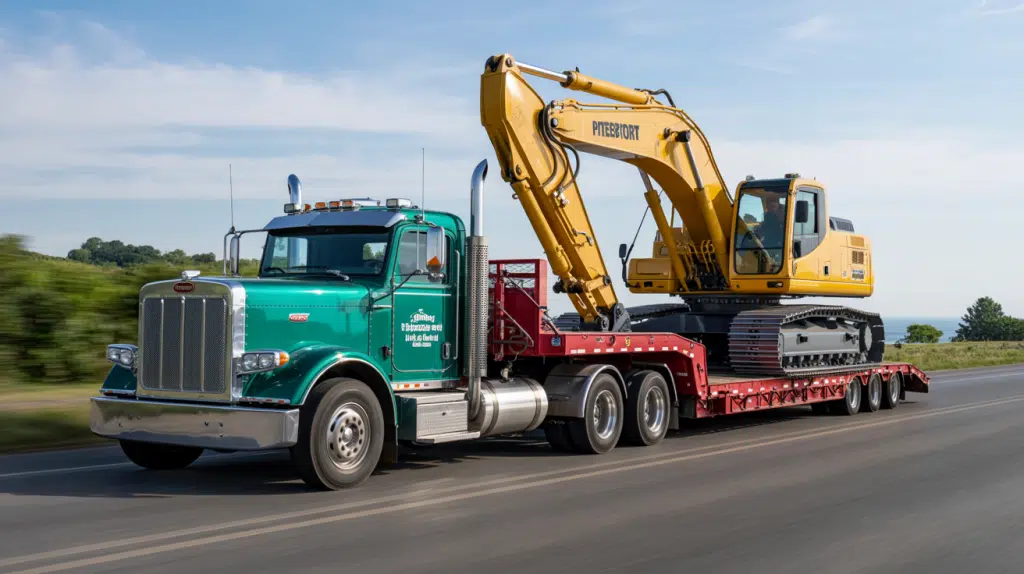
Common excavator prep steps include:
- tucking the boom and arm into a lower travel position
- lowering or repositioning the bucket
- removing attachments when they create unnecessary height or instability
- checking whether mirrors, guards, or accessories should be removed or folded
These decisions often make the difference between a smooth permitted route and a difficult one. Height control is especially important when the route may include overpasses or older infrastructure, which is one reason many teams also plan around low-clearance risks for oversized loads before dispatch.
Choose the trailer based on height, loading, and balance
Excavators often travel best on low-profile trailer setups because the machine’s upper structure and boom can quickly create overheight issues. Detachable gooseneck and low-deck trailers are common because they simplify loading and help reduce overall travel height.
The right trailer choice depends on:
- total operating weight
- machine width across the tracks
- how low the machine can be positioned
- whether the excavator will drive on or be loaded differently
- how the trailer supports axle distribution and permit compliance
A trailer that loads easily but carries the machine too high may create route trouble later. On the other hand, a lower deck can improve both stability and clearance flexibility.
Pay attention to center of gravity, not just total weight
Long-distance transport punishes poor balance. Excavators often carry a strong rear counterweight, while the boom and attachment can shift the machine’s effective balance depending on how they are positioned. That means placement on the trailer matters just as much as the machine’s total weight.
A proper setup should:
- keep the excavator centered left to right
- distribute weight so axle groups stay compliant
- avoid extreme pin weight or overloading at the rear
- prevent the machine from “riding heavy” on one part of the trailer system
If the machine is not placed correctly, you can end up with a move that is legal on paper but unstable in real driving conditions.
Secure the machine as a machine, not as a block of steel
An excavator has more than one movement point. The body, tracks, boom, arm, and attachment all need to be considered. That is why long-distance securement should never assume the machine is “one solid piece.”
A strong securement plan usually includes:
- primary securement at the machine’s designated tie-down points
- controlled restraint of the boom and attachment
- checks for metal-to-metal rubbing or movement points
- re-check stops early in the trip, especially after the first miles
The goal is not simply to stop the excavator from sliding. The goal is to prevent any part of it from shifting under braking, vibration, or cornering.
Route quality matters more as distance increases
The longer the move, the more route quality starts to matter. Rough pavement, repeated grade changes, detours, narrow work zones, and high-traffic corridors all add stress to the load and the securement system. What feels manageable over 20 miles can become a problem over 400.
For that reason, long-distance excavator hauling benefits from routes that:
- reduce severe clearance risks
- avoid unnecessary surface transitions
- offer safe staging or inspection stops
- support legal axle and width requirements consistently
A better route often protects the machine just as much as a better trailer does.
What owners should check before handing over the machine
For equipment owners and project managers, long-distance excavator transport is safer when a few things are confirmed before pickup:
- operating weight is accurate
- attachment details are clear
- the machine’s dimensions are measured in travel configuration
- any removable components are identified early
- the pickup and delivery sites allow safe loading and unloading
This kind of preparation reduces avoidable delay and helps the hauling team make better decisions before the machine is already on the trailer.
Conclusion
Looking for reliable heavy equipment transport? Freedom Heavy Haul offers competitive rates and professional service for machinery shipping across the entire United States.
Transporting excavators safely over long distances requires more than loading the machine and securing it to a trailer. Safe hauling depends on reducing transport height, matching the trailer to the excavator’s true dimensions and weight, controlling balance across the rig, and securing every movement point that could create instability. Once those details are handled correctly, the move becomes far more predictable. And when a long-distance move feels predictable, that usually means the planning was done right before the journey even began.