Utilities should prepare accurate equipment details, site access information, lifting requirements, delivery timing, and project contacts before requesting oversized equipment transport. A transformer, switchgear lineup, generator, utility pole load, substation component, or control unit cannot be planned correctly from a simple pickup and delivery address. The carrier needs to understand the equipment, the route, the site, and the project window before the move can be scheduled with confidence.
Oversized utility equipment often supports critical infrastructure work. If one important detail is missing, the transport plan can slow down through permit revisions, trailer changes, route issues, staging problems, or unloading delays. Preparing the right information early helps the move protect both the equipment and the utility project behind it.
Start with the exact equipment being moved
The first thing utilities should prepare is a clear description of the equipment. The carrier needs to know whether the load is a transformer, switchgear unit, substation component, generator, control cabinet, utility pole bundle, or another type of infrastructure material.
Basic labels are not enough. The transport plan should be built around the equipment’s real shipping condition, including its current shape, accessories, and support needs. When energy, power and utility infrastructure is moved by heavy haul transport, the cargo’s role in the project often matters as much as its physical size.
Confirm true weight and transport dimensions
Accurate weight and dimensions are essential. A load that is heavier, taller, wider, or longer than expected can affect trailer selection, permits, escorts, route clearance, and final-mile access.
Utilities should prepare:
- shipping weight
- transport height
- transport width
- transport length
- center-of-gravity details if available
- axle or support requirements if provided by the manufacturer
- accessory dimensions if parts remain attached
The most useful measurements are taken in the condition the equipment will actually travel. A transformer with accessories removed, a switchgear lineup in shipping packaging, or a pole bundle prepared for transport may not match the equipment’s installed dimensions.
Share lifting, jacking, and support-point details
Many utility loads require controlled handling. Transformers may need jacking points. Switchgear may need forklift pockets or frame support. Generators may sit on skids. Long materials may need bunks, cradles, or spaced support points.
Before transport, utilities should share any drawings, handling notes, manufacturer instructions, or photos that show where the equipment can be lifted, supported, blocked, or restrained.
This matters because transformers transported for utility projects often depend on approved support and lifting points. The same principle applies across utility equipment: the load should be carried through the parts designed to handle transport force.
Identify sensitive areas before securement begins
Some utility equipment is strong in one direction but sensitive in another. A control cabinet may have panels, meters, wiring areas, terminals, doors, or connection points that should not receive direct securement force. A transformer may have external components that need protection. A generator may include housings, controls, cooling parts, or fuel-related systems.
Utilities should identify:
- no-contact areas
- fragile or exposed components
- weather-sensitive openings
- hydraulic, electrical, or control connections
- areas that should not be chained, strapped, pushed, or lifted
- required covers or packaging
This information helps the carrier secure the cargo without damaging the equipment being protected.
Prepare pickup-site access details
The pickup location can affect trailer choice and loading method. A utility yard, manufacturer facility, substation, warehouse, port, or project site may have different access conditions. The carrier needs to know whether the truck can enter, turn, stage, load, and exit safely.
Useful pickup details include:
- correct entrance or gate
- gate width
- road surface
- turning room
- overhead hazards
- ground condition
- loading equipment available
- staging area
- site contact
- access hours or security rules
A clear pickup plan prevents delays when the trailer arrives.
Prepare delivery-site and final-mile details
The delivery side is often more difficult than the pickup side. Utility equipment may need to enter a substation, remote energy site, utility corridor, construction area, industrial plant, or temporary access road. The final mile may include gravel roads, narrow gates, soft ground, overhead lines, steep grades, or limited staging space.
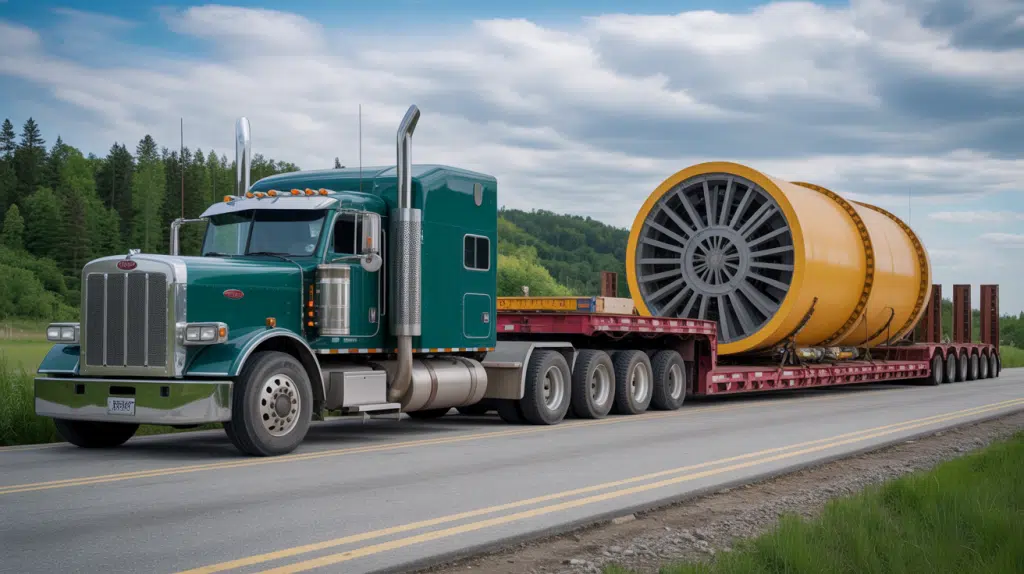
When remote energy sites affect heavy haul planning, the carrier needs more than a destination address. The team needs access details that show whether the loaded trailer can actually reach the unloading point.
Utilities should prepare:
- exact site entrance
- access road condition
- bridge, culvert, or cattle guard concerns
- overhead line or clearance issues
- turning space
- unloading location
- staging or laydown space
- trailer exit path
- site contact information
These details help the carrier plan the final approach before the load is already near the site.
Confirm unloading method and support equipment
Oversized utility equipment often needs cranes, forklifts, gantries, jacking systems, skidding systems, rigging crews, mats, or other support. The carrier should know who provides that equipment and when it will be ready.
Before delivery, utilities should confirm:
- what unloads the cargo
- who provides the crane, forklift, or rigging crew
- where the unloading equipment will set up
- whether the ground can support it
- whether mats or pads are needed
- who approves final placement
- whether the equipment is staged or installed directly
A truck can arrive on time and still be delayed if the unloading support is not ready.
Clarify delivery timing and project windows
Utility projects often run on precise timing. A delivery may be tied to an outage, installation phase, crane booking, line crew schedule, inspection window, or energization plan. If the carrier does not know the real timing constraint, the move may be scheduled in a way that does not match the project.
Utilities should share:
- required delivery date
- preferred arrival window
- outage window if applicable
- crane or rigging schedule
- crew readiness
- site access hours
- whether early delivery is allowed
- whether staging is available if timing changes
This is especially important because utility equipment delivery requires precise scheduling when the cargo supports a larger power-system sequence.
Explain whether the load is part of a multi-load project
Many utility jobs involve several related loads. A substation project may include steel, control units, switchgear, transformers, grounding materials, and long infrastructure materials. A grid expansion project may involve pole loads, hardware, equipment cabinets, and support components moving over several days or weeks.
Utilities should prepare the delivery sequence before scheduling transport. The carrier needs to know which load arrives first, which loads need protection, which loads require cranes, and where each item should be staged.
A multi-load utility project can become confusing if every shipment is treated separately.
Share photos, drawings, and site maps where possible
Photos and drawings help reduce guessing. A few clear images of the cargo, pickup site, gate, access road, unloading area, and final placement zone can reveal issues that are easy to miss in written descriptions.
Useful visuals include:
- equipment photos from multiple angles
- nameplate or model information
- lifting-point drawings
- base-frame or skid drawings
- pickup and delivery entrances
- access roads
- overhead hazards
- laydown or staging areas
- final placement location
These materials help the carrier plan faster and more accurately.
Assign contacts for pickup, delivery, and project decisions
A utility transport project can involve the utility team, manufacturer, carrier, driver, escorts, permit coordinators, crane crew, site supervisor, and project manager. If no one knows who can answer questions, small issues can delay the move.
Utilities should assign:
- pickup contact
- delivery contact
- after-hours contact if needed
- site access contact
- project manager or decision-maker
- crane or unloading contact
- emergency communication contact
Good contact planning helps the carrier handle updates without confusion.
Prepare for weather and access changes
Utility sites can change quickly. Rain can soften access roads. Wind can affect lifting. Snow can reduce traction. A site that was ready earlier in the week may become difficult by delivery day.
Before the load moves, utilities should update the carrier about:
- recent rain, snow, or flooding
- soft ground
- road closures
- site congestion
- changed access routes
- blocked entrances
- delayed crane or crew availability
- new overhead or construction hazards
A timely update can prevent the convoy from discovering a problem after reaching the site.
Conclusion
Utilities should prepare equipment details, weight and dimensions, support-point information, sensitive-area warnings, pickup access, delivery access, unloading support, timing windows, project sequence, photos, maps, and site contacts before oversized equipment transport. These details help the carrier choose the right trailer, plan the route, secure permits, coordinate escorts, protect the cargo, and deliver the equipment when the project can use it.
The core reality is simple: oversized utility transport works best when the carrier understands the equipment and the project before the truck arrives. When utilities prepare the right information early, heavy haul delivery becomes safer, clearer, and far easier to coordinate.