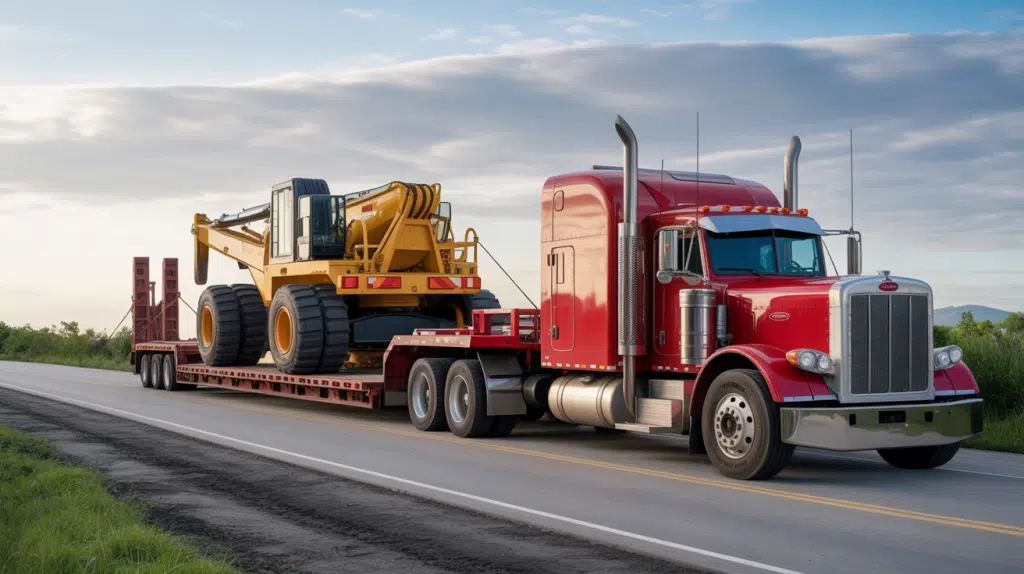
Heavy equipment is transported safely when the machine, the trailer, the route, and the securement plan all match each other. A bulldozer does not move the same way as a crane component, and a forklift does not create the same loading problem as an industrial generator. That is why safe transport is not one generic method. It is a controlled process where each machine type is matched to the right loading method, trailer setup, axle plan, and route conditions.
In heavy haul work, the central question is simple: what does this specific machine need in order to move without damage, delay, or instability? Once that question is answered correctly, the transport plan becomes calmer, clearer, and far more predictable.
Why heavy equipment cannot all be hauled the same way
Heavy equipment shares one obvious trait: it is large, heavy, and expensive. Even so, the transport risks change from machine to machine.
An excavator carries a boom, arm, and attachment that affect balance and travel height. A bulldozer carries concentrated weight through tracks and undercarriage components. A crane may move as several separate components rather than one complete unit. A wheel loader places different pressure on tires and loading angles than a skid steer. Because the machine design changes, the safe hauling method changes with it.
That is why professional transport planning starts with machine behavior, not just machine name.
The four transport factors that matter most
Before choosing a trailer or route, the safest plans usually confirm four things:
Machine dimensions and travel height
Overall length, width, and loaded height decide whether a machine will fit under bridges, through work zones, and along the permitted route.
Weight and center of gravity
The center of gravity affects axle loading, braking behavior, and trailer stability. A machine that is front-heavy, rear-heavy, or top-heavy needs more deliberate placement than one with even balance.
Loading method
Some equipment can drive onto a detachable trailer. Some needs ramps, winches, cranes, or partial disassembly. The loading method changes both risk and trailer choice.
Securement and attachment control
Buckets, booms, forks, blades, counterweights, and other movable parts often create the real transport challenge. Safe hauling depends not only on holding the machine, but also on controlling whatever can shift, swing, or extend.
Excavators: safe movement starts with boom and balance control
Excavators create transport challenges because their upper structure, boom, stick, and attachment change both height and balance. Their track systems also place concentrated force on the trailer deck. For that reason, excavator hauling usually focuses on lowering travel height, controlling the attachment, and placing the machine so the weight sits correctly across the trailer.
If the move involves larger excavators or longer highway distance, the planning becomes more specific, which is why transporting excavators safely over long distances deserves its own dedicated guide.
Bulldozers: the undercarriage and tracks need protection, not just movement
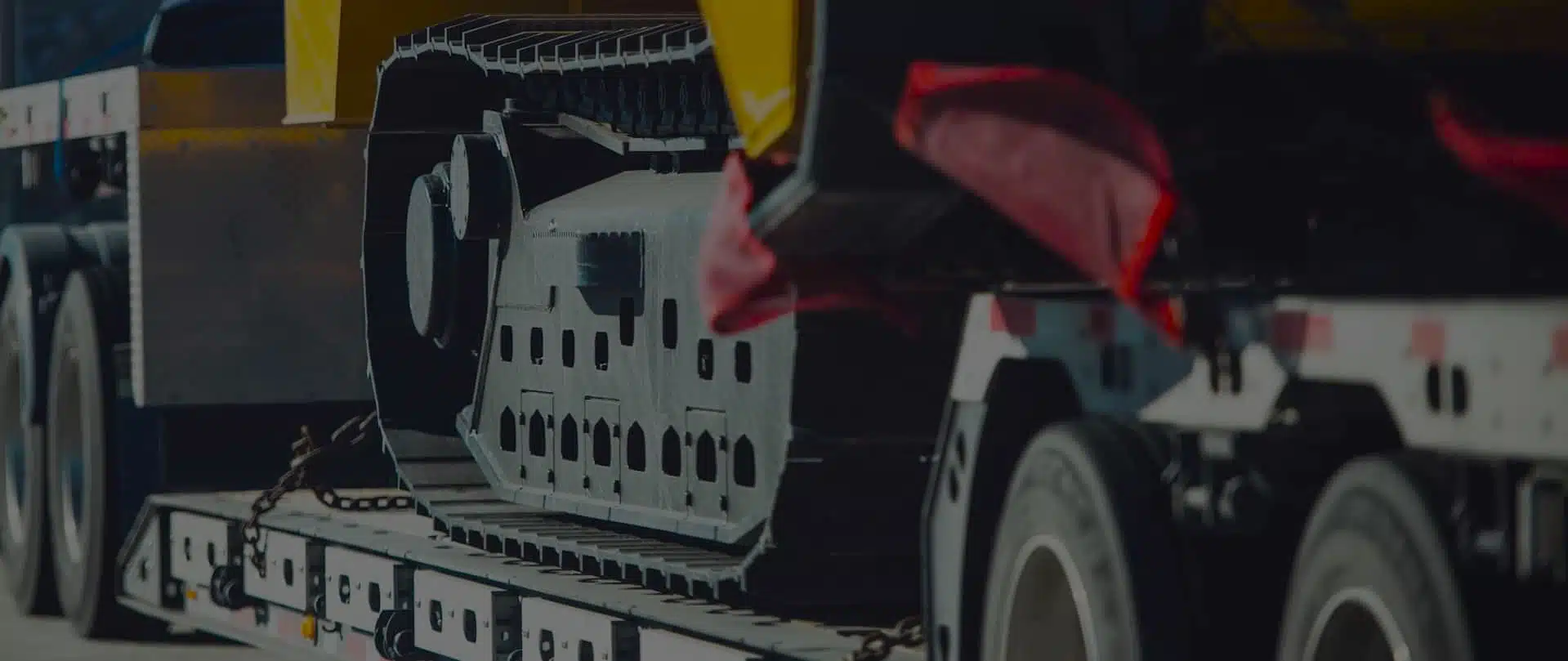
Bulldozers are heavy, compact, and track-driven, which makes them stable in one sense but punishing to the wrong trailer or loading approach. Their weight often concentrates into the blade side or undercarriage zones, and repeated stress during loading can damage components if the angle or deck support is wrong.
That makes dozer transport less about “can it fit?” and more about “can it be loaded and hauled without harming the machine?” That is exactly why hauling bulldozers without damaging tracks or undercarriage is a separate planning topic.
Cranes: one project may become multiple transport moves
Crane transport is different because the crane itself may not travel as one complete unit. Depending on size and type, the move can include the crane body, boom sections, counterweights, jibs, or support components as separate shipments. This changes routing, axle planning, and loading order.
As a result, crane hauling often feels more like project coordination than simple equipment transport. The details behind the best transport methods for cranes and crane components show why this category needs more planning depth than many other machine types.
Wheel loaders: tire machines still need heavy-haul discipline
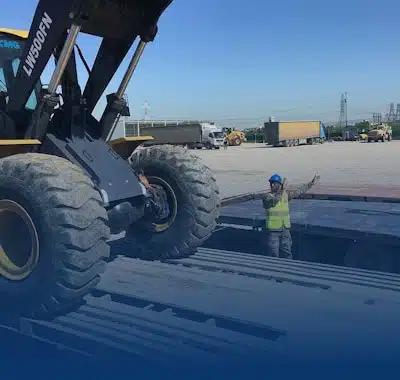
Wheel loaders may appear easier to move than tracked machines because they roll and load more easily. Even so, their height, articulation, and bucket position still affect transport stability and legal height. Their tire condition and loading angle also matter more than many customers expect.
That is why safe movement depends on proper preparation, not just a convenient trailer, and why how wheel loaders are prepared for heavy haul transport is worth treating as its own subject.
Skid steers and compact machines: small size does not remove risk
Compact equipment often creates a false sense of simplicity. Skid steers, for example, may be smaller than many other machines, but they still require securement, attachment control, and loading care. Because they are easier to move, they are sometimes underplanned. That is where avoidable mistakes happen.
For that reason, even smaller machines need a methodical approach, and what to know before transporting skid steers helps separate “small machine” from “small risk,” because the two are not the same.
Backhoes and compact equipment: combination machines need combination thinking
Backhoes and compact equipment often combine multiple movement points in one unit. A backhoe may have front loader arms, a rear digging assembly, and different transport dimensions depending on configuration. Compact equipment may also move between job sites more frequently, which increases the importance of repeatable, low-stress transport planning.
That is why safe transport planning for backhoes and compact equipment matters. These machines may be smaller than mining or crane equipment, but they still require correct trailer matching and controlled loading procedures.
Generators and power units: freight may be static, but risk still moves
Industrial generators and power units often lack the visual complexity of machines with booms or tracks, yet they create a different type of hauling problem. Their weight can be dense, their lifting points are critical, and their value is often high enough that vibration, poor blocking, or careless securement creates costly consequences.
Because of that, moving them safely depends on stable support and route predictability. The details behind how to move industrial generators and power units focus less on drive-on loading and more on support, placement, and protection.
Forklifts and warehouse equipment: indoor machines meet outdoor transport rules
Forklifts and warehouse equipment are built for controlled environments, but once they move by road, they must meet heavy-haul logic. Mast height, battery weight, tire style, and center of gravity all affect the move. A forklift that feels easy to operate inside a warehouse can become awkward to secure on a trailer if the mast and weight balance are not handled properly.
That is why transporting forklifts and warehouse equipment by trailer deserves its own guide, especially for customers moving equipment between facilities, jobsites, or storage locations.
Mining equipment: oversized transport planning becomes a project system
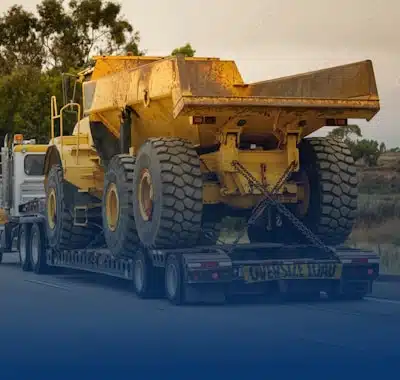
Mining equipment often sits at the far end of heavy-haul complexity. These machines may be exceptionally large, unusually heavy, or impossible to move without staged disassembly and route engineering. In that context, transport stops being a simple haul and becomes a coordinated oversized-load project.
That is why preparing mining equipment for oversized transport requires deeper planning around axle layout, permits, escorts, loading sequence, and infrastructure restrictions.
The safest transport method always comes from the machine first
One of the most common mistakes in heavy haul is choosing the trailer before fully understanding the machine. Safe transport usually works the other way around.
The machine determines:
- what trailer design is appropriate
- how much axle support is needed
- whether the route can handle the height and weight
- how securement must be applied
- whether the load can travel complete or needs partial breakdown
When those decisions are made in the right order, the project becomes more efficient and less reactive.
What equipment owners and project managers should really look for
When customers think about heavy equipment transport, they often focus on price and timing first. Those matter, but safe execution depends on something deeper: whether the carrier understands the machine type well enough to choose the right transport method before the move begins.
That understanding protects:
- the machine from damage
- the road move from delays
- the permit process from rework
- the project schedule from disruption
The best transport plans feel almost quiet. That quiet confidence usually comes from preparation that happened long before the first mile.
Conclusion
Looking for reliable heavy equipment transport? Freedom Heavy Haul offers competitive rates and professional service for machinery shipping across the entire United States.
Different types of heavy equipment are transported safely when the hauling method reflects the real character of the machine. Excavators need balance and attachment control. Bulldozers need track and undercarriage protection. Cranes need component-level planning. Loaders, skid steers, backhoes, generators, forklifts, and mining machines each introduce their own transport logic. The safe method is never generic. It is built around dimensions, weight, loading behavior, securement, and route fit. When those pieces align, heavy equipment transport stops feeling uncertain and starts feeling engineered.