Trailer choice affects more than how a load sits during transport. It can change permit requirements, route options, escort needs, clearance risk, bridge review, loading method, delivery timing, and total project cost. In heavy haul work, the trailer is not just the equipment under the cargo. It is part of the legal, physical, and financial plan behind the move.
A tall load on the wrong trailer may create avoidable clearance problems. A dense load on too few axles may create permit or bridge concerns. A long load on a trailer with poor support may require route changes or extra handling. That is why the right trailer can make a move smoother, while the wrong trailer can make the same cargo harder and more expensive to transport.
Trailer choice changes the loaded dimensions
Permits and routes are based on the loaded transport configuration, not just the cargo itself. A machine may be a certain height on the ground, but once it is placed on a trailer, the total height changes. The same is true for width, length, axle spacing, and overall weight distribution.
That is why heavy haul trailer types and when each one is used should be chosen around the cargo’s final travel profile. The trailer can reduce height, add length, spread weight, improve loading access, or create extra planning needs depending on the setup.
Lower trailers can reduce clearance problems
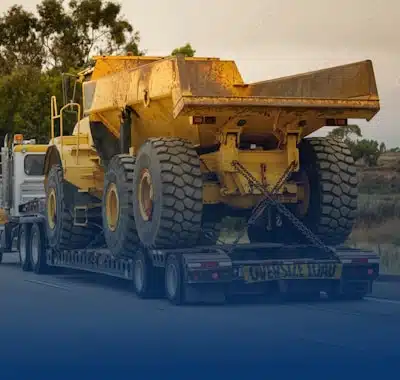
Height is one of the most obvious ways trailer choice affects routing. A flatbed may make a tall machine too high for certain bridges, overpasses, utility lines, signs, or facility entrances. A lower trailer may reduce the loaded height enough to make the route more practical.
Lowboy, RGN, step deck, and double-drop trailers can all help with height in different ways. The right choice depends on how much height reduction is needed and how the cargo must be loaded.
If the cargo is seriously height-sensitive, double-drop trailers can reduce transport height by placing the load in a lower center well, which may help avoid some clearance-related detours or permit complications.
Axle configuration affects overweight permits
When weight is the main issue, trailer choice becomes a permit decision. A heavy load does not only need enough capacity. It needs an axle setup that distributes weight in a way roads and bridges can legally accept.
Permitting agencies may review:
- gross weight
- axle count
- axle spacing
- axle group weight
- trailer configuration
- bridge restrictions
- approved route
A trailer with too few axles may overload axle groups even if the trailer looks physically capable of carrying the cargo. More axles or a specialized configuration can make the move more acceptable from a permit and infrastructure standpoint.
Trailer length can affect route approval
Longer trailer setups can help support long cargo, but they also affect route planning. An extendable trailer may solve the cargo-support problem while creating new concerns around turns, intersections, ramps, staging areas, and final-mile access.
A long trailer may require more careful review of:
- turning radius
- rear swing
- lane positioning
- intersection clearance
- site entrance geometry
- escort coordination
This means trailer choice can reduce one risk while adding another planning requirement. A good plan balances both.
Trailer choice can change escort requirements
Oversized load escorts are often based on loaded dimensions, route conditions, and local rules. If the trailer makes the load taller, wider, longer, or more difficult to maneuver, escort requirements may change.
For example, a longer trailer may need additional support during turns. A wider load may need more traffic control. A taller load may need clearance checks or utility coordination. A heavier setup may need route-specific restrictions.
The trailer itself may not be the only reason escorts are required, but it can influence the final movement profile that permit agencies and route planners review.
Loading method affects cost and scheduling
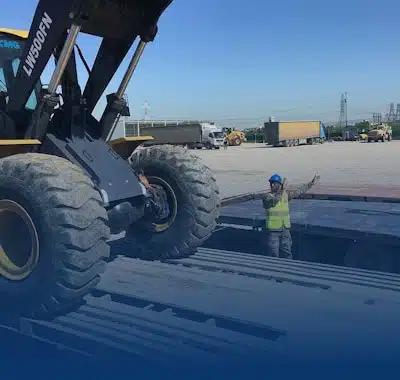
Some trailers make loading easier. Others require additional support. An RGN may allow self-propelled equipment to drive on from the front. A flatbed may need forklift or crane loading. A double-drop may reduce height but require careful lifting into the well. A modular trailer may need a more coordinated loading plan.
The loading method can affect:
- labor time
- crane or forklift needs
- site preparation
- trailer positioning
- pickup schedule
- unloading requirements
- total project cost
A cheaper trailer is not always cheaper if it requires more support, more time, or more risk at the loading site.
Delivery site access can limit trailer options
A trailer that works on the highway still has to work at the delivery site. Some sites have narrow gates, soft ground, tight turns, limited staging space, overhead hazards, or poor trailer exit paths. A trailer may solve the route problem but create a final-mile problem if it cannot position correctly for unloading.
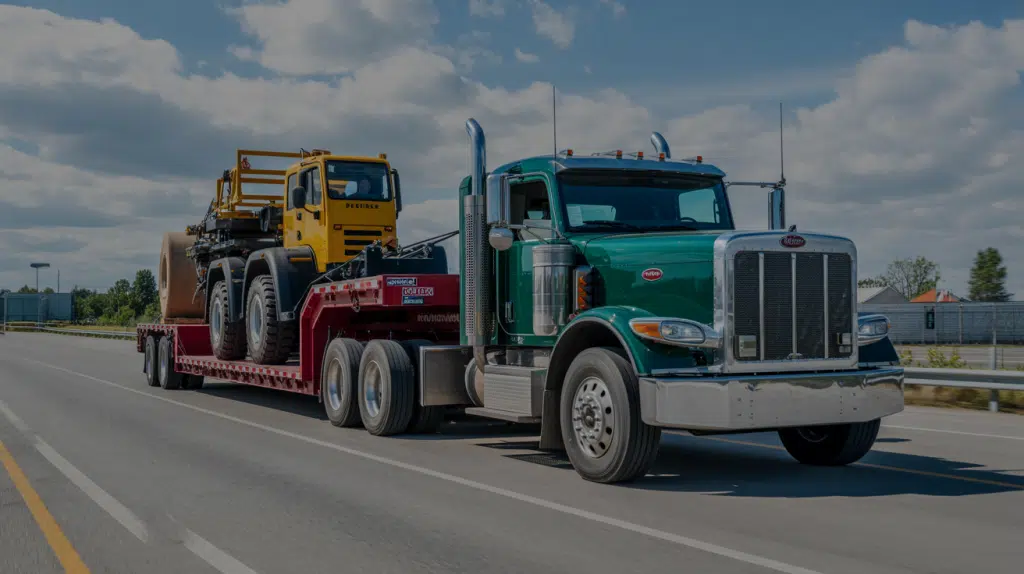
Before choosing a trailer, the carrier should consider:
- pickup access
- delivery access
- ground condition
- turning space
- staging area
- unloading method
- support equipment
- trailer exit route
A trailer choice is only correct when it works at both ends of the move.
Trailer complexity can increase cost
Specialized trailers often cost more because they require more equipment, more planning, more permits, more experienced handling, or more coordination. A modular trailer, multi-axle setup, extendable trailer, or crane-loaded double-drop move may involve more time and review than a simpler flatbed move.
That extra cost can be justified when the cargo requires it. The expensive mistake is using a specialized trailer when it is not needed, or using a simple trailer when the load clearly requires a more capable setup.
The best cost control comes from matching the trailer to the real constraint.
The wrong trailer can create hidden expenses
A poor trailer choice may seem cheaper at first, but it can create hidden costs later.
Those costs may include:
- permit revisions
- route changes
- extra escorts
- delayed loading
- crane support added late
- equipment repositioning
- failed site access
- clearance problems
- schedule disruption
Heavy haul pricing is often shaped by risk. When the trailer reduces risk, it may save money across the full project even if the trailer itself costs more.
Trailer choice should follow the dominant transport problem
Every load has one or two main constraints. The trailer should be chosen to solve those first.
Examples:
- Height problem: lowboy, RGN, step deck, or double-drop
- Length problem: extendable trailer
- Weight problem: multi-axle or modular trailer
- Loading problem: RGN, ramps, crane-supported setup, or specialized loading plan
- Simple cargo: flatbed or step deck may be enough
- Complex industrial cargo: modular trailer may be needed
A good trailer decision comes from identifying what the cargo is most likely to fight during the move.
What customers should understand before choosing by price
Customers often compare quotes by price, but trailer choice can explain why one quote differs from another. One carrier may be planning a simpler trailer. Another may be allowing for height reduction, extra axles, route restrictions, escorts, or special loading needs.
Before comparing price, customers should ask:
- What trailer type is being used?
- Why is that trailer suitable for the load?
- Does the trailer reduce height, weight, or loading risk?
- Does the route require that trailer configuration?
- Will the trailer work at the delivery site?
- Are permits, escorts, and support equipment included?
These questions help customers compare the actual transport plan, not only the number.
What information helps carriers choose the right trailer
The carrier can choose the right trailer more accurately when the customer provides complete details early.
Useful information includes:
- cargo height, width, length, and weight
- equipment make and model
- attachment details
- photos of the load
- pickup and delivery site access
- ground conditions
- loading and unloading method
- route or clearance concerns
- deadline or delivery window
- whether crane or forklift support is available
The more accurate the information, the less likely the trailer plan will need to change later.
Conclusion
Trailer choice affects permits, route planning, and cost because the trailer shapes the entire loaded configuration. It changes height, axle distribution, length, turning behavior, loading method, escort needs, site access, and permit review. A low trailer may reduce clearance risk. A multi-axle trailer may support overweight permits. An extendable trailer may help with long cargo. A modular trailer may make complex industrial cargo possible.
The right trailer does not simply carry the load. It makes the move more legal, more practical, and more predictable. When the trailer matches the cargo, route, permits, and delivery site, the heavy haul project becomes easier to plan and safer to complete.