Weather can turn a heavy haul project from planned to uncertain very quickly. A route may be approved, permits may be ready, and the trailer may be correctly matched to the load, but rain, wind, snow, ice, heat, fog, or poor visibility can change how safely the move can be loaded, driven, escorted, staged, and delivered.
In heavy haul transport, weather is not just a comfort issue for the driver. It affects traction, ground stability, braking distance, visibility, escort coordination, route timing, equipment protection, and final-mile access. That is why weather should be treated as part of heavy haul risk management for oversized equipment projects, especially when the load is tall, wide, heavy, sensitive, or moving through difficult access points.
Rain can weaken pickup and delivery sites
Rain does not only affect the road. It can affect the ground where the equipment is loaded or unloaded. A site that was firm the day before may become soft, muddy, or unstable after heavy rainfall.
That can create problems such as:
- trailer tires settling into soft ground
- ramps losing stable contact
- machines slipping during loading
- crane mats needing more support
- final placement areas becoming unusable
For oversized equipment, this matters because the first and last few feet of the move can be just as important as the highway miles. If the trailer cannot safely line up or the machine cannot unload without sinking or sliding, the whole schedule can be affected.
Wind is a serious issue for tall and wide loads
Wind can create risk when a load has a large side profile. Tall equipment, modular sections, tanks, vessels, and wide machinery can all react differently when exposed to strong crosswinds. The load may remain secured, but wind can still affect convoy speed, lane control, escort spacing, and driver comfort.
Wide loads are especially sensitive because they already require more road space. When wind adds side force, the move may need slower travel, a delayed window, or a safer staging decision.
A strong plan does not treat wind as a minor inconvenience. It asks whether the load, route, and timing still make sense under the actual conditions.
Snow and ice reduce control during loading and travel
Snow and ice increase risk because they reduce traction at almost every stage of the project. A machine can slip while climbing onto the trailer. A trailer can struggle with site access. Escort vehicles may need more stopping distance. The loaded truck may need slower movement and more careful route timing.
Ice can also hide surface problems. A flat-looking yard may include frozen ruts, weak shoulders, or slick ramp contact points. On the road, bridge decks and shaded areas may freeze faster than surrounding pavement, which makes route conditions less predictable.
For these moves, weather planning is not just about whether the road is open. It is about whether the cargo can move with enough control.
Heat can create equipment and tire stress
Extreme heat creates a different kind of risk. Tires, brakes, hydraulic systems, cooling systems, and road surfaces may all be affected by high temperatures. Long-distance moves can become harder on equipment when heat combines with heavy weight, slow travel, and repeated stopping.
Heat can also affect workers during loading and unloading. Crews may need more careful timing, hydration breaks, and inspection routines, especially when securement, tarping, rigging, or crane support is involved.
The risk may not look dramatic at first, but heat can quietly increase stress across the entire transport system.
Fog and poor visibility affect escort coordination
Visibility matters more in heavy haul than in ordinary freight because oversized loads often need escorts, warning vehicles, wider turns, controlled lane movement, and communication between multiple people. Fog, heavy rain, blowing dust, or snow can reduce how far drivers and escorts can see ahead.
That makes it harder to manage:
- lane changes
- bridge approaches
- turns
- traffic control
- utility hazards
- roadside stops
- final-mile movement
When visibility drops, the move may need to slow down, stage temporarily, or wait for safer conditions. That delay can be frustrating, but it is often better than forcing a wide or tall load through low-visibility conditions.
Weather can trigger route changes
A planned route may become unsuitable because of flooding, high winds, snow closures, construction-zone washouts, reduced visibility, or unstable shoulders. Weather can also affect bridges, rural roads, dirt access paths, and final delivery areas.
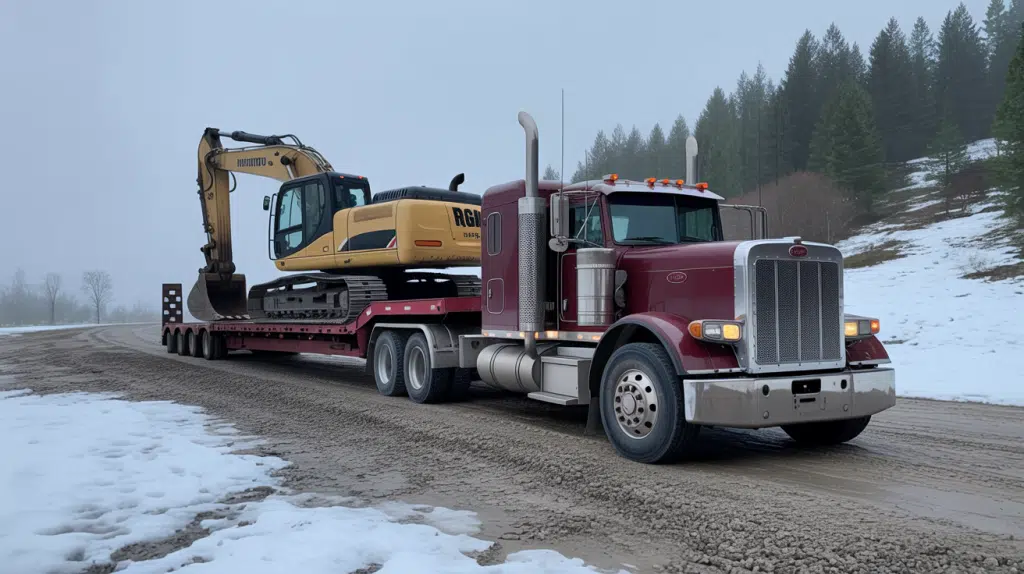
When weather conditions change, route changes during oversized load moves may become necessary to protect the load, the driver, the escort team, and the public. In heavy haul, a route change is not always a setback. Sometimes it is the safest decision available.
Weather affects permits and travel windows
Oversize and overweight permits may include travel restrictions based on daylight, weather, holidays, traffic conditions, or specific movement windows. Even when weather is not directly written into the permit, unsafe conditions can still delay movement.
A storm can push a move outside its permitted window. A delayed departure can affect escort availability. A missed delivery window can create problems with site crews, crane bookings, or customer schedules.
That is why weather planning should be connected to permit timing and project scheduling. The question is not only “Will the weather be bad?” The better question is “What happens to the schedule if weather slows this move?”
Weather can expose weak securement or poor preparation
A well-secured load should be prepared for normal transport forces, but weather can add new stress. Wind can pull against tarps or covers. Rain can reduce friction. Ice can affect chains, binders, or deck surfaces. Rough weather can also increase vibration and road shock if the route conditions worsen.
This is why securement checks and planned stops matter. Weather can reveal small weaknesses in the setup, especially on longer moves or sensitive cargo. A securement plan should account for the conditions the load is likely to face, not just the conditions at pickup.
Final-mile delivery can become the hardest weather risk
The final mile is often where weather creates the most practical trouble. A public road may be clear, but the delivery site may be muddy, crowded, icy, flooded, or too soft for the trailer. A crane pad may need extra support. A staging area may become unusable. A machine may unload safely on dry ground but struggle after rain or snow.
This is where weather risk becomes very physical. The equipment is close to delivery, but the site may not be ready to receive it safely.
How carriers manage weather risk
A professional heavy haul carrier manages weather risk by watching conditions before and during the move. The carrier may adjust departure time, choose staging points, confirm site conditions, change the unloading plan, request updated photos, or delay movement when conditions are unsafe.
A strong weather plan usually includes:
- checking pickup and delivery site conditions
- reviewing forecast changes along the route
- identifying safe staging areas
- confirming permit and escort timing
- preparing for slower travel
- checking whether tarps or covers are needed
- planning securement re-checks
- communicating changes early
The goal is not to avoid every delay. The goal is to prevent weather from becoming damage, danger, or a bigger project disruption.
What customers should share when weather may affect the move
Customers can help reduce weather-related risk by sharing real site conditions before pickup or delivery. This is especially important when the site is rural, temporary, unpaved, under construction, or affected by recent rain, snow, or thawing ground.
Helpful information includes:
- recent photos of pickup and delivery areas
- whether the ground is firm, muddy, icy, or sloped
- whether the site has drainage problems
- whether access roads are paved or unpaved
- whether cranes or forklifts will need stable ground
- whether the delivery window is flexible
- whether the cargo needs weather protection
Accurate site updates help the carrier make better decisions before the truck arrives.
Conclusion
Weather creates risk in heavy haul transport because it changes the conditions around the load, not just the road ahead. Rain can weaken job sites. Wind can affect tall and wide loads. Snow and ice can reduce traction. Heat can stress equipment and crews. Fog can affect escort coordination. Poor conditions can also change routes, permits, staging, unloading, and delivery timing.
A safe heavy haul plan treats weather as a real project variable. When conditions are checked early, communicated clearly, and managed with flexible planning, the move stays safer and more controlled even when the forecast does not cooperate.