Route changes in oversized load transport usually happen because the road system changes faster than the original plan. A route may look clear during planning, but construction, bridge restrictions, utility work, weather, traffic control, permit conditions, or site access issues can make a different path safer or legally necessary.
For standard freight, a route change may be inconvenient. For heavy haul, it can affect permits, escorts, travel windows, staging points, bridge reviews, and delivery timing. That is why route flexibility is part of heavy haul risk management for oversized equipment projects, not a sign that the plan was careless.
Oversized loads cannot simply “take another road”
A regular truck can often detour around a closed road with little difficulty. An oversized load does not have that freedom. The load may be too tall for one bridge, too wide for one town road, too heavy for one structure, or too long for one turn. Even a small detour can create a new clearance, bridge, or traffic-control problem.
That is why route changes in heavy haul require careful review. The new route has to fit the loaded trailer, not just appear open on a map.
Construction zones can make a planned route unusable
Road construction is one of the most common reasons a heavy haul route changes. A work zone may reduce lane width, shift traffic, add temporary barriers, close shoulders, or create sharp lane transitions. A route that was approved earlier may become difficult once cones, barriers, equipment, and temporary signage are added.
For oversized loads, even a few inches of reduced width can matter. A construction zone may also affect escort movement, staging space, and safe traffic control. In those cases, changing the route may be the safer choice.
Bridge restrictions can force a different path
Heavy haul routes often depend on bridge capacity, axle spacing, gross weight, and crossing conditions. If a bridge is restricted, under repair, newly posted, or rejected during review, the load may need a different crossing.
This can happen even when the route looks normal for everyday traffic. A bridge may be fine for passenger vehicles and standard trucks but unsuitable for a heavy haul configuration. When that happens, the carrier may need to reroute, adjust axle planning, or wait for special approval before the move continues.
Low clearances can appear late in the process
Low bridges, overhead signs, utility lines, tree canopies, and temporary structures can all create clearance problems. Sometimes these risks are known during planning. Other times, they appear during a route survey, permit review, or final-mile check.
A low-clearance issue can change the route quickly because height problems are not easy to solve on the road. If the load cannot safely pass under an obstacle, the route must change, the load must be reconfigured, or utility coordination may be needed.
Utility work and overhead lines can affect final-mile access
Oversized loads often run into the hardest route problems near the pickup or delivery site. Overhead wires, temporary utility work, narrow plant roads, small-town streets, or site entrances can affect the last part of the move.
A route may be approved for the main road miles but still need adjustment near the destination. This is why final-mile access matters. The last few turns can create more difficulty than the highway portion of the route.
Permit conditions may require route changes
Oversize and overweight permits are route-specific. If a permitting agency changes the approved route, requires a different road, adds bridge conditions, or limits travel through certain areas, the carrier must follow those conditions.
Permit changes can happen because of:
- bridge review results
- road restrictions
- construction updates
- local travel limitations
- escort requirements
- time-of-day restrictions
- state or municipal approval rules
In heavy haul, the permitted route is not just a suggestion. It is the legal movement path for that load.
Weather can make a route unsafe
Weather can create route changes when the original path becomes risky. High winds can affect tall or wide loads. Heavy rain can soften roads or job-site access. Snow and ice can reduce traction. Flooding can close roads or weaken shoulders. Poor visibility can make escort coordination more difficult.
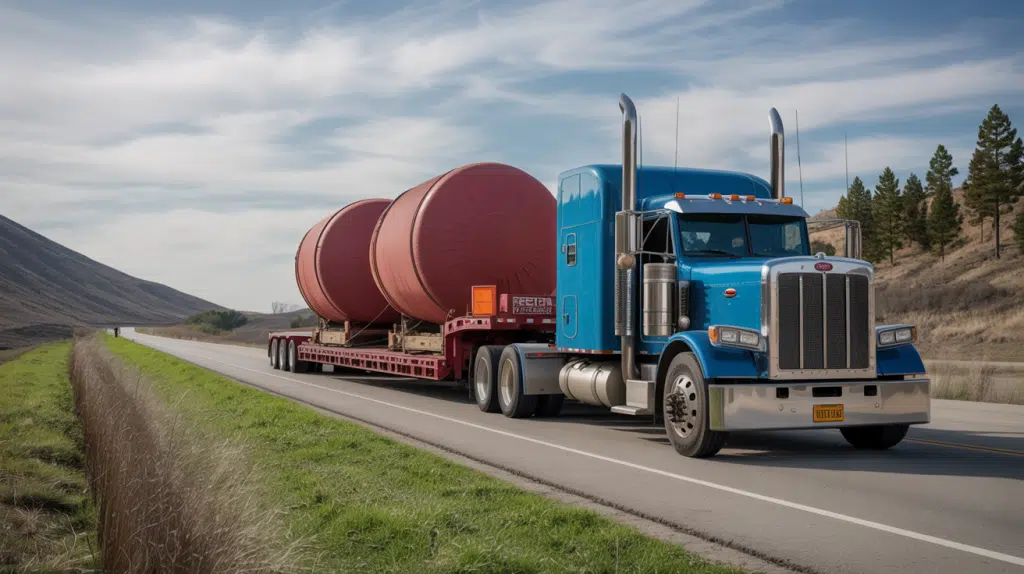
When weather creates risk in heavy haul transport, a route change may protect the load, the crew, and the project schedule from a larger disruption. A delayed or adjusted route is often better than forcing a move through unsafe conditions.
Traffic patterns and public safety can affect route choice
Some roads are technically passable but difficult during certain traffic periods. Urban corridors, school zones, commuter routes, narrow downtown streets, and public road projects may require specific timing or alternative routing.
A wide or overlength load may need more room to turn, merge, or pass through intersections. If traffic conditions make that movement unsafe, the route may be adjusted to reduce public risk and avoid unnecessary stops.
Site access changes can affect the entire route
Pickup and delivery sites can change after the route is planned. A gate may be blocked. A construction entrance may move. Ground conditions may weaken. Materials may be stacked in the planned path. A crane or unloading zone may shift.
When the site access changes, the route into or out of the location may also need to change. This is especially important for oversized loads because a new entrance may require different turning space, overhead clearance, or staging room.
Route changes can affect schedule and cost
A route change is rarely just a new line on a map. It can affect:
- permit revisions
- escort scheduling
- fuel and mileage
- travel windows
- delivery timing
- staging points
- bridge and clearance review
- site coordination
That is why route changes should be communicated quickly. The earlier the customer, carrier, driver, escort team, and receiving site know about the change, the easier it is to adjust the project schedule.
How carriers reduce route-change problems
Professional heavy haul carriers reduce route-change risk by planning with flexibility. They review the route, check permits, confirm site access, watch weather, communicate with escorts, and identify potential problem areas before the move begins.
A strong planning process usually includes:
- accurate load dimensions and weight
- route review based on the loaded trailer
- permit and bridge checks
- clearance awareness
- staging options
- final-mile access review
- communication with site contacts
- contingency thinking for delays or closures
The goal is not to guarantee that nothing changes. The goal is to make sure changes can be handled safely and calmly.
What customers should understand about route changes
Customers may feel concerned when a route changes, especially if the delivery is time-sensitive. But in heavy haul, a route change can be a responsible decision. It may prevent a clearance issue, bridge problem, unsafe turn, permit violation, or delivery-site conflict.
Customers can help by sharing accurate site details, updating the carrier about access changes, responding quickly to timing questions, and keeping the receiving team informed. Better information helps the carrier make route decisions before the convoy reaches a problem point.
Conclusion
Route changes happen during oversized load moves because heavy haul routes must match real-world conditions, not just planned directions. Construction zones, bridge restrictions, low clearances, permit conditions, weather, traffic, utility conflicts, and site access changes can all affect the approved path.
A route change is not always a setback. Sometimes it is the safest way to protect the equipment, the crew, the public, and the project timeline. When route changes are handled with clear communication and contingency planning, the move stays controlled even when the original path no longer works.