Public works transport is rarely judged by freight alone. A machine can arrive safely and still create problems if it reaches the site at the wrong time, enters through the wrong access point, or conflicts with traffic control already in place. That is what makes infrastructure hauling different. The cargo may be familiar, but the delivery environment is public, coordinated, and far less forgiving than a private yard or isolated job site.
That industry reality sits inside heavy haul transport solutions for construction, energy, agriculture & industry, because public works equipment must satisfy both transport requirements and project requirements at the same time.
Public roads are part of the project, not just the route
A bridge-repair machine, paving unit, utility support vehicle, or road-construction component does not move toward a closed industrial yard. It often moves through active streets, shared corridors, or municipal work zones where the public is still present. That changes the hauling logic immediately.
The route now has to respect:
- commuter traffic and time-of-day restrictions
- school zones and municipal access limits
- staging space near active roadwork
- traffic-control setups already supporting the project
- nearby utilities, curbs, medians, and temporary barriers
Because of that, the “last mile” often matters more in public works than the long highway segment before it.
The project schedule usually controls the delivery window
Public works jobs often operate under narrow work windows. A city street may close only overnight. A utility crew may need the machine after lane control is already established. A paving train may require support equipment to arrive in sequence, not simply “sometime today.” In these jobs, timing is not a nice detail. It is part of the transport method.
That is why public works hauling should answer a practical question early: when can the site receive the machine in a way that helps the project instead of interrupting it?
Site access is often temporary, narrow, or controlled by traffic setups
Unlike large private jobsites, public works sites often create improvised delivery environments. The access may run through cones, barriers, temporary steel plates, shoulder lanes, or partially closed streets. A wide trailer may fit the road in theory but still struggle once staging, signage, and traffic control are already in place.
For that reason, a clean public-works move often depends on:
- confirming the actual unloading entrance
- understanding how much space remains after barriers are set
- checking whether the machine will unload into live work or protected staging
- making sure the trailer can exit without fighting the same restrictions on the way out
A route that looks adequate on paper can become awkward once traffic-control hardware is added.
The equipment category still decides the transport method
Public works is an industry label, not a machine type. One project may involve rollers, excavators, pavers, bridge access units, utility trenching machines, loaders, compact equipment, or modular infrastructure components. That means the carrier still has to begin with the cargo itself before matching the public-works conditions around it.
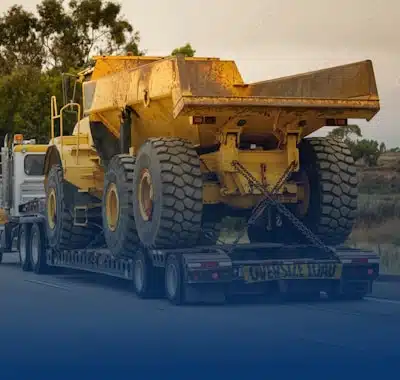
A machine with boom height and attachment complexity will need a different haul plan than a dense utility unit or a compact paving support machine. That is exactly why cargo type changes heavy haul planning requirements in real-world operations, because the project category never replaces the machine’s physical transport needs.
Urban geometry can become more limiting than gross weight
In many public works moves, the hardest issue is not raw tonnage. It is maneuvering. Narrow intersections, medians, utility poles, parked municipal assets, temporary signs, and work-zone boundaries can all reduce the usable transport space. A machine that is legal in width may still feel oversized once the city environment begins to compress the path around it.
That is why public works hauling often benefits from routes that are chosen for turning practicality, not just mileage.
Escort and traffic coordination become more visible in municipal work
Some heavy haul industries keep most of the complexity hidden from the public. Public works does the opposite. The move often happens where motorists, pedestrians, city staff, and contractors can all interact with the transport environment at once. That makes escort coordination and delivery discipline more important, not less.
In these settings, the hauling team usually needs to stay aligned with:
- site traffic-control plans
- lane closure timing
- municipal or contractor coordination
- safe placement that does not block active operations longer than necessary
The machine is still the cargo, but the surrounding public environment becomes part of the load-management problem.
Delivery sequence matters because crews are already moving
A public works project may already have crews staged, barriers placed, inspectors on schedule, and subcontractors working around one another. That means the order of delivery matters. If the wrong piece shows up first, or if a key machine arrives after the work window has started slipping, the project can lose valuable time very quickly.
This is where public works hauling begins to resemble active construction coordination. In fact, some of the same scheduling discipline seen in construction equipment transport planning applies here too, except with the added constraint that the work is often happening in public view and on public roads.
The receiving site should be treated like an operating corridor, not a parking lot
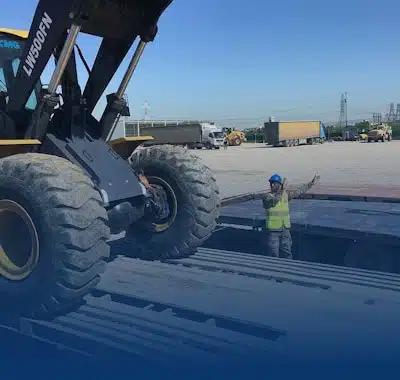
A common mistake in public works hauling is assuming the site is simply a place to drop the equipment. In reality, the site may need:
- a specific unloading direction
- a machine delivered into a protected zone
- immediate positioning for use
- coordination with live traffic or utility access
- trailer removal that does not interfere with the next phase of work
That means unloading is part of the operation, not the end of the operation.
What project teams should confirm before public works delivery
A steadier public-works move usually begins with very practical answers:
- what exact equipment is moving
- what delivery window is actually usable
- how traffic control will look at arrival
- where the trailer will stage and unload
- whether the machine must be delivered in working sequence
- how the trailer exits once the equipment is on site
These details do not overcomplicate the move. They stop a public project from becoming chaotic during the handoff.
Conclusion
Infrastructure equipment transport for public works projects works best when the haul is planned around the public work environment, not just around the machine itself. The cargo still matters, but timing windows, municipal access, traffic-control layouts, and delivery sequence often shape the success of the move just as strongly as trailer choice and route distance. When those public-facing conditions are accounted for early, the transport supports the project cleanly, the site receives the equipment without disruption, and the work can begin with the quiet confidence that well-planned heavy haul is supposed to deliver.