Heavy haul transport is not one service used the same way by every industry. A wind blade creates a different transport problem than a bulldozer. A mining machine creates a different route and axle challenge than a plant vessel. Agricultural equipment moves on a different rhythm than public-works equipment. Because the cargo changes, the transport method changes with it.
That is the practical truth behind heavy haul work. Safe transport does not begin with the truck. It begins with the cargo type, the industry environment, and the real job the equipment must do once it arrives. When those things are understood clearly, the haul becomes more controlled, more compliant, and far easier to plan from the first quote to the final delivery.
Why industry context changes heavy haul planning
A heavy haul load always has dimensions, weight, and route limits. Even so, those facts do not tell the whole story by themselves. The industry behind the load changes what matters most.
Construction equipment often needs fast site-to-site movement and predictable loading access. Energy cargo often creates length, sensitivity, or infrastructure restrictions. Agricultural equipment may travel seasonally and often moves through rural roads, local bridges, and narrow access points. Industrial machinery may need cleaner handling, stricter support, and lower vibration. Because of that, heavy haul planning works best when it answers two questions at the same time:
- what is the cargo physically
- what does the industry require operationally
Once those two questions are connected, transport planning becomes more accurate and much less reactive.
Construction equipment needs speed, access, and machine-specific preparation
Construction projects usually move on active schedules. A delayed excavator can slow a crew. A late dozer can hold up grading. A crane component arriving out of sequence can disrupt an entire lift schedule. That is why construction hauling usually depends on route practicality, loading efficiency, and machine readiness more than elegant theory alone.
For that reason, construction equipment transport planning often focuses on how machines are loaded, how quickly they can be staged, and how site access affects the move before the truck even leaves the yard.
Agriculture adds width, seasonality, and rural-road realities
Agricultural transport has its own personality. Farm equipment is often wide, seasonal, and moved across local road systems that may not feel like “heavy haul corridors” at first glance. Combines, tractors, headers, and other farm equipment may create escort needs, bridge concerns, or temporary route adjustments even when they are not the heaviest loads on paper.
That is why moving agricultural equipment with heavy haul trailers often depends on route timing, attachment management, and trailer choice that respects both width and rural-road conditions.
Oilfield and energy equipment creates higher operational pressure
Energy-sector transport tends to be more demanding because the cargo is often dense, critical, and tied to operational uptime. Oilfield equipment may be large, awkward, and site-sensitive. Energy projects may also involve stricter coordination around pads, staging areas, or utility corridors. In those settings, transport planning is not just about moving weight. It is about supporting an operating system that does not welcome uncertainty.
That is why heavy haul requirements for oilfield and energy equipment usually emphasize route control, securement discipline, and job-sequence awareness from the start.
Manufacturing and plant machinery needs steadier handling
Industrial machinery often looks cleaner and more compact than construction equipment, but that does not make it easier to move. Plant equipment can be sensitive to vibration, concentrated in weight, and difficult to support correctly if lifting points and base geometry are not understood. In these projects, a rough move can create expensive consequences that are not visible until installation begins.
That is why transporting manufacturing and plant machinery safely usually depends on support, placement, and machine protection just as much as permits and deck space.
Mining equipment pushes scale, weight, and route engineering harder
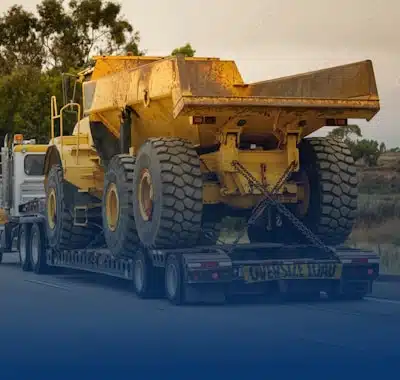
Mining cargo often sits at the extreme end of heavy haul. The machine size can grow quickly, the weight can become infrastructure-sensitive, and the route may need more engineering than normal commercial freight ever sees. In these cases, transport planning becomes a project system rather than a simple dispatch.
That is why mining equipment logistics planning often includes staged movement, route review, axle strategy, and more deliberate sequencing than other cargo categories.
Wind energy cargo turns length and turning radius into major constraints
Wind energy transport is one of the clearest examples of cargo type changing the haul completely. Blades, tower sections, nacelles, and related components do not just weigh a lot. They also create unusual length, turning, and infrastructure challenges. A route that handles ordinary oversized freight may still fail when a blade needs room to sweep through curves and intersections.
That is why wind energy component transport planning often centers on route geometry, escort coordination, and project-specific movement strategy rather than simple mileage.
Industrial tanks and vessels require support, stability, and route care
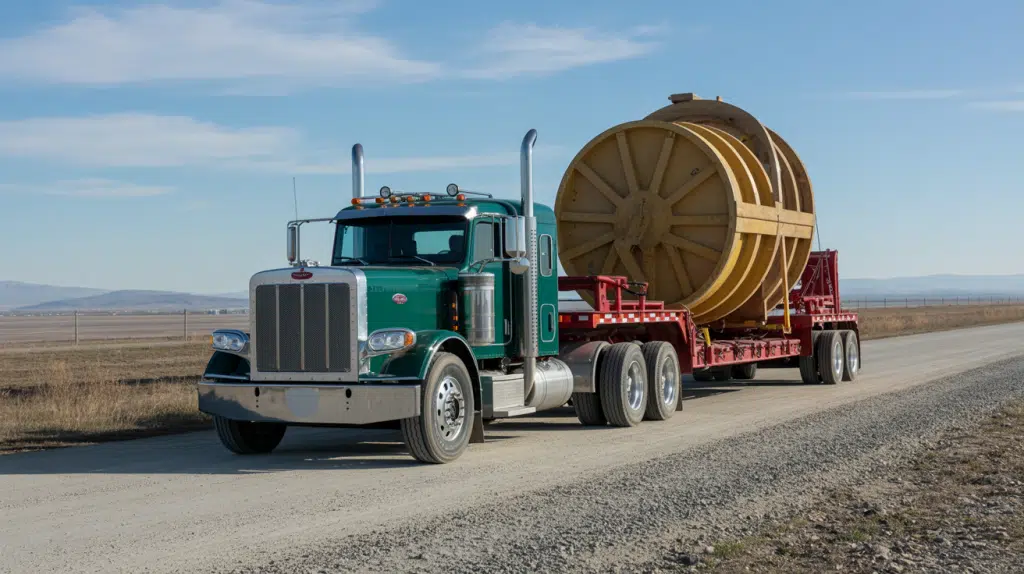
Tanks and vessels create a different kind of heavy haul challenge. They may be cylindrical, tall, top-heavy, or difficult to secure without carefully controlling contact points and support zones. Their shape can make them look simpler than they are, but in transport, shape often becomes the main planning issue.
That is why tank and vessel transport planning usually focuses on support design, stability, and route compatibility long before the trailer is finalized.
Public works and infrastructure equipment must fit project coordination
Infrastructure projects often involve public visibility, road restrictions, and schedule coordination that reaches beyond a private site. Equipment for bridges, roads, utilities, and municipal work may move through active public corridors where access, timing, and staging matter just as much as raw transport capability. In those cases, a well-planned move protects not only the equipment, but the project calendar and the surrounding traffic environment.
That is why transport planning for public works equipment often depends on timing windows, access discipline, and route control that support the broader project around it.
Cargo type decides trailer choice more than many customers expect
Two loads can weigh the same and still need very different trailers. A dense generator, a long boom section, a wide agricultural machine, and a tall vessel all place different demands on deck height, axle spacing, loading method, and securement geometry. That is why smart heavy haul planning usually starts by asking what the cargo needs from the trailer, not just what trailer is available.
This is also why how cargo type changes heavy haul planning requirements is such an important topic on its own. Trailer logic, axle planning, and route decisions all become more accurate when cargo identity leads the process.
The safest industry solution is the one that fits the real working environment
A heavy haul move can look correct on paper and still be poorly matched to the customer’s actual job. A plant machine may need gentler handling. A construction site may need faster unloading. An oilfield move may need tighter coordination. An agricultural move may need a route built around rural realities. The best transport solution is not the most generic one. It is the one that respects both the cargo and the industry that depends on it.
That is where trust is built. Customers do not only want a carrier that can move weight. They want a carrier that understands what the cargo means once it arrives.
What customers should expect from an industry-aware heavy haul plan
An industry-aware heavy haul plan usually does five things well:
- it matches the trailer to the cargo’s real shape and weight
- it respects the route limits that matter for that industry
- it protects the cargo according to how sensitive it is
- it plans loading and unloading around the actual site environment
- it keeps the delivery sequence aligned with project needs
When those pieces come together, the move feels less like a gamble and more like a controlled operation.
Conclusion
Heavy haul transport solutions for construction, energy, agriculture, and industry are safest when the cargo type and the industry context are treated as one planning problem, not two separate ones. Construction equipment needs access and speed. Agricultural equipment needs width-aware rural routing. Energy and oilfield cargo needs tighter coordination. Plant machinery needs steadier handling. Mining cargo needs stronger route and axle planning. Wind components, vessels, and public-works equipment each bring their own transport logic as well. That is the core reality of heavy haul by industry: the load determines the method, and the industry determines how precisely that method must be applied.