Heavy haul planning does not begin with the trailer. It begins with the cargo. A dense generator, a long wind blade, a wide farm machine, and a tall vessel may all qualify as heavy haul, yet they do not create the same transport problem. One load may be governed by bridge stress. Another may be governed by turning radius. A third may be governed by support geometry, route height, or delivery sequence. That is why cargo type changes the plan before the truck is even assigned.
This idea sits at the center of heavy haul transport solutions for construction, energy, agriculture & industry, because industry context matters, but the cargo itself is what shapes the transport method in the most direct way.
The same weight does not create the same move
Two loads can weigh the same and still require completely different heavy haul plans. A short, dense machine places more pressure on axle layout and support points. A long but lighter component may place more pressure on route geometry and escort coordination. A tall load may reduce trailer options because height becomes the first route constraint. In each case, the weight matters, but the cargo type tells you how that weight behaves.
That is the first rule to understand. Heavy haul is not just weight management. It is cargo-behavior management.
Shape changes the route before the road is even reviewed
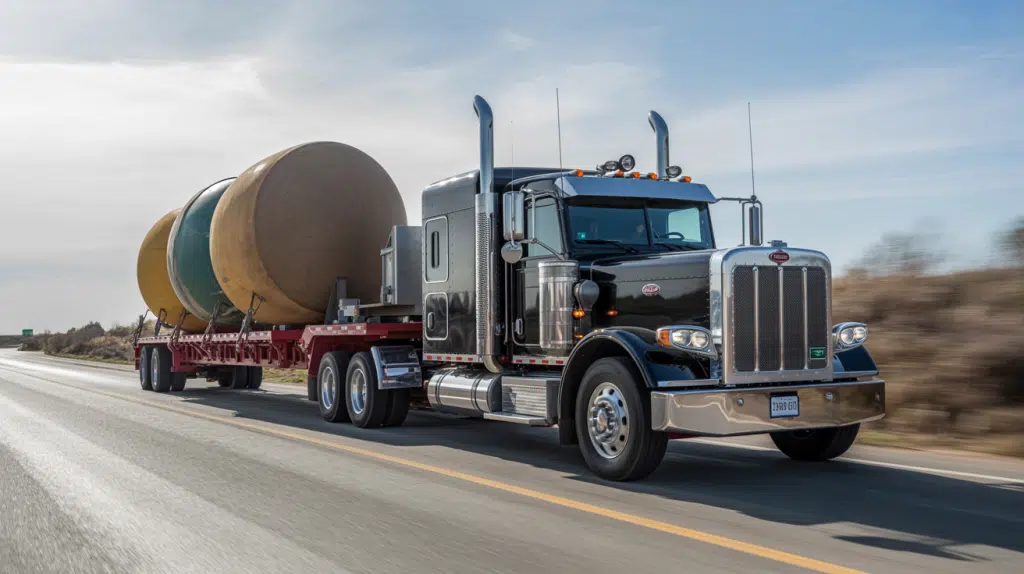
Cargo shape often decides what kind of route review is needed. A wide load pushes lane and shoulder concerns higher. A tall load makes overpasses, lines, and bridge clearances more sensitive. A long load turns curves, intersections, and swept path into major planning points. A round vessel changes support and securement logic. A machine with attachments changes both balance and travel profile.
So when teams ask, “What route should we use?” the better question is often, “What kind of cargo are we trying to move through that route?” The answer usually narrows the route choices immediately.
Density changes the trailer and axle strategy
Some cargo is physically large. Some cargo is physically dense. Dense cargo creates a different kind of pressure because it can overload axle groups, stress bridge structures, and challenge trailer support even when the piece itself looks compact.
That is why a cargo category such as industrial machinery or power equipment often requires more careful placement and support than people expect. It is also why transporting plant and manufacturing machinery safely depends so much on base-frame support, deck behavior, and steady handling rather than visual size alone.
Length changes movement, not just measurement
Long cargo does not simply occupy more space. It changes how the trailer turns, how the load swings through intersections, and how route design must be evaluated. That is why long freight often needs more than an extended deck. It needs route planning that respects real geometry.
Wind energy components make this especially clear. A blade may not be the densest load in the project, yet it can become the most difficult simply because the road has to accommodate its movement pattern. That is exactly why wind energy component transport planning is built around shape and turning behavior as much as around basic oversized dimensions.
Surface sensitivity changes how the cargo should ride
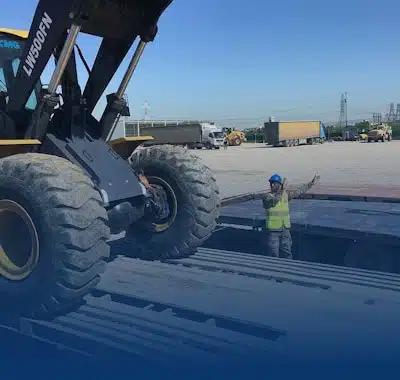
Some loads can tolerate a rougher road experience than others. A bulldozer is built for ground contact and work-site punishment, although even it still needs careful loading and undercarriage protection. A plant vessel, by contrast, may need steadier support and calmer restraint because the shell, saddles, or installation sequence matter more. A generator may need a stable ride because dense internal components and support geometry are more important than visual ruggedness.
This means cargo type changes not only what trailer is used, but also how gentle or controlled the move needs to feel in practice.
Attachments and removable parts can completely change the plan
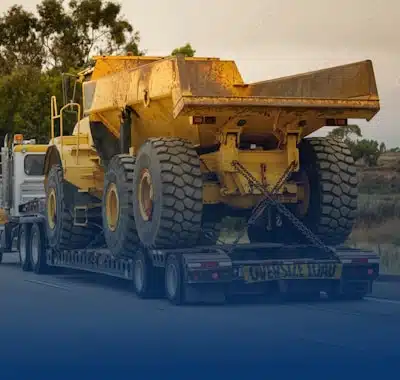
A machine is often not just one machine. Buckets, booms, rippers, headers, forks, and other working parts may increase transport height, change front-to-rear balance, or require separate handling. In many cases, the “cargo type” problem becomes an “attachment type” problem before the move is finalized.
That is why one of the most useful planning questions is not only “what are we moving?” but also “what is staying on it when it travels?” The answer often changes permits, trailer setup, route flexibility, and loading method all at once.
Industry context amplifies the cargo type, but does not replace it
An oilfield load and a construction load may both be heavy equipment, yet the operating environment around them is very different. Even so, the cargo still leads. A compact but dense oilfield unit creates a different haul than a long and awkward agricultural attachment. The industry changes schedule, access, and delivery sequence. The cargo changes the actual transport mechanics.
That is why the safest planning process keeps both layers in view:
- the industry explains the operating pressure
- the cargo explains the physical transport method
When those two are separated, the plan gets weaker. When they are combined, the move gets sharper.
Cargo type changes what “risk” means
Risk does not look the same on every load. For one cargo type, risk means axle overload. For another, risk means low clearance. For another, risk means vibration damage, shell stress, poor unloading sequence, or a final-mile access failure. The move may still be called heavy haul, but the dominant risk shifts with the cargo itself.
That is why professional planning feels less generic than many customers expect. The trailer, route, securement, timing, and site review are all selected according to the cargo’s real behavior, not according to a one-size-fits-all hauling formula.
The best planning question is simple: what is this load likely to fight?
Some loads fight height.
Some fight width.
Some fight density.
Some fight turning space.
Some fight support geometry.
Some fight delivery timing.
Once that main struggle is identified, the rest of the plan gets clearer. Trailer choice becomes easier. Route review becomes more honest. Securement improves. Delivery sequencing makes more sense. In that way, cargo type acts like the planning compass for the entire move.
What customers should take from this
Customers often ask for quotes based on dimensions and weight, which is understandable. Those details matter. Even so, the more useful question is what kind of cargo is being moved and what transport behavior it creates. That answer helps explain:
- why one load needs a lower deck
- why another needs more axle planning
- why another needs escorts or route surveys
- why another must arrive in sequence
- why one move feels simple and another feels highly engineered
The cargo type is what turns freight into a real transport plan.
Conclusion
Cargo type changes heavy haul planning requirements because not all oversized or overweight loads behave the same way on the road. Shape changes the route. Density changes the trailer and axle strategy. Attachments change the travel profile. Sensitivity changes how support and securement must be handled. Industry context adds pressure, but the cargo itself still defines the physical transport method. That is the calm, practical truth behind good heavy haul planning: once the cargo is understood correctly, the right method becomes much easier to build around it.