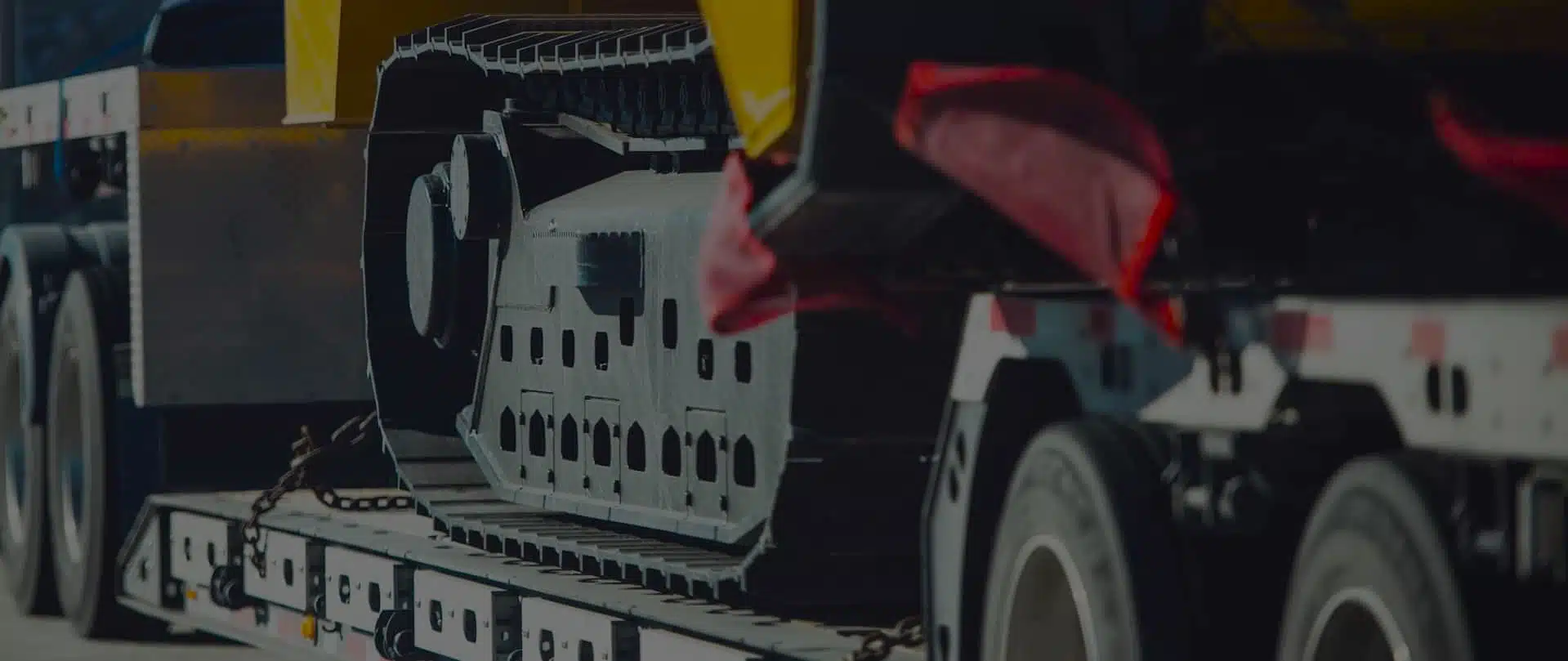
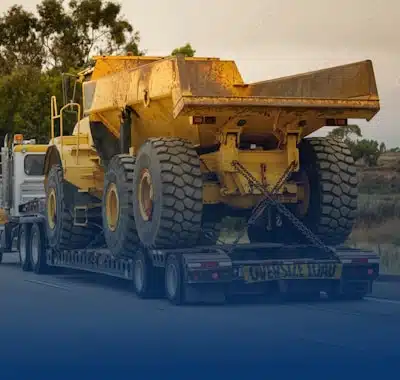
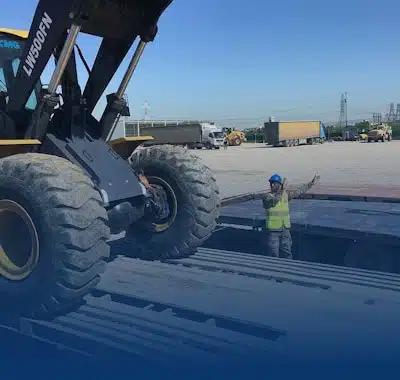
Step deck trailers are used when a load needs more height clearance than a flatbed can offer, but does not require the deeper drop of a lowboy or double-drop trailer. They are useful for equipment, machinery, and industrial cargo that sits moderately tall, loads more easily on an open deck, and still needs a lower profile for road movement.
A step deck is not the most extreme heavy haul trailer, and that is exactly why it is useful. It gives carriers a practical middle option between standard flatbeds and lower specialized trailers. When the cargo is too tall for a flatbed but not tall enough to justify a deeper low-deck setup, a step deck can keep the move efficient without adding unnecessary complexity.
Step deck trailers solve moderate height problems
A standard flatbed sits higher from the ground, so tall cargo can quickly become overheight once it is loaded. A step deck lowers part of the deck, giving the load more vertical room while still keeping the trailer practical for many types of equipment.
This makes step decks useful for cargo such as:
- mid-sized construction equipment
- industrial machinery
- agricultural equipment
- attachments and machine components
- crated or framed equipment
- lower-profile oversized cargo
When comparing heavy haul trailer types and when each one is used, the step deck often becomes the balanced option for loads that need extra height room but not the lowest possible deck.
Step decks are useful when a flatbed sits too high
A flatbed may be simple and available, but that does not always make it the right trailer. If the cargo is already close to height limits, the added deck height can create route problems. A step deck can lower the loaded profile enough to make the move more practical.
This can help reduce concerns around:
- bridges and overpasses
- utility lines
- traffic signals
- warehouse or plant entrances
- tree canopies
- construction-zone overhead restrictions
The load still needs clearance planning, but the lower deck gives the transport team more room to work with.
Step decks are not the same as lowboys or double-drops
A step deck gives more height clearance than a flatbed, but it does not sit as low as a lowboy or double-drop trailer. That difference matters.
If the equipment is extremely tall, a step deck may not reduce height enough. If the machine is very heavy or has a high center of gravity, a lower and more specialized trailer may be better. But if the cargo only needs a moderate height reduction, a step deck can be a cleaner and more cost-effective choice.
This is the practical difference: a step deck helps when height is a concern, but not when height is the entire problem.
Step deck trailers work well for equipment that does not need drive-on RGN loading
Some machinery needs a removable gooseneck trailer because the machine must drive onto the deck from the front with a low loading angle. Other cargo does not need that level of loading access. It may be loaded by forklift, crane, ramps, or other controlled methods.
A step deck can work well when:
- the equipment is not too tall for the lower deck
- loading access is manageable
- the cargo does not need the front-loading advantage of an RGN
- the site has enough space for the loading method
- the load can be secured properly from the deck
If drive-on loading is the main challenge, an RGN trailer for oversized machinery may be the better option. If moderate height control is the main concern, a step deck may be enough.
Step decks can handle mixed equipment and machinery loads
Step decks are often useful when a load includes equipment or cargo with different heights. The upper deck and lower deck can provide flexibility for certain freight combinations, depending on weight, securement, and legal limits.
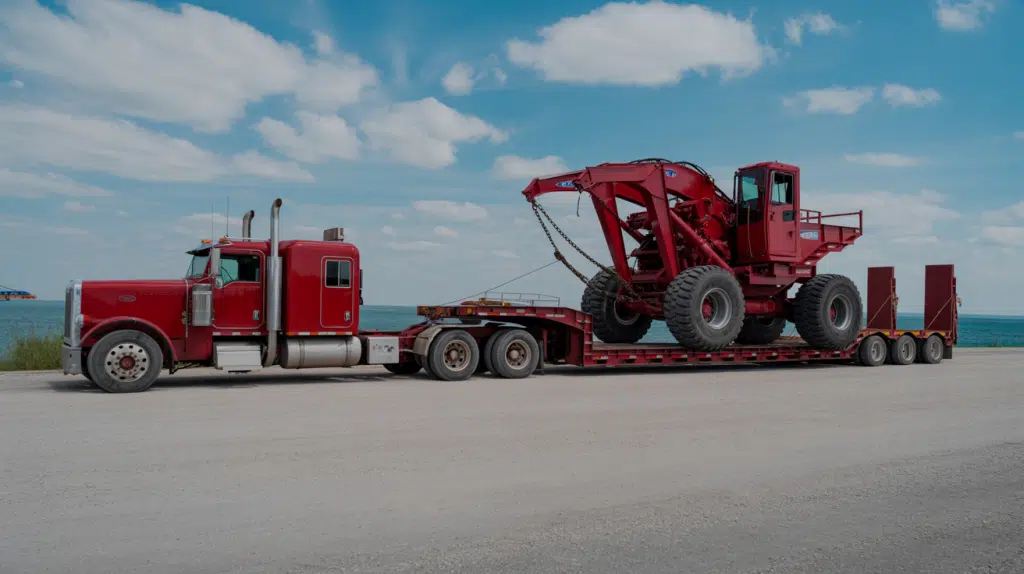
For example, a carrier may use a step deck for machinery parts, attachments, palletized industrial items, smaller equipment, or cargo that benefits from lower deck height but does not need a fully specialized heavy haul setup.
This flexibility makes step decks useful for jobs where the load is oversized enough to need planning, but not extreme enough to require the heaviest trailer configuration.
Weight still has to match the trailer
A step deck may help with height, but it does not automatically solve weight. If the cargo is very dense or heavy, the trailer’s capacity, axle setup, and load placement still need to be checked carefully.
Before using a step deck, the carrier should confirm:
- cargo weight
- deck capacity
- axle limits
- center of gravity
- securement points
- route restrictions
- loading method
- delivery-site unloading conditions
The trailer may fit the cargo dimensionally, but it still has to carry the load safely and legally.
Step decks are helpful when loading and unloading sites are practical
A step deck can work well when pickup and delivery sites allow safe loading access. The site should have enough room for the trailer, support equipment, machine movement, and securement work.
If the site is tight, muddy, sloped, or difficult to access, the loading method may become more important than the trailer type itself. A step deck may be a good road choice but still need extra planning at the site.
The trailer should work for the full move, from loading to transport to unloading.
When step decks are usually the right choice
A step deck trailer is usually a strong option when:
- the load is too tall for a flatbed
- the cargo does not require the lowest possible deck
- the equipment can be loaded safely without RGN front access
- the weight is within the trailer’s practical capacity
- the route has moderate clearance concerns
- the cargo needs open-deck flexibility
- the move does not require a more specialized trailer system
In these cases, the step deck gives a useful balance between simplicity and height control.
When a step deck may not be enough
A step deck may not be the right trailer when the load is extremely tall, very heavy, unusually long, difficult to load, or highly route-sensitive.
Another trailer may be better if:
- the cargo needs maximum height reduction
- the machine needs front drive-on loading
- the load requires more axles
- the cargo is too long for a standard deck
- the route includes serious low-clearance restrictions
- the delivery site cannot support the loading method
Choosing a step deck too quickly can create the same problem as choosing a flatbed too quickly. The trailer must match the real constraint.
What customers should share before a step deck move
Customers can help the carrier decide whether a step deck is the right option by providing accurate details before quoting or scheduling.
Useful information includes:
- cargo height, width, length, and weight
- whether the equipment has attachments
- whether the load can be driven, lifted, or forklifted
- pickup and delivery site access
- ground conditions
- overhead restrictions
- unloading method
- required delivery timing
These details help confirm whether the step deck is the practical choice or whether the move needs a lower or more specialized trailer.
Conclusion
Step deck trailers are used in heavy haul transport when a load needs more height clearance than a flatbed provides but does not require a lowboy, RGN, double-drop, or modular trailer. They are practical for moderate-height machinery, industrial cargo, agricultural equipment, and mixed open-deck loads that need flexibility without unnecessary trailer complexity.
The key is knowing what problem the step deck is solving. When the cargo needs moderate height reduction, manageable loading access, and a practical open-deck setup, a step deck can be the right trailer for a safer and more efficient heavy haul move.