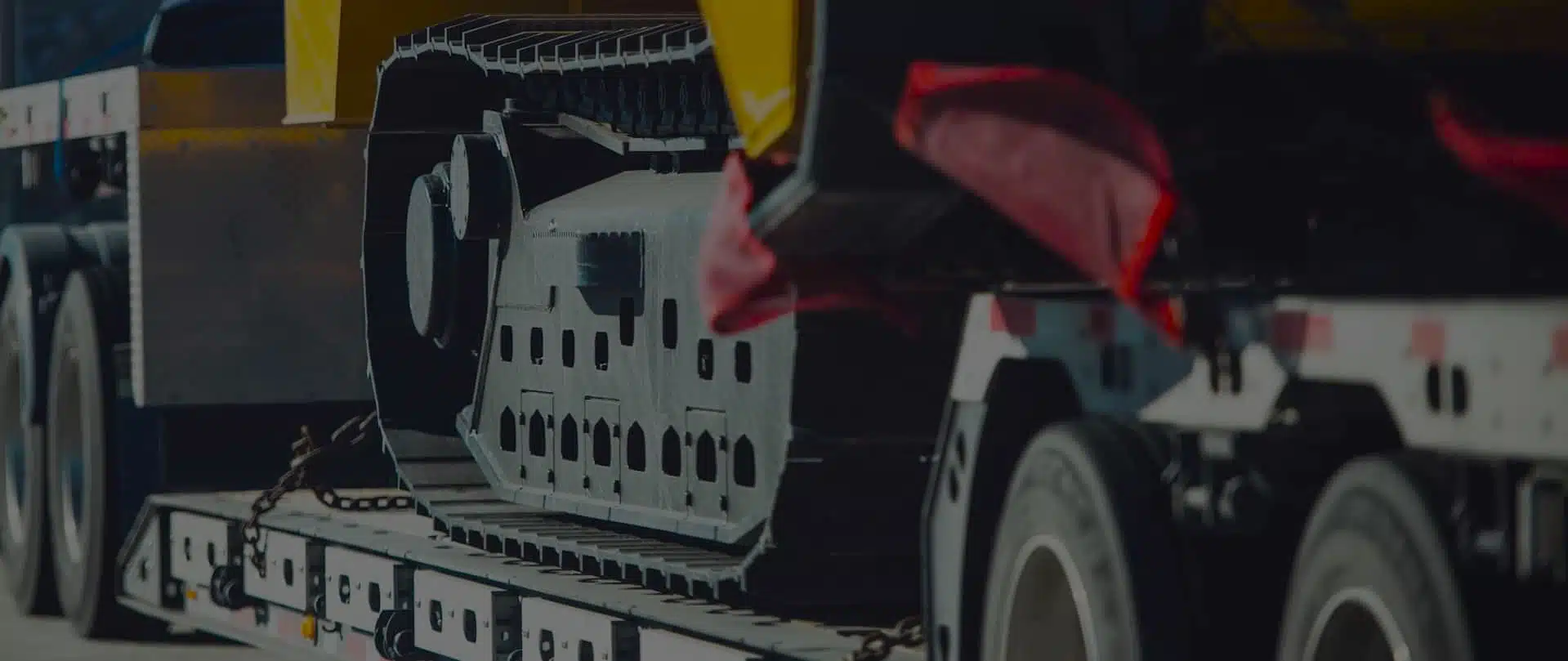
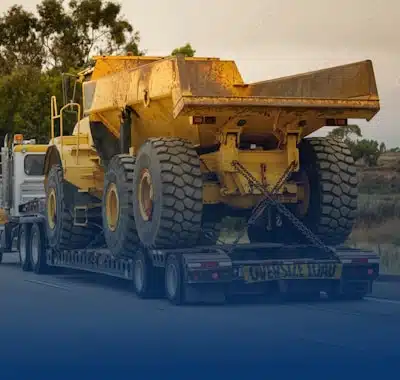
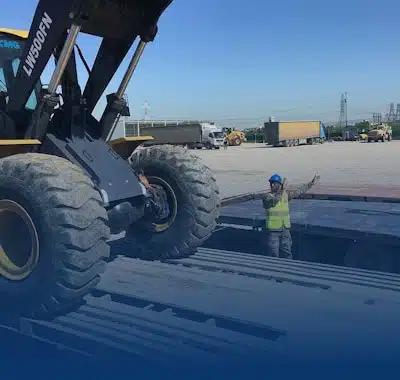
A lowboy trailer is used when heavy equipment needs to travel lower to the ground than it would on a standard flatbed or step deck. That lower deck height helps control total transport height, improve stability, and make oversized machinery easier to move through routes with bridges, overpasses, signs, and utility-clearance concerns.
In heavy haul work, the lowboy is not chosen just because a machine is heavy. It is chosen when the equipment’s height, weight, loading needs, or center of gravity make a lower trailer setup the safer and more practical option.
Lowboy trailers are useful when height is the main concern
Many pieces of heavy equipment are tall even before they are loaded onto a trailer. Excavators, bulldozers, wheel loaders, graders, cranes, and other machines can quickly become overheight once trailer deck height is added.
A lowboy trailer reduces that total loaded height because the main deck sits closer to the ground. That can help the load move through more route options and reduce the chance of clearance issues.
When customers are comparing heavy haul trailer types and when each one is used, the lowboy often becomes the practical choice for tall machines that need a lower travel profile.
Lowboys help improve stability for taller machines
Height is not only a clearance issue. It is also a stability issue.
When a tall machine rides higher on a trailer, the center of gravity rises with it. That can make the load feel less stable during turns, braking, road transitions, or uneven travel conditions. A lowboy helps lower the machine’s travel position, which can make the entire setup feel more controlled.
This is especially helpful for equipment with:
- tall cabs
- high frames
- large attachments
- elevated counterweights
- heavy upper structures
- higher centers of gravity
A lower ride height gives the transport team more confidence because the load sits closer to the road.
Lowboy trailers are commonly used for construction equipment
Lowboys are often used for construction machines because many of them are tall, heavy, and awkward to move on higher decks. Excavators, dozers, loaders, backhoes, graders, pavers, and similar equipment often benefit from the lower deck and stronger heavy haul setup.
The goal is not only to carry the machine. The goal is to carry it in a position that protects the route, the equipment, and the delivery schedule.
For example, a dozer may need a low loading angle and strong deck support. An excavator may need height reduction because of its boom and upper structure. A wheel loader may need a lower transport profile because the bucket and cab can add height quickly.
Lowboys can reduce route problems
A heavy equipment move becomes easier when the trailer helps solve the route before the truck leaves. Lowboy trailers can reduce overheight risk and give route planners more flexibility.
A lower deck can help when the route includes:
- bridges and overpasses
- overhead utility lines
- road signs or signal structures
- tree canopies
- construction-zone restrictions
- industrial entrances
- low-clearance final-mile access
Even with a lowboy, clearance still has to be checked. But the trailer can give the carrier more room to work with.
Lowboys are helpful when loading angle matters
Loading angle can affect whether a machine climbs onto the trailer smoothly or scrapes, drags, slips, or stresses its frame. Lowboy trailers often create a more manageable loading setup than higher deck trailers, especially when the equipment has low clearance or heavy undercarriage components.
Tracked machines, bulldozers, compact equipment, and machines with rear attachments may be more sensitive to loading angle. When the angle is too steep, the equipment may scrape at the transition point or place unnecessary stress on the undercarriage.
A lowboy does not automatically remove every loading issue, but it can make the loading path calmer and more controlled.
Lowboy trailers are not always the right answer
A lowboy is useful, but it is not automatically the best trailer for every heavy equipment move. Some loads may be better suited to a flatbed, step deck, RGN, double-drop, extendable trailer, or multi-axle setup depending on the cargo and route.
A lowboy may not be the first choice when:
- the load is long and needs extra deck length
- the machine needs front drive-on loading from an RGN
- the cargo is extremely heavy and needs more axle support
- the load is low enough for a simpler trailer
- the site does not allow the trailer to position properly
- the cost and complexity are not justified by the load
The best trailer is the one that solves the main transport problem without creating unnecessary complications.
Lowboy vs RGN: the loading difference matters
Lowboys and RGNs are often discussed together because both are used for heavy equipment. The main difference is often loading access.
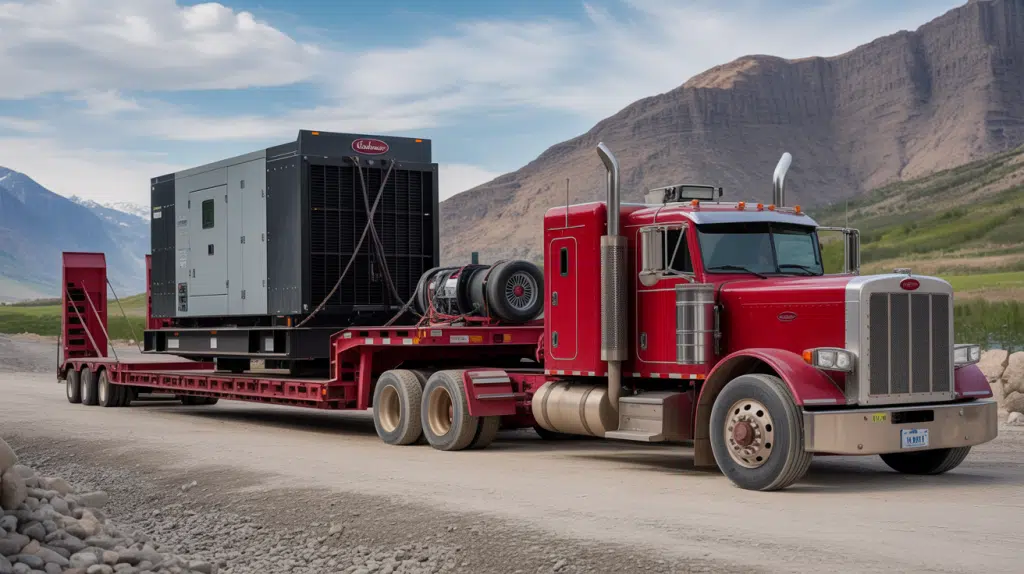
An RGN trailer can detach at the front, allowing machines to drive onto the trailer from the front with a lower approach. A standard lowboy may require ramps or another loading method depending on configuration.
That means a lowboy may be ideal when height and stability are the main concern, while an RGN trailer for oversized machinery may be better when drive-on loading access is a major part of the job.
Weight and axle needs still have to be checked
A lowboy can carry heavy equipment, but trailer choice still has to match the machine’s weight and axle requirements. If the load is very dense or unusually heavy, the carrier may need a different axle setup, additional axle support, or a more specialized trailer.
Before choosing a lowboy, the transport plan should confirm:
- machine weight
- deck capacity
- axle configuration
- loaded height
- loading method
- route restrictions
- pickup and delivery access
- securement points
A low deck helps, but the entire trailer system still has to fit the load.
Pickup and delivery sites affect lowboy use
A lowboy trailer needs enough space to load, unload, turn, stage, and exit. If the site is narrow, muddy, sloped, blocked, or crowded, the carrier may need extra planning before committing to the trailer setup.
The site should be checked for:
- trailer access
- turning room
- loading surface
- overhead hazards
- unloading area
- ground stability
- room for ramps or support equipment
A trailer that works perfectly on the road still needs to work at both ends of the move.
When a lowboy trailer is usually the right choice
A lowboy trailer is usually a strong option when:
- the equipment is tall
- total transport height needs to be reduced
- the machine has a higher center of gravity
- the cargo needs a lower, more stable ride
- construction equipment is being moved
- clearance is a major route concern
- the equipment is too tall for a flatbed or step deck
- loading geometry needs to be safer than a higher deck setup
In these cases, the lowboy helps solve the main problem before the move begins.
What customers should share before requesting a lowboy move
Customers can help the carrier choose the correct trailer by sharing accurate equipment and site details early.
Helpful information includes:
- machine make and model
- operating or shipping weight
- loaded height, width, and length
- attachment details
- whether the machine runs and drives
- pickup and delivery surface conditions
- access restrictions
- overhead hazards
- required delivery timing
These details help confirm whether a lowboy is the right trailer or whether another trailer type would be safer.
Conclusion
A lowboy trailer is used for heavy equipment transport when the move needs lower deck height, better stability, and improved clearance control. It is especially useful for tall construction equipment, machines with higher centers of gravity, and loads that would become too high on a flatbed or step deck.
The key is matching the trailer to the real transport problem. When height, stability, route clearance, and loading conditions point toward a lower deck, a lowboy trailer can make the heavy haul move safer, cleaner, and easier to control.