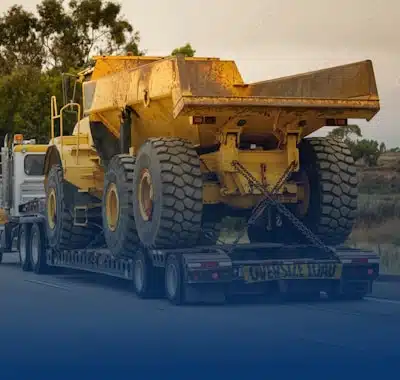
Some heavy haul loads are not difficult because they are tall or long. They are difficult because their weight is too concentrated for a simpler trailer setup. A transformer, mining component, large industrial machine, pressure vessel, or heavy plant assembly may place so much force into the trailer and road system that ordinary axle arrangements are not enough.
Multi-axle trailers are used when the load needs more contact points to spread weight safely. The extra axles help distribute force across the trailer, tires, pavement, and bridges, which can make an extreme heavy haul move more stable, more permit-ready, and more practical to route.
Multi-axle trailers solve weight concentration problems
A heavy load does not affect the road only through its total weight. It affects the road through how that weight is carried. If too much weight sits over too few axles, the trailer can overload axle groups, stress pavement, create bridge concerns, and complicate permit approval.
A multi-axle trailer spreads the load across more axle points. That does not make the cargo lighter, but it changes how the cargo’s weight enters the road system.
That difference is why extreme heavy haul planning often starts with axle distribution before route decisions feel complete.
Total weight and axle weight are not the same thing
Two loads can have the same gross weight but create different transport problems. One load may be spread across a longer trailer with more axles. Another may be compact, dense, and concentrated over a smaller footprint. The second load can be harder to permit and harder on infrastructure, even if the total weight is similar.
This is where trailer choice becomes more technical. In the broader mix of heavy haul trailer types and their best use cases, multi-axle trailers are selected when the main issue is not simply carrying the load, but carrying the weight in a way roads and bridges can accept.
Bridges often decide whether more axles are needed
Bridges react to axle spacing, axle weight, gross weight, and where the load sits while crossing. A bridge may handle standard traffic every day and still need special review for an extreme heavy haul load. The concern is not only whether the bridge is strong in a general sense. The concern is how that specific loaded trailer applies force as it moves across the structure.
More axles can help by spreading weight over a longer footprint. In some cases, that improves route feasibility. In other cases, it may still require bridge review, crossing conditions, or route changes.
The point is simple: multi-axle trailers are often chosen because the route’s infrastructure demands a smarter weight footprint.
Multi-axle trailers improve load stability when configured correctly
Extreme heavy loads need more than capacity. They need controlled movement. A multi-axle setup can improve stability because the trailer supports the cargo through more contact points and can reduce excessive stress on a smaller axle group.
That stability matters during:
- braking
- turns
- grade changes
- bridge crossings
- rough road sections
- slow final-mile movement
- controlled staging and delivery
However, more axles do not automatically mean a better move. The axle layout has to match the cargo, trailer, route, and turning needs.
Dense industrial cargo often needs multi-axle support
Multi-axle trailers are common for dense cargo because the problem is usually concentrated weight rather than oversized length. A transformer may not be as long as a wind blade, but it may create far more axle pressure. A mining component may fit within a shorter footprint but still require additional axle support because of how much weight sits in one area.
These loads often include:
- transformers
- turbines
- heavy generators
- mining equipment components
- industrial presses
- plant machinery
- vessels and tanks
- large electrical equipment
- project cargo assemblies
For these shipments, the trailer acts like a weight-management system, not just a transport platform.
More axles can also increase planning complexity
A multi-axle trailer can solve a weight problem, but it can also create planning challenges. More axles may affect turning radius, route options, trailer length, permit review, staging needs, and final-mile access. A setup that distributes weight beautifully may still need more space to move through turns or enter a delivery site.
That is why multi-axle planning must balance weight distribution with maneuverability. The trailer must protect the road system without making the route impossible to execute.
Permits often depend on axle configuration
Oversize and overweight permits usually care about more than gross weight. They may consider axle count, axle spacing, axle group weight, tire loading, trailer configuration, and route restrictions. If the axle setup is not acceptable, the move may require changes before approval.
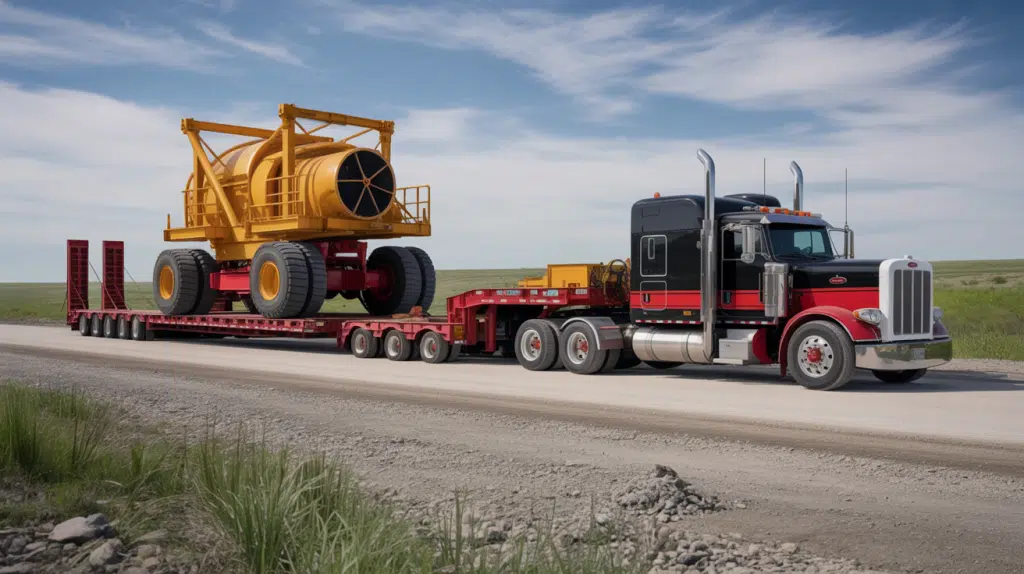
A multi-axle trailer can help the permit process when it lowers axle group pressure or creates a more acceptable load footprint. But it can also require more detailed review because the loaded configuration is more complex.
This is why trailer choice can affect permits, route planning, and cost long before the equipment is loaded. The axle setup may shape the legal route as much as the cargo itself.
Multi-axle trailers must match the cargo’s center of gravity
A heavy load should not simply be placed on a trailer because the trailer has many axles. The cargo still needs to sit where the trailer can carry it correctly. If the center of gravity is poorly understood, some axles may carry too much while others are underused.
Before using a multi-axle setup, the plan should confirm:
- total cargo weight
- center of gravity
- support points
- axle spacing
- axle group limits
- deck capacity
- route restrictions
- loading and unloading method
A multi-axle trailer works best when the cargo is positioned with purpose.
Final-mile access can limit multi-axle trailer use
Extreme heavy haul planning often looks good until the final mile. A multi-axle trailer may handle the weight well but still need enough space to turn, stage, align, and unload. Industrial plants, substations, mines, construction sites, and remote access roads can all create limits that affect whether the trailer can actually reach the delivery point.
Before the move is finalized, the team should confirm:
- entrance width
- turning space
- ground stability
- staging area
- overhead clearance
- unloading location
- trailer exit path
The right trailer must work at the destination, not only on the permitted route.
When multi-axle trailers are usually the right choice
A multi-axle trailer is often the right choice when:
- the cargo is extremely heavy
- weight is concentrated in a small footprint
- axle group limits are a concern
- bridge review is likely
- the route needs a better load footprint
- the cargo is dense industrial or energy equipment
- standard trailers cannot distribute the load safely
- permit approval depends on axle configuration
In these cases, the extra axles are not added for appearance or excess capacity. They are added because the load needs a safer and more acceptable way to interact with the road system.
When another trailer may be better
A multi-axle trailer may not be necessary when the load is mainly tall, long, or simple enough for a lower or lighter setup. A lowboy, RGN, step deck, double-drop, flatbed, or extendable trailer may be more practical depending on the dominant transport problem.
Another trailer may be better when:
- height is the main issue
- length is the main issue
- the load needs easier drive-on loading
- the cargo is not heavy enough to justify the complexity
- the route or site cannot handle the longer axle setup
- a simpler trailer can move the load safely and legally
The best trailer is the one that solves the main constraint without adding unnecessary complications.
What customers should share before a multi-axle move
Customers can help the carrier decide whether a multi-axle trailer is needed by providing accurate cargo and site details early.
Helpful information includes:
- confirmed cargo weight
- dimensions in shipping condition
- center-of-gravity information if available
- support-point requirements
- photos or drawings of the cargo
- pickup and delivery access details
- unloading method
- deadline or delivery window
- any known bridge, site, or route concerns
These details help the carrier build the trailer plan around the real load rather than estimates.
Conclusion
Multi-axle trailers are used for extreme heavy haul loads when weight distribution becomes the main transport challenge. They help spread force across more axle points, support permit planning, reduce stress on roads and bridges, and improve control for dense industrial cargo.
The core reality is straightforward: extreme weight needs more than a strong trailer. It needs the right axle footprint. When the axle setup matches the cargo, route, bridge limits, and delivery site, a difficult heavy haul move becomes much more controlled and predictable.