Oilfield and energy equipment does not move like ordinary freight, because the cargo is usually tied to active operations, remote access, and very little tolerance for delay. A frac pump, drilling component, compressor unit, rig support module, or field generator may all be “heavy equipment,” but in the energy world each one carries schedule pressure, site constraints, and operational consequences that go far beyond weight alone.
That is why energy hauling is usually more than a transport task. It is part of a larger field operation. The trailer, the route, the loading method, and the delivery timing all have to support work that may already be underway. In that sense, oilfield hauling works best when it is planned as a live operations move rather than a standard equipment shipment.
This industry-specific planning fits within heavy haul transport solutions for construction, energy, agriculture, and industry, because oilfield and energy cargo follows its own transport logic from the first pickup decision to the final site handoff.
The real challenge is not just size, but operating pressure
Energy equipment often moves under tighter practical pressure than many other loads. A site may be waiting on a replacement unit. A drilling or service window may already be active. A pad may be accessible only during certain conditions. Because of that, a late or poorly planned move can affect more than a delivery schedule. It can affect labor, equipment uptime, and field operations.
That is the first requirement to understand: oilfield hauling is controlled by urgency and site readiness at the same time.
Energy equipment tends to be dense, specialized, and awkwardly practical
A lot of oilfield and energy equipment is not visually dramatic, yet it still creates difficult transport conditions. Units may be dense for their size, mounted on skids, fitted with exposed connection points, or designed for function rather than transport convenience. This means trailer support, weight distribution, and loading control matter even when the freight does not look unusual from a distance.
What often needs attention early includes:
- real operating weight
- skid or base-frame support points
- height and width in travel condition
- whether hoses, piping, or auxiliary assemblies affect dimensions
- whether the equipment is meant to roll, lift, or slide into place
Those details decide whether the haul feels controlled or unnecessarily improvised.
Site access is usually a bigger issue than customers expect
Many energy loads are delivered to sites that are not simple freight environments. The road may turn to lease roads, gravel pads, soft shoulders, temporary site entrances, or remote staging areas. That changes how loading and unloading should be planned. The same trailer that works on a paved industrial site may become awkward or inefficient once the final miles stop behaving like normal road freight.
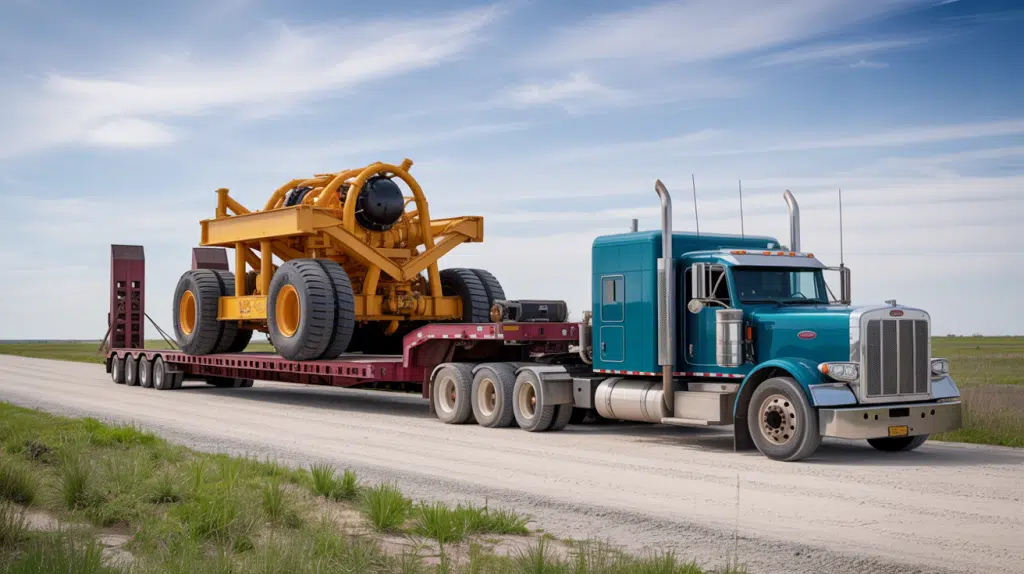
That is why route planning for oilfield loads should account for:
- final-mile surface conditions
- trailer turning space
- staging room at the pad or facility
- whether unloading equipment will be available
- whether weather or site traffic could change access
A clean highway segment does not guarantee a clean delivery.
Trailer choice should serve the equipment, not the habit
Oilfield and energy equipment often gets moved under pressure, which can tempt teams into using whatever trailer is easiest to dispatch. That habit becomes expensive when the deck height is wrong, the support points do not match the skid, or the route becomes harder than it needed to be.
A better approach is to choose the trailer based on what the equipment actually needs:
- lower profile if height is sensitive
- stronger deck support if the load is dense
- stable loading geometry if the cargo is driven or winched on
- enough deck and axle flexibility if the route is permit-sensitive
When the cargo is a packaged unit such as a generator or power system, the trailer choice often follows the same practical logic used when industrial generators and power units are moved by controlled loading methods, where support and frame behavior matter more than visual simplicity.
Securement has to respect function, not just mass
Energy equipment may include enclosures, pumps, tanks, modules, connection points, exposed hardware, or mounted assemblies that do not react well to casual tie-down placement. A unit can be secure in the legal sense and still be poorly protected if the securement method creates stress in the wrong place.
That is why securement planning usually needs to answer:
- where should restraint force be applied
- what parts of the frame are meant to carry that force
- what accessories need separate control
- whether the load can shift, rub, or vibrate against the trailer
The safest setup is the one that treats the equipment like working infrastructure, not just a block of weight.
Weight and axle planning still drive permit success
Oilfield cargo can be compact and heavy, which makes axle planning especially important. Dense units can overload trailer groups quickly if they are placed casually. That can create permit revisions, route changes, or poor on-road behavior even when the cargo appears manageable in length and width.
This is where practical transport discipline matters most. The load should be placed where the trailer can carry it cleanly, not simply where it “fits.” That one difference often separates a predictable move from a permit-heavy one.
Timing matters because operations may already be waiting
In construction hauling, timing matters because crews and machines are scheduled. In oilfield and energy hauling, timing can matter even more because the cargo may support active service work, maintenance windows, or critical field uptime. A delayed move may not just inconvenience the site. It may interrupt operations already in motion.
That is why planning should confirm:
- when the site can actually receive the load
- what unloading support will be ready
- whether access changes by time of day or conditions
- whether the move sequence affects other equipment already staged
In these projects, “on time” often means “usable when it arrives,” not just “delivered by the appointment.”
What owners and field teams should confirm before dispatch
The safest energy-equipment moves usually begin with clear information from the customer side. Before dispatch, it helps to know:
- exact unit type and confirmed weight
- dimensions in travel condition
- whether the cargo sits on skids, wheels, or a custom frame
- site access conditions for the last miles
- unloading method and on-site support
- whether delivery timing is tied to active field work
These details do not slow planning down. They keep the move from breaking down later.
Conclusion
Heavy haul requirements for oilfield and energy equipment are shaped by more than size and weight. These loads often move under live operational pressure, toward remote or access-sensitive sites, and with very little room for transport mistakes. When trailer choice, support points, securement, route conditions, and delivery timing are aligned to the actual equipment and the field environment, the haul becomes more stable and far more useful to the operation waiting for it. That is the real standard in energy transport: not just moving the load, but delivering it in a way the job can immediately work with.