Compactors and rollers are moved safely by controlling weight, drum contact, loading angle, trailer placement, securement, and delivery access. These machines may not look as tall or complex as cranes, excavators, or telehandlers, but they can be dense, heavy for their size, and sensitive to poor loading surfaces.
A roller’s job is to press force into the ground. That same weight can create transport challenges when the machine is climbing onto a trailer, sitting on a deck, or unloading onto a work zone that is not fully prepared. Safe transport depends on treating compactors and rollers as heavy construction machines, not as simple site equipment.
Compactor and roller transport starts with machine type
Not all compactors and rollers move the same way. A small walk-behind compactor creates a very different transport plan than a large padfoot roller, smooth drum roller, pneumatic roller, or double drum compactor.
Before transport, the carrier should confirm:
- machine type and model
- operating weight
- drum width or tire width
- overall transport height, width, and length
- whether the machine runs, steers, and brakes properly
- whether any attachments or accessories travel with it
- pickup and delivery site conditions
These details help the carrier decide whether the machine needs a flatbed, step deck, lowboy, RGN, or another trailer setup.
Dense weight makes placement important
Compactors and rollers can be heavy even when they look compact. Their weight is often concentrated through drums, tires, or frame sections, which means deck placement matters. If the machine sits too far forward, too far back, or off-center, the trailer can become unbalanced.
A safe deck position helps control:
- axle loading
- trailer stability
- securement angles
- braking behavior
- unloading position
- route compliance
This is why construction site equipment and machinery transport should be planned around the machine’s actual weight behavior, not only its size.
Drum contact needs careful handling
Roller drums are built for compaction, but they still need careful handling during transport. A drum can create concentrated contact with the trailer deck, especially when the machine is heavy or the surface is not prepared correctly. The transport team may need to consider deck protection, blocking, or controlled placement so the machine sits securely without unwanted movement.
The machine should not roll, slide, or shift once placed. Even small movement can create rubbing, deck wear, or securement stress during travel.
Loading should be slow, straight, and stable
Many compactors and rollers can be driven onto a trailer, but the loading process should stay slow and controlled. These machines may have limited visibility, heavy drums, and a different feel from wheeled construction equipment. If the ramp or deck angle is steep, the machine may transition awkwardly from ground to trailer.
Safe loading depends on:
- firm ground under the trailer
- correct ramp or deck contact
- straight approach space
- clear spotter communication
- controlled throttle and braking
- enough room to stop if the machine drifts
A roller should climb onto the trailer smoothly, not bounce, slide, or require sharp corrections.
Loading surface can change the risk quickly
Compactors and rollers are often picked up from roadwork areas, grading sites, paving zones, or unfinished surfaces. These locations can include loose stone, fresh material, uneven shoulders, wet soil, or partially compacted ground. That surface can affect traction and trailer stability.
A machine that feels stable on compacted ground may become harder to control on mud, loose aggregate, or sloped access. Before loading starts, the site should confirm whether the trailer can sit level and whether the roller can approach safely.
Securement should control rolling movement
A compactor or roller must be secured so it cannot roll, slide, bounce, or shift during transport. Because the machine is designed to move on drums or tires, securement needs to control both the body and the rolling contact points.
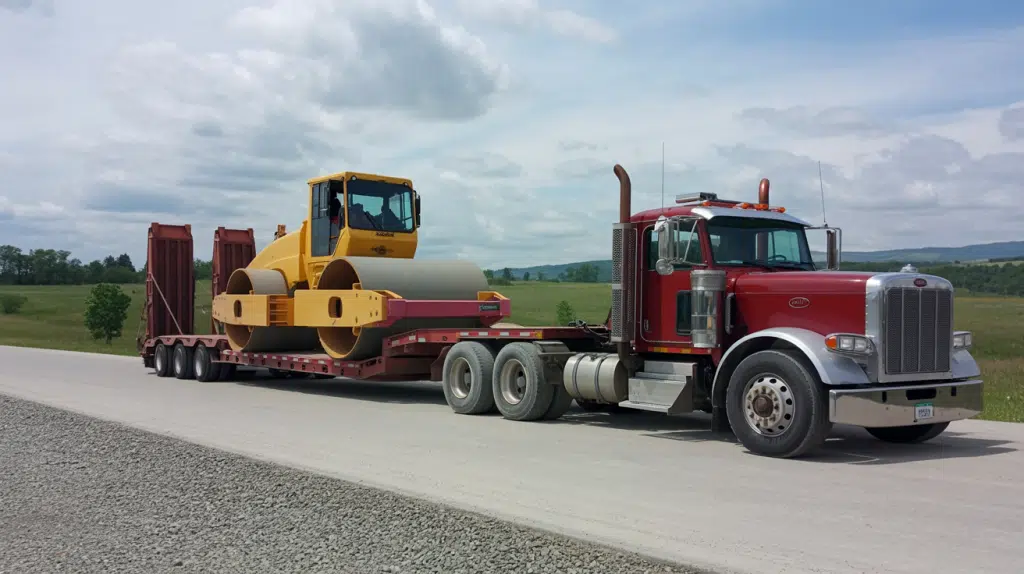
A safe securement plan usually includes:
- proper tie-down points
- restraint against forward and rearward movement
- side movement control
- blocking or chocking where appropriate
- securement angles that match the machine
- re-checks after the machine settles into travel
The machine should be held in a way that protects both the trailer and the roller.
Smooth drum, padfoot, and pneumatic rollers may need different handling
A smooth drum roller has a different transport contact pattern than a padfoot roller. A padfoot drum can create more concentrated contact points, while pneumatic rollers depend on tire condition and inflation. Double drum machines may need careful deck placement because both drums affect how the machine sits.
These differences are important because the trailer setup and securement plan should match the machine, not just the word “roller.”
Delivery timing matters on paving and grading work
Compactors and rollers are often needed at a specific project stage. If the machine arrives too early, it may sit in the way before the surface is ready. If it arrives late, paving, grading, or compaction work may pause while crews wait.
This is why heavy haul delivery timing affects construction projects in a very practical way. A roller becomes useful only when the site is ready for compaction. The delivery should match that phase, not simply the carrier’s earliest availability.
Unloading should place the machine where it can work
A roller should be unloaded where it can safely reach the work area without crossing unstable ground, blocking site traffic, or damaging unfinished surfaces. The delivery site should provide enough room for the trailer to line up, unload, and leave without interfering with other equipment.
Before delivery, the site should confirm:
- correct entrance
- unloading location
- ground stability
- slope or shoulder condition
- machine path after unloading
- traffic-control needs
- site contact
- final staging or work area
The goal is to unload the roller in a position that supports the project, not in a spot that creates another move.
Compactors and bulldozers share one important transport lesson
Compactors and bulldozers are different machines, but both depend heavily on ground contact and controlled loading. A dozer’s tracks and a roller’s drums both transfer serious force into the trailer and loading surface. That is why the same care used when bulldozers are transported for grading projects also applies to rollers in a different way: the machine may be rugged, but transport still needs controlled geometry, deck placement, and site preparation.
What contractors should prepare before moving compactors and rollers
Contractors can help the move go smoothly by sharing accurate machine and site details early.
Helpful information includes:
- compactor or roller type
- operating weight
- drum or tire width
- overall transport dimensions
- whether the machine runs and brakes properly
- pickup and delivery site photos
- surface condition at both sites
- slope, shoulder, or access concerns
- required delivery time
- site contact information
These details help the carrier choose the right trailer, loading plan, route, and unloading method.
Conclusion
Compactors and rollers are moved safely when the transport plan respects their dense weight, drum contact, loading behavior, securement needs, and delivery timing. These machines may look simple compared with larger construction equipment, but their weight and ground-contact design can create real transport challenges.
A safe move places the roller correctly on the trailer, secures it against rolling or shifting, checks the loading surface, and delivers it when the site is ready for compaction work. When those details are handled early, the machine arrives ready to support the next stage of grading, paving, or site preparation.