Heavy haul supports grid expansion projects by moving the large, heavy, long, and sensitive equipment needed to build or upgrade power infrastructure. A grid expansion may require transformers, switchgear, substation components, utility poles, steel structures, control units, power generation equipment, and long infrastructure materials. These items cannot always move like ordinary freight because their size, value, timing, and installation role make transport part of the project itself.
A grid project does not succeed only when equipment reaches the site. It succeeds when each load arrives in the right order, in the right condition, and at the right time for crews to install, connect, test, or stage it. Heavy haul carriers support that process by planning the trailer, route, permits, escorts, staging, and delivery sequence around the wider power project.
Grid expansion depends on equipment movement
Grid expansion usually involves adding capacity, replacing older equipment, connecting new energy sources, supporting growing demand, or extending service into new areas. These projects may require equipment to move into substations, utility corridors, generation sites, rural access roads, industrial zones, or remote energy locations.
Because these sites often need large infrastructure components, heavy haul transport for energy, power and utility infrastructure becomes a practical part of the buildout. The carrier helps connect the supply chain to the physical site where the grid work happens.
Transformers often anchor the heavy haul plan
Transformers are often central to grid expansion because they help manage voltage across the power system. They can also be some of the most demanding loads to move because they are dense, high-value, and route-sensitive.
When transformers are transported for utility projects, the move may require specialized trailers, axle planning, bridge review, controlled lifting, careful securement, and precise delivery timing. A delayed transformer can hold up substation work, utility crews, or planned energization steps, so the transport plan must support the larger project schedule.
Substation equipment arrives as a coordinated sequence
Grid expansion often includes new or upgraded substations. These sites may need transformers, breakers, switchgear, control buildings, steel structures, buswork, grounding materials, and supporting components. Each load may have a different trailer need, but the deliveries must still support one coordinated construction sequence.
The goal is not simply to deliver everything to the substation. The goal is to deliver the right equipment when the site can receive and use it. A control unit arriving before protected staging is ready may create risk. Steel arriving late may slow assembly. A transformer arriving without crane support may sit on the trailer longer than planned.
Switchgear and control units protect the electrical side of the project
Grid expansion is not only about large steel structures and heavy transformers. Electrical switchgear, control units, relay panels, and cabinets also support the grid by managing, protecting, and controlling power flow.
These units may be lighter than major transformers, but they often need more protection from moisture, vibration, impact, and poor handling. When electrical switchgear and control units are transported, the carrier should plan stable support, weather protection, careful securement, and delivery timing that matches installation readiness.
Long materials help build the physical network
Utility poles, steel beams, conduits, crossarms, and other long infrastructure materials support the physical side of grid expansion. These loads may not always be extremely heavy, but they can be difficult because of length, overhang, turning space, securement, and staging requirements.
A long load can create problems at intersections, rural roads, utility corridors, and tight site entrances. When utility poles and long infrastructure materials are moved safely, the transport plan must account for support across the length of the material, trailer behavior during turns, and where the materials will be placed after delivery.
Power generation equipment may support new grid capacity
Some grid expansion projects involve generation support, backup capacity, temporary power, or equipment tied to new energy supply. Generators, turbines, packaged power units, cooling systems, and related components may need heavy haul planning because of weight, sensitivity, and installation timing.
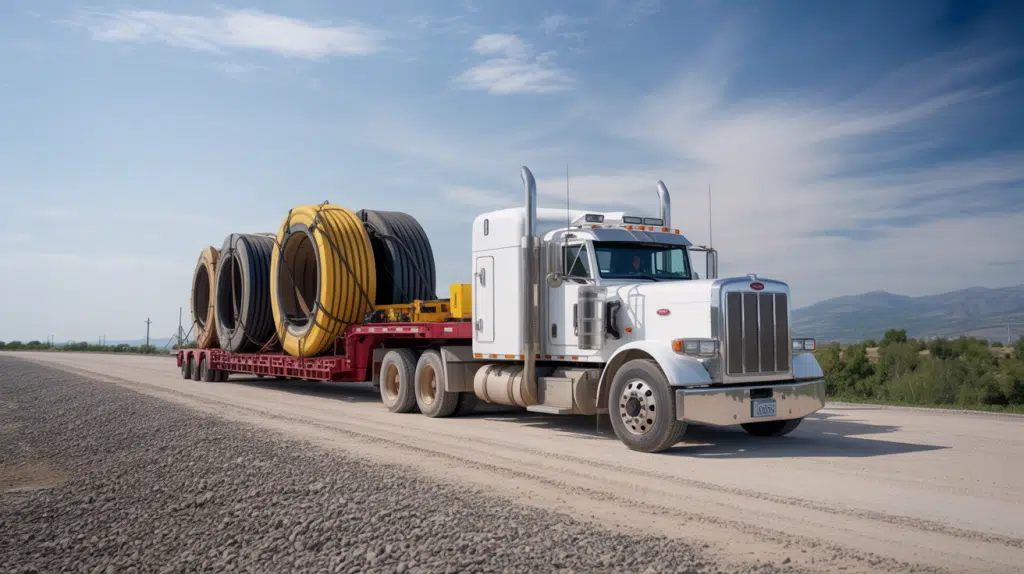
Power generation equipment often carries dense weight through skids or frames, and it may include electrical, mechanical, or control systems that need careful handling. The transport plan should protect both the equipment and the project schedule it supports.
Remote and developing sites need stronger access planning
Grid expansion often reaches areas where access is not simple. New substations, renewable energy sites, rural utility corridors, and remote infrastructure projects may involve gravel roads, temporary entrances, soft ground, narrow turns, or limited staging space.
These final-mile conditions can decide whether a delivery works smoothly. A route may be approved to the general area, but the site still has to support the loaded trailer, unloading equipment, and final placement. Remote access should be checked before the convoy reaches the last few miles.
Staging helps crews work in the right order
Grid expansion projects often involve several loads arriving over time. Staging space helps keep those deliveries organized. Transformers, switchgear, poles, steel components, control units, and support materials may all need different laydown areas, protection levels, or installation timing.
A good staging plan answers:
- which equipment arrives first
- where each load will be placed
- whether the site has enough laydown space
- whether sensitive equipment needs weather protection
- whether cranes or forklifts can reach the staging area
- whether later loads can still enter the site safely
Without staging, the site can become crowded, and crews may spend time moving equipment instead of installing it.
Permits and routes shape the project schedule
Large utility equipment may require oversize or overweight permits, route surveys, escorts, bridge checks, or travel-time restrictions. Those requirements can affect when equipment can leave pickup, how long it takes to reach the site, and whether delivery can happen inside the project window.
For grid expansion, permit timing should be built into the schedule early. A delayed route approval or bridge review can affect crews, crane bookings, outage windows, and installation plans. Heavy haul planning helps reduce that risk by identifying transport requirements before the equipment is urgently needed.
Delivery timing is tied to outages, crews, and installation windows
Utility work often depends on planned outages, crew schedules, crane availability, energization timelines, and inspection steps. Equipment may need to arrive before a specific outage begins or after a site reaches a certain stage of readiness.
A load that arrives safely but at the wrong time can still create problems. Early delivery may expose sensitive equipment or crowd the site. Late delivery may delay electrical work. For grid expansion, the best delivery window is the one that matches the project sequence.
Communication keeps the transport and utility teams aligned
Grid expansion projects involve many people: utility managers, project engineers, carriers, drivers, permit teams, escort crews, site supervisors, crane teams, and installation crews. Heavy haul support works best when these groups share accurate information.
Good communication confirms:
- equipment details
- pickup and delivery timing
- route status
- permit progress
- site access
- staging locations
- unloading support
- weather or access changes
- who approves delivery decisions
Clear communication helps prevent avoidable delays at the moment when crews and equipment are already waiting.
What utilities should prepare for grid expansion transport
Utility teams can help heavy haul carriers support grid expansion by preparing complete information early.
Useful details include:
- equipment list by delivery phase
- confirmed weight and dimensions for each load
- lifting and support-point details
- site drawings or access maps
- staging and laydown plans
- crane or forklift requirements
- outage or installation windows
- weather-sensitive equipment details
- remote access conditions
- delivery sequence
- site contact information
These details help the carrier plan each move around the project, not just the shipment.
Conclusion
Heavy haul supports grid expansion projects by moving the equipment and materials needed to build, upgrade, and extend power infrastructure. Transformers, substation components, switchgear, power generation equipment, utility poles, and long infrastructure materials all require transport plans that match their size, weight, sensitivity, and installation role.
A successful grid expansion delivery is not just a heavy load reaching a utility site. It is a coordinated handoff that supports the next stage of electrical work. When the trailer, route, permits, staging, timing, and communication are aligned, heavy haul transport helps grid projects move forward with fewer delays and less risk.