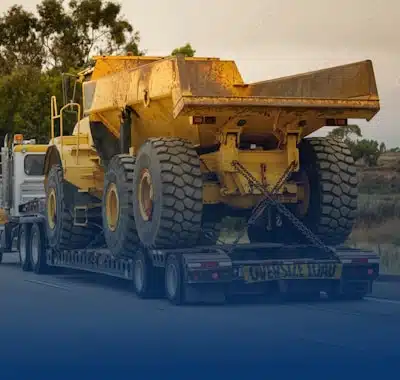
Mining equipment does not usually enter transport in a neat, road-ready condition. It begins as working equipment built for extraction, loading, crushing, drilling, or support inside demanding environments. Because of that, oversized transport preparation is less about “booking a trailer” and more about converting a production machine into a controlled highway load.
That conversion takes planning. A mining machine may be too wide to travel assembled, too heavy for a simple axle plan, too tall for a direct route, or too complex to secure as one piece. For the wider equipment-by-equipment transport framework, this guide sits inside how different types of heavy equipment are transported safely, where the transport method begins with the machine’s real structure rather than its job-site label.
Mining equipment preparation starts with one decision: move whole, or move in parts
This is usually the first serious transport question, and it changes everything that follows.
Some mining equipment can travel as a complete unit if the route, trailer, and permit conditions allow it. Other machines become safer and more realistic to move only after partial disassembly. That may include removing:
- buckets or attachments
- counterweights
- conveyor sections
- booms, arms, or guards
- oversized tires or track assemblies in specific cases
The point is not to dismantle for the sake of dismantling. The point is to remove whatever makes the machine unnecessarily difficult to route, support, or secure.
Size is obvious, but density is what usually makes the move difficult
Large mining equipment attracts attention because of its dimensions, yet transport pressure often comes from its density. A machine can be shorter than a crane boom and still be harder to haul because enormous weight is concentrated into a compact footprint.
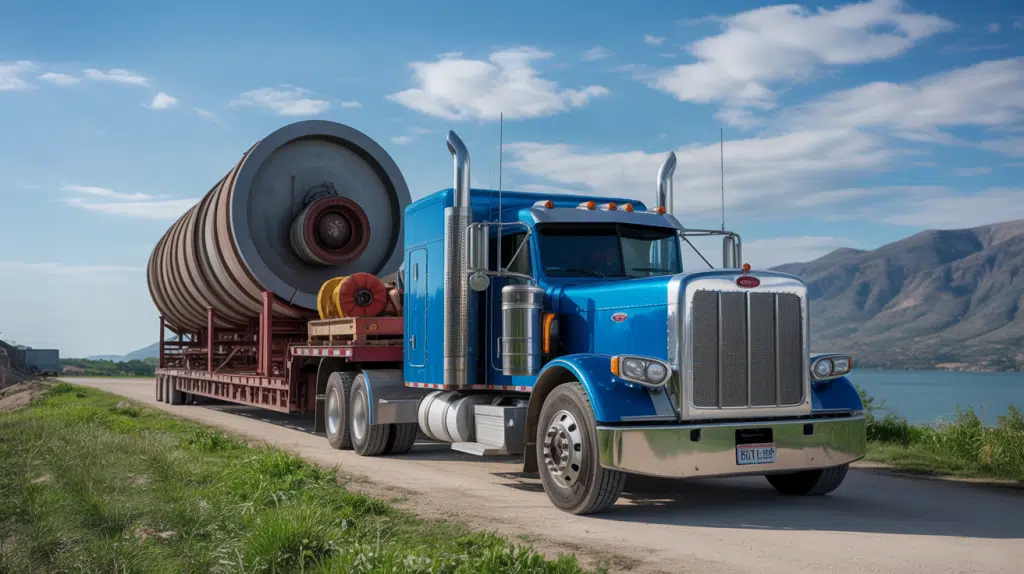
That concentrated mass affects:
- axle loading
- trailer choice
- bridge planning
- deck support requirements
- loading and unloading strategy
This is where oversized transport preparation starts to feel more like structural planning than routine hauling.
Documentation matters before the machine is touched
With mining equipment, preparation improves when the transport team has accurate information before arriving on site. That usually includes:
- exact machine model
- current operating configuration
- transport weight, not guessed weight
- dimensions in assembled and partially disassembled form
- center-of-gravity information where available
- approved lifting or support points
When these facts are wrong or incomplete, the move becomes reactive. And with mining equipment, reactive planning gets expensive quickly.
Support and trailer contact have to be engineered, not improvised
A machine this heavy cannot simply “sit wherever it fits.” The base structure, contact points, and support pattern all matter because the trailer must carry the equipment without creating new stress through bad placement.
That means preparation often includes:
- identifying where the frame can safely bear transport loads
- deciding whether cribbing or spread support is needed
- matching the trailer deck to the machine footprint
- making sure the machine is not resting on vulnerable components
In other words, the transport plan has to support the machine’s structure, not just its weight.
Axle planning should happen before route optimism
It is easy to get excited about a possible route before the axle plan is truly understood. Mining equipment punishes that mistake. Once the machine’s weight begins interacting with a multi-axle setup, permit feasibility, bridge crossing conditions, and route limitations all begin to depend on actual distribution rather than rough estimates.
That is why preparation should align early with axle weight distribution planning. The machine may be movable, but the route only becomes realistic when the weight is spread in a way the infrastructure can accept.
Height reduction often decides whether the move becomes practical
Many mining machines create height problems before they create anything else. A top structure, operator platform, protective guarding, tire profile, or elevated component can push total loaded height into a range that limits routing heavily.
Preparation often improves when teams ask:
- what can be removed safely?
- what can be lowered or folded?
- what creates height without adding transport value?
- can a different trailer solve height more effectively than further disassembly?
These questions matter because every inch of reduction can improve route flexibility. That is one reason mining equipment preparation often overlaps with low-clearance planning for oversized loads, especially when older bridges, utility lines, or work zones are involved.
Loading method depends on the machine’s real behavior, not just its category
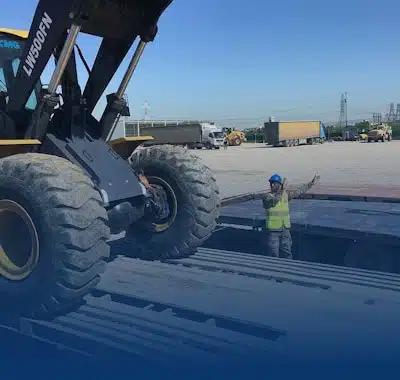
Not all mining equipment loads the same way. Some units can be driven onto the trailer. Others require cranes, jacking systems, winches, or staged support during placement. The wrong loading method can stress components, increase danger on site, or create poor trailer positioning from the start.
A better preparation process confirms:
- whether the machine is self-propelled and safe to load that way
- whether the loading area can support the operation
- whether the equipment needs lifting or staged placement
- whether the trailer setup allows proper alignment and seating
Loading is not just the start of transport. With mining equipment, it often determines whether the rest of the move feels stable or compromised.
Securement has to control mass without damaging the machine
Securement on mining equipment is not simply “more chains.” The machine’s mass is so significant that restraint must be deliberate, well-angled, and tied to the right structural points. At the same time, tie-down strategy must avoid applying force into weak, removable, or non-structural areas.
Preparation usually improves when the team identifies:
- approved securement points
- movement zones that must be restrained separately
- whether removed components need separate securement plans
- how the machine will behave under braking and road vibration
If the equipment is transported in sections, each section becomes its own securement problem. That is one reason transport planning for large industrial loads often starts to resemble the discipline behind moving industrial generators and power units, where support and restraint are just as important as gross weight.
Bridge and infrastructure review should enter early, not late
Mining equipment transport often reaches the point where route review is no longer just about clearances and lane width. It becomes about whether the infrastructure can tolerate the move at all. At that stage, bridge behavior, road strength, turning geometry, and escort control all enter the project together.
If the machine or trailer configuration pushes into serious overweight territory, the preparation phase should already be aligned with bridge engineering considerations for heavy haul transport before final route assumptions are made.
Mine-site realities often shape the move more than the highway does
Mining equipment does not always begin from a clean yard. It may start in remote, dusty, uneven, or tightly constrained locations. Ground conditions, staging room, slope, and extraction-site layout can all affect how the machine is prepared and loaded.
That is why site preparation should confirm:
- available space for trailer positioning
- ground condition for heavy loading activity
- whether lifting equipment can safely access the machine
- whether disassembly must happen on site before loading
- whether the departure route from the mine is itself a transport bottleneck
Many oversized moves are delayed before they reach the public road, simply because the departure environment was underestimated.
The best preparation usually feels slower at first and faster later
Mining equipment transport rewards patience early. Measuring correctly, removing the right components, planning support points, checking axle implications, and preparing the site all take time. Yet that early discipline usually shortens the move overall because it reduces rework, route surprises, permit revisions, and damaged equipment.
That is the quiet truth behind oversized mining transport: preparation does not slow the project down. It protects the project from avoidable disruption.
Conclusion
Shipping an oversized load? Freedom Heavy Haul’s oversize load trucking services handle permits, escorts, and safe delivery for over-dimensional freight nationwide.
Preparing mining equipment for oversized transport means turning a working machine into a controlled load by reducing unnecessary size, confirming real weight and support requirements, matching the right trailer and axle plan, and making sure the route can actually handle what is being moved. These machines are too large, too dense, and too valuable for guesswork. When preparation is done properly, the move stops feeling like an oversized problem and starts feeling like an engineered operation.