Load shifting is one of the most dangerous problems in oversized transport because it can begin quietly. A machine may look stable when it leaves the pickup point, but road vibration, braking force, turning pressure, wind, and surface changes can slowly work against the securement system. By the time movement is visible, the load may already be creating risk for the driver, the equipment, and everyone around the transport route.
Preventing load shifting is not only about using stronger chains. It is about controlling the load before movement begins, choosing the correct restraint points, checking how the cargo sits on the trailer, and confirming that every part of the machine is held in a stable travel position.
A complete heavy haul load securement and damage prevention process treats load shift as something to prevent early, not something to correct later on the road.
Load shifting usually starts before the truck leaves
A load often shifts because something was missed during loading. The equipment may have been placed slightly off center. The attachment may have been left with too much movement. A chain angle may have looked tight but pulled in the wrong direction. A tire or track may have settled after the first few miles.
These small details matter because oversized loads are exposed to repeated force during transport. One bump may not move the load. Hundreds of bumps, turns, and braking events can slowly reveal weak planning.
That is why load-shift prevention begins in the yard, not halfway through the route.
Placement is the first layer of shift prevention
The best securement system works better when the load starts in the right position. If the cargo sits too far forward, too far back, or too far to one side, the trailer may carry stress unevenly. That uneven setup can make the load harder to restrain and easier to disturb during travel.
A stronger placement plan checks:
- whether the load is centered side to side
- whether the weight sits correctly over the trailer and axle groups
- whether the machine has enough deck contact or support
- whether attachments create imbalance
- whether tie-down angles remain useful after placement
Good placement makes the load feel settled before securement begins.
Friction, blocking, and deck contact all matter
Securement gear does important work, but it should not be the only thing resisting movement. A load that sits cleanly on the deck, has proper contact support, and uses blocking where appropriate is less likely to slide or walk during travel.
For wheeled equipment, tire contact and chocking may help reduce rolling risk. For tracked machines, even deck contact and stable positioning matter. For base-frame cargo, support points must match the load path so the cargo does not rock or settle unevenly.
The more stable the load is before chains are tightened, the less stress those chains must fight later.
Tie-down direction should match the movement risk
A load can move forward, backward, sideways, or upward. Securement should be arranged to control those directions deliberately.
Forward movement is usually a major concern during braking. Side movement becomes important during turns, lane changes, road crown, and evasive maneuvers. Vertical bounce matters on rough pavement, bridge joints, and uneven roads. Rearward movement can appear during acceleration, grades, or trailer movement.
This is why tie-down direction matters as much as tie-down strength. A chain pulling in the wrong direction may look serious without doing enough of the right work.
Strong shift prevention depends on tie-down points that let restraint force pull from the correct parts of the machine, because the connection point decides how effectively the securement system controls movement.
Attachments need their own movement control
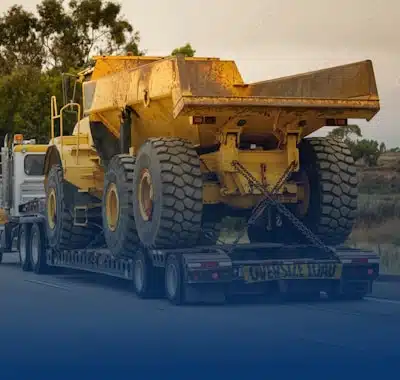
Many oversized loads shift because the main machine is secure, but the attachment is not fully controlled. Buckets, booms, blades, forks, grapples, rippers, masts, and arms can bounce, settle, or shift if they are not lowered, locked, removed, or restrained correctly.
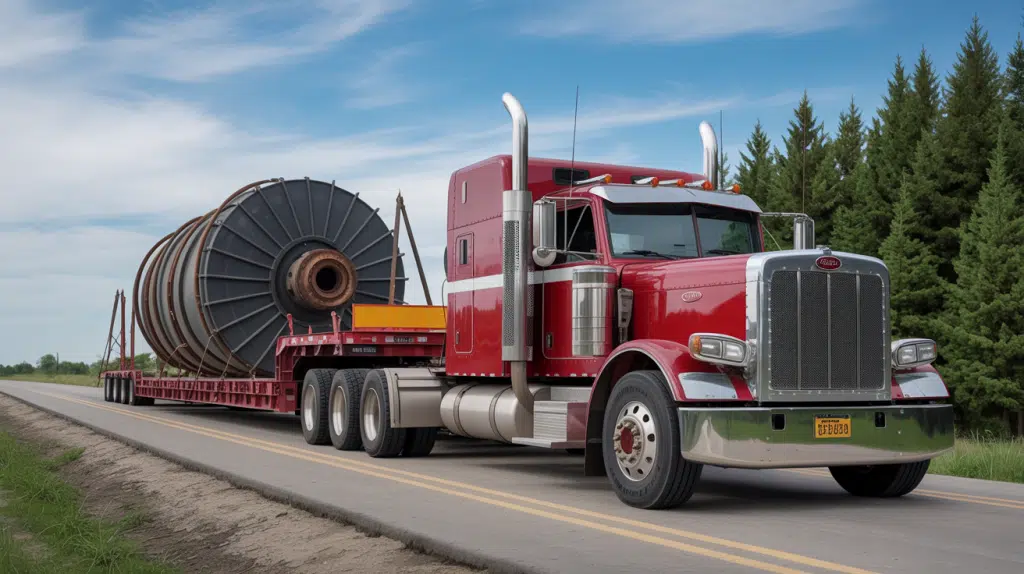
An attachment can change the load’s center of gravity. It can increase travel height. It can create rubbing points. It can also move independently from the main machine body. That means attachment control is not a small detail. It is part of the load-shift prevention system.
A machine should travel in a compact, stable position whenever possible.
Settling is normal, but unchecked settling becomes risk
Some loads settle after the first miles. Tires compress. Tracks seat into the deck. Chains tension differently. Blocking beds in. Attachments rest into their final position. This settling is not always a problem, but it becomes a problem if nobody checks it.
That is why early re-checks are so important. The first stop after loading often tells the truth about whether the load is riding correctly.
During a re-check, the crew should look for:
- loose chains or binders
- shifted blocking
- rubbing or new contact marks
- changed attachment position
- uneven deck contact
- signs the load moved even slightly
A small adjustment early can prevent a much bigger issue later.
Road conditions can increase shifting risk
A secure load on a smooth route may behave differently on rough roads, steep grades, tight curves, construction zones, or windy corridors. Oversized transport is especially sensitive to route quality because the load may be tall, wide, heavy, or irregular in shape.
Risk increases when the route includes:
- repeated bridge joints
- sharp turns or roundabouts
- long grades
- rough pavement
- high winds
- sudden detours
- narrow lanes or shoulder transitions
This is why route planning and securement planning should not be separated. The road decides what the load will experience, so the securement plan should be strong enough for that environment.
Warning signs of load movement
Load shifting does not always announce itself dramatically. Sometimes the first signs are subtle.
Watch for:
- one chain becoming looser than the others
- new rubbing marks near contact points
- changed angle in a binder or hook
- blocked material moving from its original position
- attachment position changing during transit
- uneven tire or track seating
- a visible gap where the load was previously touching support
These details may look small, but they can signal that the load is no longer behaving exactly as planned.
Drivers and escorts help detect problems early
Load-shift prevention is not only a loading-yard responsibility. Drivers and escorts play an important role during the move. The driver feels how the load behaves through braking, turning, and road transitions. Escorts may see load behavior from outside the truck’s perspective, especially on wider or taller cargo.
Good communication helps identify problems before they become emergencies. If a load looks different, rides differently, or responds differently, the safest response is to stop in a controlled place and inspect it.
Customers can help prevent load shifting too
Customers often think securement is only the carrier’s job, but better information from the customer can make the move safer. Accurate dimensions, machine weight, attachment details, and loading-site conditions all help the transport team prepare the right trailer, securement gear, and placement strategy.
Before pickup, customers should confirm:
- the machine’s true operating weight
- whether attachments stay mounted or travel separately
- whether the equipment has designated tie-down points
- whether any parts are loose, damaged, or removable
- whether the pickup site allows safe loading and inspection
Good information reduces guesswork. Less guesswork means less movement risk.
Conclusion
Preventing load shifting during oversized transport means controlling the load before it ever has a chance to move. Correct placement, stable deck contact, proper tie-down direction, attachment control, early re-checks, and route-aware planning all work together to keep equipment seated and protected. A load that does not shift is not secure by accident. It is secure because every movement path was considered before the road began testing the plan.